
Climate change has boosted penguin populations off the “Island of Deception.” Photo Photo
Subantarctic or Papuan penguins (in English, the name of the gentoo) were one of the few representatives of their species that managed to “benefit” from climate change on the planet and increase the population while the number of others shows a decline.
Subantarctic or Papuan penguins (in English, the name of the gentoo) were one of the few representatives of their species that managed to “benefit” from climate change on the planet and increase the population while the number of others shows a decline.
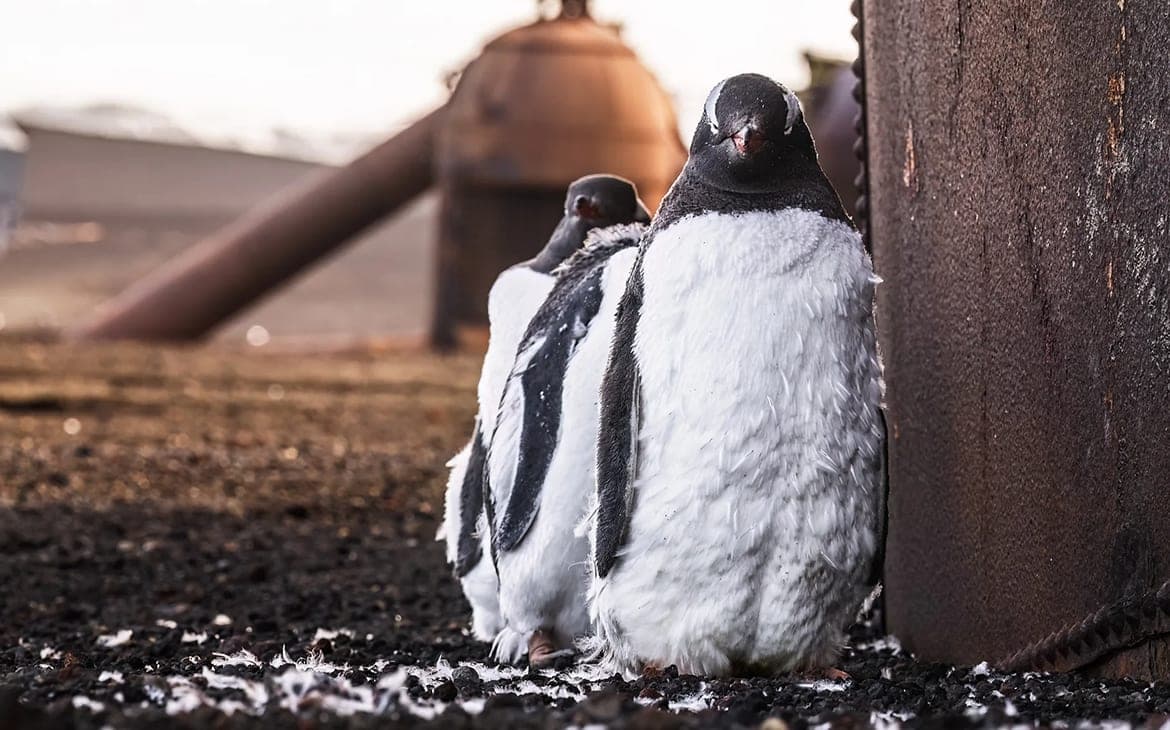
Photographer Romain Barats filmed the life of a Gent on Deception Island, which is located in the western part of Antarctica, looks like a horseshoe or donut from space and is, in fact, an active volcano. This area has been abandoned by man, although it used to be whaling, which is reminiscent of rusting tanks and destroyed boats.
The shooting took place during a difficult period for penguins molting, when they are uncomfortable in cold water and they try to stay warm as long as they get while growing feathers. “Their numbers in this part of Antarctica have increased dramatically because they like warmer weather, they tolerate humid climates well,” said Heather Lynch, professor of ecology and evolution at Stony Brook University in New York.
The global Gentoo population increased by about 11% between 2013 and 2020, and by 23% in the western part of Antarctica. At the same time, the number of Antarctic penguins and Adélie penguins has declined dramatically in recent years.
In addition to ingenuity when choosing a habitat during molting, gentoos are unpretentious in food, so they easily change their diet, unlike other relatives, they can lay eggs several times a year, which is important in case of loss of offspring due to snowstorms or floods, and are able to tolerate the mating period as part of adaptation to climate change.
Although penguins do not lay eggs on Deception for a long time due to volcanic activity, Lynch admits that the adaptability of the gentu could make them the first to nest on the island. "It would be so similar to them," she believes.


