
Piotrovsky spoke about the laws that the builders want to abolish
The head of the Hermitage made a proposal to prevent “lawlessness” with monuments. “We must work out the legislation well and correct it in order to preserve monuments so that they live,” said Mikhail Piotrovsky
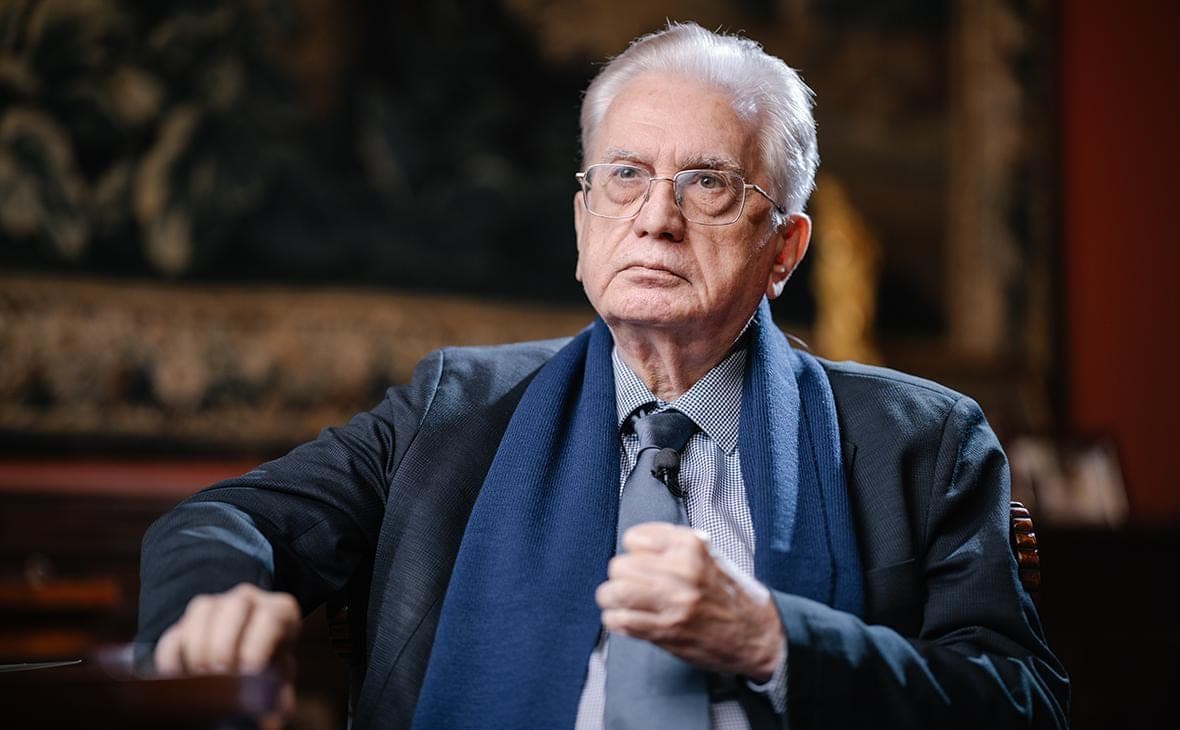
The School of Arts and Cultural Heritage of the European University participates in the work on laws on the preservation of monuments, said in an interview with RBC the President of the school, Director of the State Hermitage Mikhail Piotrovsky. He noted that now the laws on archaeology and the protection of monuments are changing, "builders are trying to abolish some of the laws that really interfere with building.".
“There is a set of different interests, and one must defend one’s own interests and find compromises. We must work out the legislation well and correct it to preserve monuments so that they live. How they should live and invent. Simple methods do not work very well, sometimes it turns out to be a museum or hotel in it, sometimes it does not work. This is one of the practical tasks that our graduates solve with knowledge of all languages and technologies, says Piotrovsky.
According to him, the system of monuments protection in Russia is very powerful, "for this, many builders do not like it." Discuss who should conduct archaeological examination and what it should be.
“When we force builders to do an examination, they sometimes pay for it. Now we have a painful question, who issues an open sheet for archaeological excavations. All the protection of monuments rests on archaeological excavations. If you are building a monument where there is a monument, and we will always find a monument, then there should be an archaeological excavation. Who will conduct this excavation? Once, only the Academy of Sciences gave open sheets, then the Academy of Sciences with the Ministry of Culture. Now there is an idea to bring this to the level of the subjects of the Federation. We are actively fighting it because it has to be centralized. Responsibility should be serious personal – both in the open sheet, and in who conducts the work, and how he reports to whom he reports, says Piotrovsky, emphasizing the importance of this decision.
According to him, Moscow stands for the right to decide so that it would be good for the interests of the building and the city. “One of our proposals: let’s change the rules in Moscow, but do not change them throughout the country, because then there will be lawlessness, and in the capital you can adjust something,” says the head of the Hermitage.
In discussing how best to use all the monuments, he said, everyone agrees that you can rent them out even cheaply, just to keep everything in the monument. “Everything is well said, all is well. But the developer comes and says: well, you said, we need to quickly, and we will do it quickly, and it will not collapse. We have a perpetual problem with the Exchange - we restore it, and the contractors are put in jail. This is a common situation where there are wrong rules. People know how to win tenders. We work with them all the time, but we try to keep them on a short leash so that they do not spoil anything. Because you have to be very careful. You can do everything very quickly, but it will be a real crime, Piotrovsky said.
Speaking about other works of the School of Arts, he also says that she made a program for the development of Old Ladoga. In addition, according to him, one of the practical tasks that students solve is “to what extent it is necessary to protect monuments from tourists, so as not to trample, but at the same time could come and admire.”.
Mikhail Piotrovsky is one of the founders and Chairman of the Board of Trustees of the European University in St. Petersburg. Non-State University was founded in 1994. In 2022, the University and the Hermitage announced the opening of the School of Arts and Cultural Heritage. Piotrovsky became the president of the school.
Our university is small, research, innovative, pioneering and so on. It is based on postgraduate and additional education courses. Bachelor’s degree we are still going to do. Therefore, people come who have their own agenda, says the director of the Hermitage. According to him, the school differs from similar ones in that it prepares a very wide range of art historians who can work as museum workers, gallery workers, art critics, and so on.
“This is a very important element of cultural luxury that we should always have alongside the cultural mass,” Piotrovsky explains.


