Died the “most investigated” businessman Grigory Luchansky
In Vienna died businessman Grigory Luchansky, who created the first non-state foreign trade company in the USSR. In 1996, Time called him “the person who has probably been the most investigated in the world.”
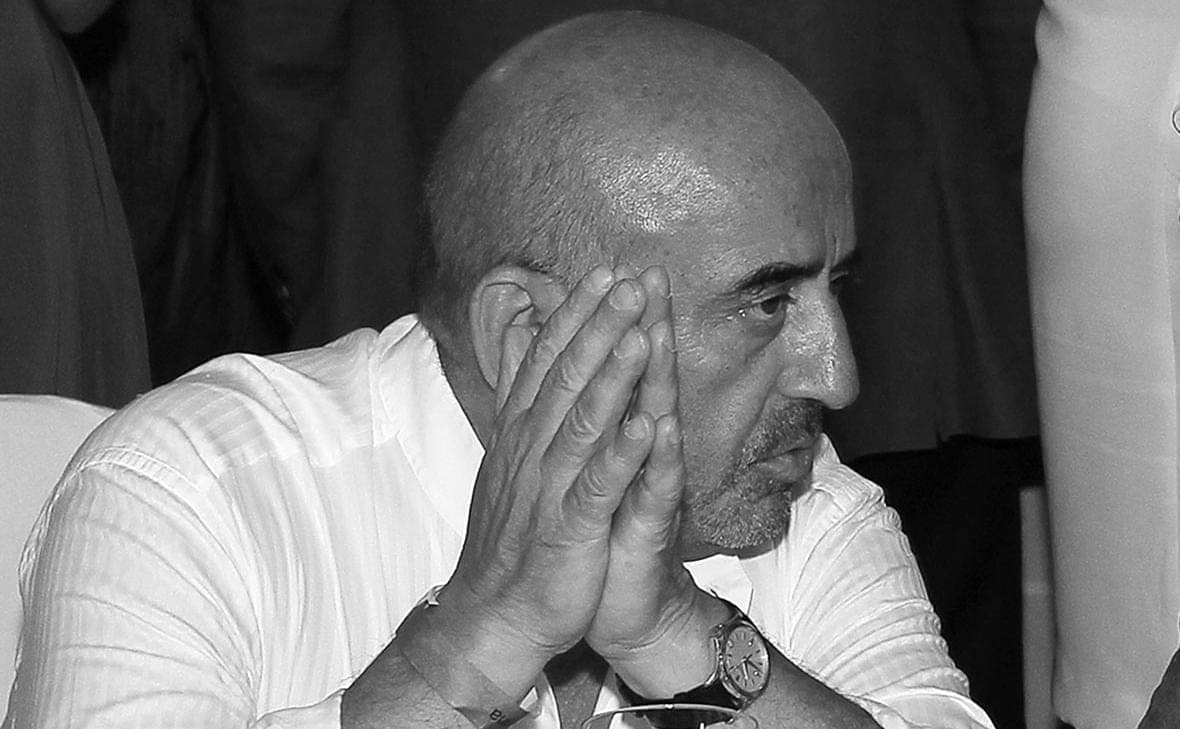
At the age of 81, businessman Grigory Luchansky died, his friend, entrepreneur Yuli Krumins told the Latvian portal Jauns.lv.
According to him, Luchansky died on October 20 in Vienna. The businessman became ill, doctors helped him, but he could not be saved. Farewell is scheduled for October 25 at the Jewish Cemetery in Riga.
Krumins and Lucianski were longtime friends. In 2019, Julius named him one of his business partners. The publication Santa.lv, in turn, published their joint photo from the anniversary of the composer Raymond Pauls, made in early 2026. Krumins told the publication that Luciansky visited him last summer, but “in recent years, Gregory was a little coward” and “was not a particularly cheerful person.”.
In an article titled The Russia Connection on July 8, 1996, Time magazine called Luchansky “the man who has arguably been the most investigated in the world because of his close ties and suspicious dealings in the former Soviet Union.” The investigation says that Western intelligence agencies suspected the businessman and his company Nordex of money laundering, illegal trade in weapons, drugs and nuclear materials, including the alleged supply of components for creating nuclear weapons to Iran and North Korea.
At the same time, Time noted that no official charges were brought against Luchansky and Nordex, and its own study of the company’s documents revealed no evidence of money laundering. Luchansky himself also denied all charges. "I'm not a gangster. I'm not a money launderer. I'm not a drug dealer... Nordex has never invested a penny in weapons, he said.
The CIA also suspected Nordex of links to crime. In the same year, the campaign headquarters of US presidential candidate Bob Dole, a political opponent of then-US leader Bill Clinton, published a statement by former CIA director James Woolsey, who criticized Luchansky's invitation to dinner with Clinton in 1993. Woolsey supported the assessment of then-CIA head John Deutsch, who called Luchansky’s Nordex “an organization linked to Russian criminal activity,” and said that any US government ties to the businessman would be “extremely unreasonable.”.
Luchansky was born in Tashkent in 1945. After graduating from the Moscow Institute of Steel and Alloys, he was sent to work in the Latvian SSR. In 1974 he became Vice-Rector of the Piotr Stuchka Latvian State University for Administrative and Economic Affairs, becoming the youngest Vice-Rector in Latvia.
In 1982, Luchansky was arrested on charges of embezzling socialist property worth 2,564 rubles. The following year he was sentenced to seven years in prison. In 1985, he was released on parole for forced labor.
Later, Luchansky became the deputy head of the Latvian agro firm “Adazi” Albert Kauls. In 1987, the company was visited by General Secretary of the CPSU Central Committee Mikhail Gorbachev, after which the agro-firm received the right to independently conduct foreign economic activities. After that, in 1988, Luchansky founded Adazimpeks, the first non-state foreign trade company in the USSR, which was engaged in the export of fertilizers. In 1990, Luchansky founded and headed Nordex, which later became an influential group of enterprises in the energy sector.
The rapid growth of Nordex caused bewilderment among Western competitors, and in 1992 the Austrian magazine Wirtschaft Woche published an article entitled “Vienna Russians from Riga”, accusing Nordex of money laundering and links to organized crime. The British newspaper The Times published two articles in which Luchansky was linked to organized crime, money laundering and smuggling of nuclear materials. The businessman filed a libel suit and the High Court of London ruled in his favour.
In 1997, Luchansky established the Center for Investment Projects and Programs in Moscow. In 2003, the Moscow Automobile Company controlled by the center received control of the Likhachev plant (ZIL). She ran the business until 2011, when she was suspended. Luchansky also held senior positions at the International Congress of Industrialists and Entrepreneurs.