
How universities are moving from theory to the introduction of technology in production
More and more universities are becoming the driving force of technological development: young scientists create breakthrough projects and implement them in different areas of the economy. This is supported by the Priority 2030 program
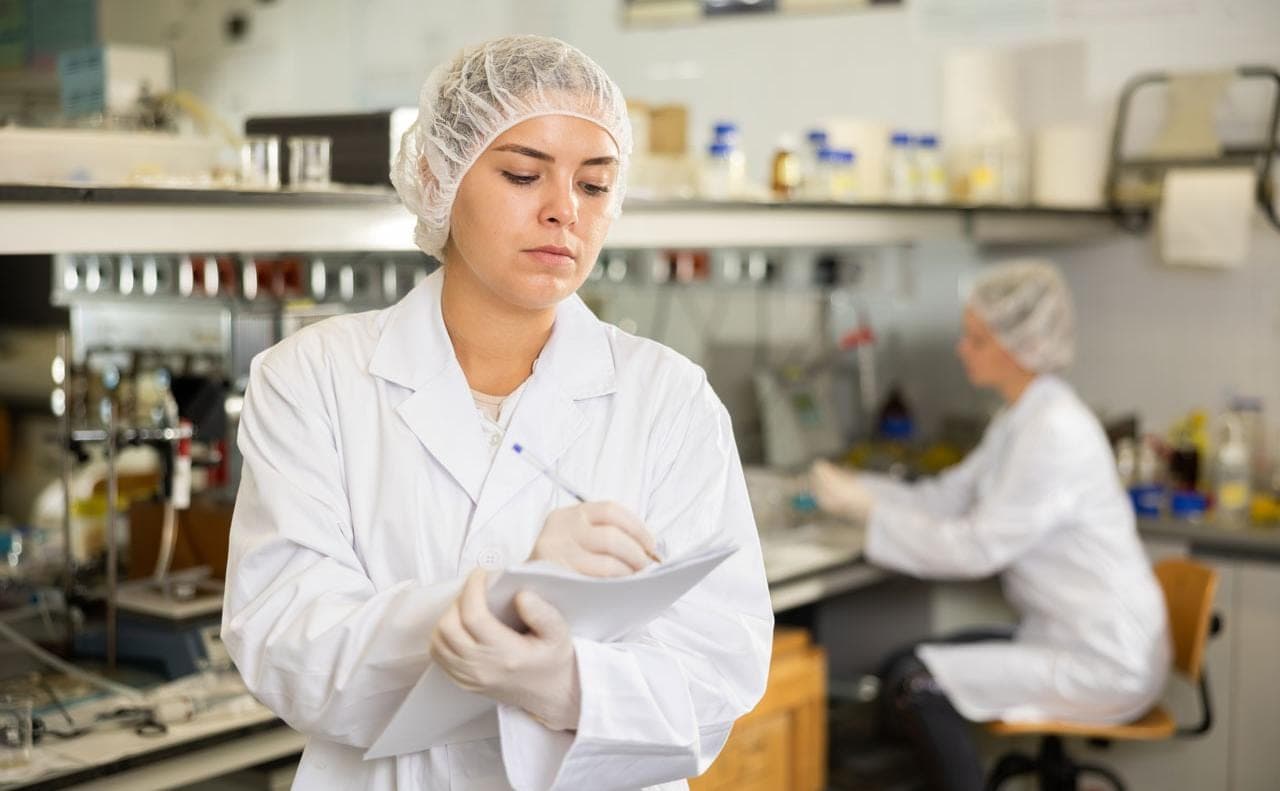
A total of 141 universities are participating in the program this year. Of these, 14 are located in the Far East. Also among the participants are five creative universities. The goal of the program is to form more than 100 progressive modern universities by 2030, which will become centers of scientific, technological and socio-economic development of the country. In 2025, the Priority 2030 program became part of the national project “Youth and Children”.
The key vector of the program is the achievement of technological sovereignty and the strengthening of Russia’s positions in priority scientific and technological areas. To this end, universities have revised development programs and formed strategic technology projects – initiatives with high commercial potential, designed to accelerate the transformation of scientific developments into finished products. Each university could submit up to three such projects.
At the same time, academic indicators are not canceled - they are supplemented by new ones. For example, the Integral Technology Leadership Index is a comprehensive indicator that evaluates the volume of extrabudgetary R&D (research and development work), revenues from the commercialization of intellectual activity and the work of small innovative enterprises.
At the same time, technological expertise of projects of participating universities is carried out. The evaluation methodology is based on four criteria: scientific and technical novelty and technological leadership, application potential and market prospects, team qualification and management system, risk assessment.
“The emergence of technological expertise has benefited universities. Thanks to the connection of not only scientists, but also industry experts, university development programs are beginning to be qualitatively reconstructed, said Valery Falkov, head of the Ministry of Education and Science of Russia. In 2026, the main evaluation criteria were announced as the dynamics and effectiveness of projects.
The results of the participation of universities in the program are not only technological projects, but also a contribution to the development of the regions: the growth of R&D orders from enterprises and businesses, joint investment projects, new jobs and training for regional economies.
Legal Engineering as a System Solution
Technology projects often face legal barriers. At the same time, the lawyer traditionally acts as an external consultant or controller, rather than a member of the technology development team. Moscow State Law University named after O. E. Kutafin (MGLA) under the program "Priority-2030" proposed a systemic solution - legal engineering.
This is a new model of legal activity, in which a specialist accompanies the technology throughout the life cycle - from idea to commercialization and entry into international markets. For this purpose, a special methodology has been developed for the legal assessment of technology readiness levels (PAGT), an analogue of the well-known UST, but with an emphasis on regulatory risks and tools for their removal.
The university has created nine competence centers, including cyber law, biolaw, environmental law, as well as the digital platform of the Innovative Jurisprudence consortium, where more than 200 products (draft laws, legal models, analytical reports) have already been placed. Among the breakthrough solutions are the concept of regulating quantum communications until 2030, the legal model of the national climate monitoring system, draft federal laws On Industrial Data and On Genetic Technologies.
This year, MGSA launched an open Digital Legal Valley, a center for digital competencies, where more than ten pilot modules have been developed at the intersection of law and IT. In the 2025/2026 academic year, 1,577 people were trained at the Digital Department. “Digital Department” is a project that is implemented only in universities participating in the “Priority-2030” and allows students to receive IT qualifications for free in parallel with the main specialty. Thus, more than 2.3 thousand young people have mastered the course “The Law of Artificial Intelligence”.
“We are designing a legal trajectory for each technology,” Maria Mazhorina, Vice-Rector for Strategic and International Development, said. A lawyer becomes a member of the engineering team, and this changes the approach to training. Our task is to educate legal engineers who think not in articles but in products.”.
Reagents for obtaining lithium concentrates
The raw materials base is very important for achieving technological sovereignty. Russia has many fossil reserves, but it needs lithium, a strategic raw material for battery production and renewable energy. Existing technologies for enriching lithium-containing ores require the use of imported reagents, and the flotation process (dividing crushed ore into useful mineral and empty rock using water and air) involves heating the ore mixture. This increases the cost of production and reduces the profitability of domestic fields.
At the Irkutsk National Research Technical University (IRNITU), students and postgraduates of the laboratory “Flotation and chemistry of reagents” with the direct participation of the Irkutsk Institute of Chemistry named after A. E. Favorsky SB RAS synthesized new reagents for enrichment of lithium ore. Instead of heating the ore, the scientists used a mixture of two types of substances (anionic and cationic). This allowed to separate the lithium mineral (spodumene) from the empty rock without heating, as well as save up to 20% of reagents, which is very significant for plants. The effectiveness of the development has already been confirmed by laboratory tests. The next stage is industrial use at the processing plants of the Murmansk region, Tuva, Transbaikalia and Primorye.
“Our goal is to create reagents for the production of lithium concentrates,” said the project manager, five-year student Lilia Vasilyeva. According to her, the innovation of the solution is that a mixture of two types of reagents works more efficiently than each of them separately. Now mining and processing plants will be able to save millions of rubles.
The new development is a step towards achieving technological independence of the country in the critical raw materials sector.
The project is supported by an industrial partner, Promkhimservice. Students and postgraduates of IRNITU are involved in the study from the first years. Earlier, the university had already patented a reagent for extracting gold and, together with Chinese scientists, developed a technology for enriching bastnezite, a source of rare earth metals.
New steel processing technology
Udmurt State University (UdSU) develops materials to improve and extend the operation of machines and mechanisms. In particular, the durability of sliding bearings in various components of aircraft, ships, cars and turbines depends on the presence of lubrication. It collapses at high pressure, temperature and speeds, leading to rapid wear and emergency stops.
Scientists of the Laboratory of Physics and Chemistry of Materials of UdSU together with colleagues from the Institute of Metal Physics of the UrO RAS and the Udmurt GAU have developed a fundamentally new approach to surface treatment: with the help of a laser, they add microparticles of light-melting metal bismuth to the surface, as a result, friction is significantly reduced. The bearing treated in this way can work for a long time without lubricating film on surfaces, at speeds up to 32 m / s - as in turbines. Tests confirmed the high wear resistance and stability of the coating over a wide range of temperatures. This technology is economical, simple and usable for mass production.
“This solution removes dependence on lubricants, which are expensive and not always available. Our development has already interested machine-building enterprises, we see the possibility of its adaptation to various components - from household appliances to aircraft engines, - said the head of the laboratory of physics and chemistry of materials, Professor Evgeny Kharanzhevsky. His work “Getting superlubricating coatings on steel using short-pulse laser treatment” was recognized by the Scientific Council of the Russian Academy of Sciences as the most important in the field of radiation physics of solids. The study is published in the journal Scientific Reports.
UdSU students are actively involved in conducting experiments and gain skills in working with modern laser equipment, as well as new generation materials.
It is obvious that the Priority 2030 program works in a variety of industries, experts say. In these examples, universities have found industrial partners and brought developments to production.


