
The second November magnetic storm occurred on Earth
On Earth there was the second in a row in November, a magnetic storm, reported in the laboratory of solar astronomy of the Institute of space research (IKI) RAS.
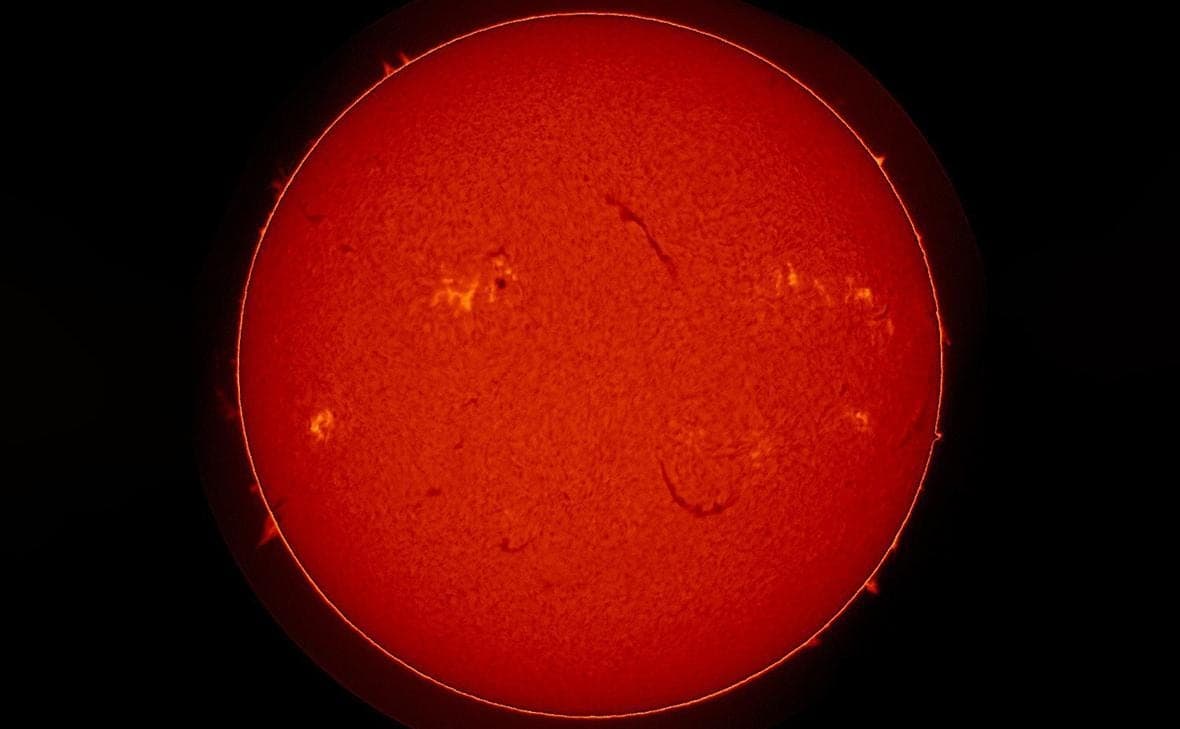
On Earth there was the second in a row in November, a magnetic storm, reported in the laboratory of solar astronomy of the Institute of space research (IKI) RAS.
"The main event was a weak geomagnetic storm - the second in November and the sixth storm this autumn," the report said.
According to scientists, this event was “rather the result of general fatigue” of the Earth’s magnetic field from a two-day stay in the perturbed solar wind from the coronal hole. Currently, geomagnetic indices are back in the green, “calm” zone.
The laboratory noted that G1 corresponds to the weakest category of magnetic storms on a five-point scale. The reason for its appearance was the flow of the solar wind from a small coronal hole on the Sun: the Earth has been under its influence since Tuesday. Over two days, the speed and temperature of the solar wind in the vicinity of the planet moderately increased, but the geomagnetic indices remained within normal limits until Thursday morning, the laboratory explained.
According to scientists, the probability of strengthening the storm is low. The forecast for the next day, the laboratory calls calm. After the two-day burst, the number and power of solar flares began to decline, according to the lab.
In October, according to IKI RAS, there were three storms, in September – one. The strongest of them reached the G3 level on the night of October 11. In late October, a magnetic storm caused auroras.


