
Biologists of NNSU: life boils in winter under the ice of Nizhny Novgorod reservoirs
Scientists of NNSU found that the winter hibernation of reservoirs is a scientific myth: under the ice there is an active life that determines the ecology of the lake for the whole year
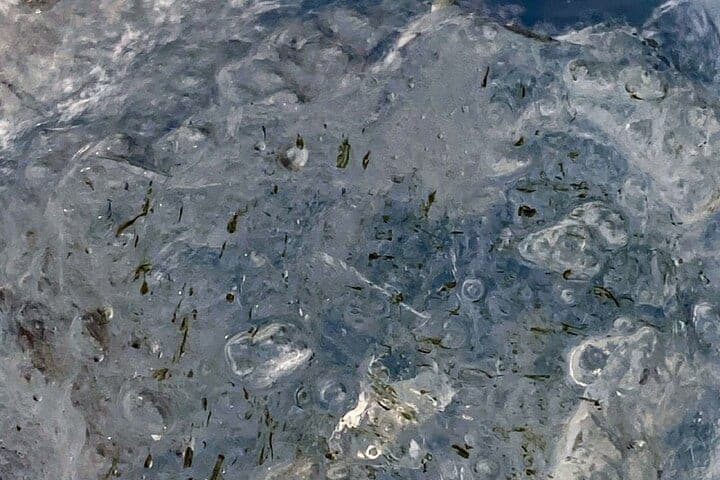
Scientists of NNSU found that the winter hibernation of water bodies is a scientific myth: under the ice there is an active life that determines the ecology of the lake for the whole year. Algologists of the Department of Botany and Zoology have completed a large-scale study of Lake Lunskoe in Sormovo.
In the cold and snowy winter of 2023, researchers recorded an underglacial bloom of toxic cyanobacteria with a biomass of 11.8 g per cubic meter. The abnormally warm winter of 2025 brought a surprise: cyanobacteria gave way to myxotrophic cryptomonads, which gave a record peak of biomass at 21 g per cubic meter – this is comparable to the summer peak figures.
In the severe frosts of 2026, the structure of the subglacial phytoplankton changed again: green and diatomic algae were activated in the ice, adapted to survive in the snow fraction.
The authors of the study emphasize that winter is a period of active development of phytoplankton, and ice serves as a specific ecological niche. Evaluation of water quality should be year-round, since it is winter processes that determine the development scenario of the reservoir for the whole next year.
The discovery of biologists of UNN refuted the stereotype that any warming stimulates only cyanobacteria. The obtained data will make it possible to more accurately predict the risks of water blooms and assess the quality of water resources in the context of climate change.


