
Will the transition to winter time in 2026 and whether it is necessary to change the clock in Russia
Seasonal transition to winter time in Russia has not been more than ten years, but the question of whether to change the clock in the fall, arises regularly
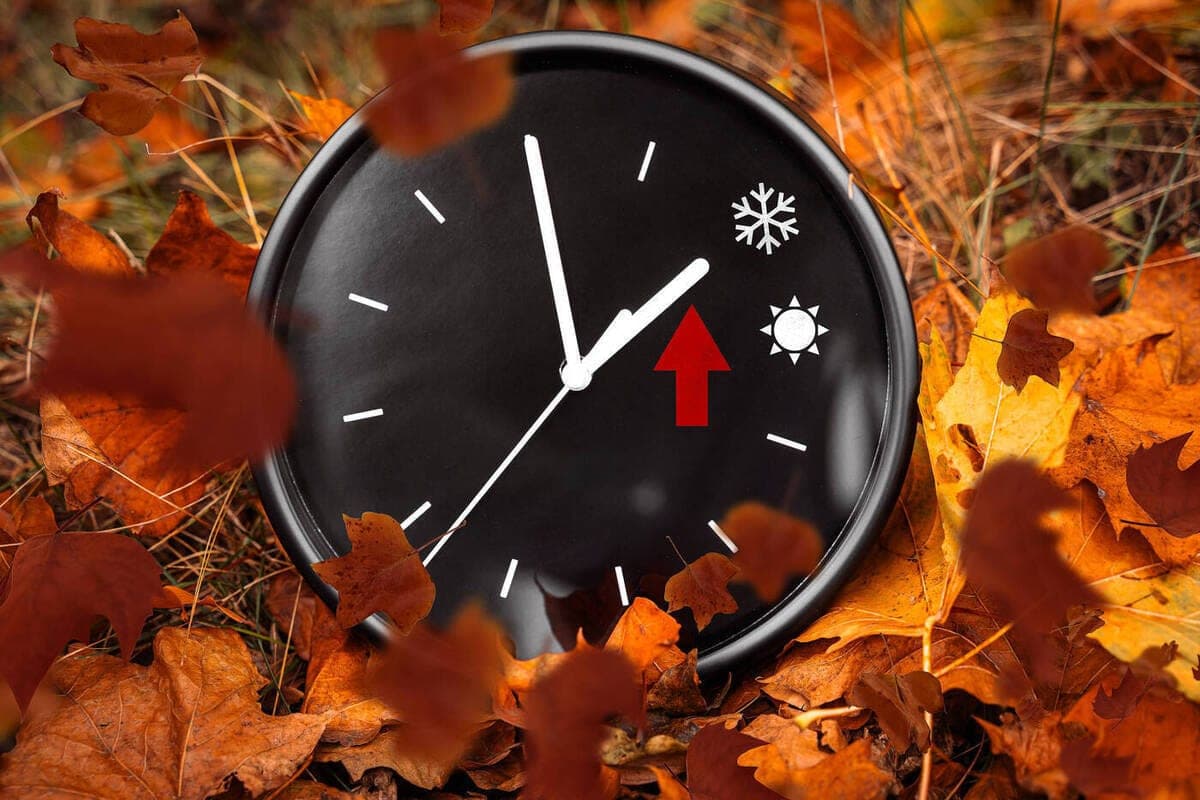
Immediately answer – no, in the fall of 2026, the transition to winter time in Russia will not take place. There is no need to translate the clock – neither in Moscow nor in other regions of the country.
The current legislation does not provide for seasonal change of time and any dates for this.
As told mk.ru meteorologist Alexei Safonov, in the fall of the Russians will not have to change the time.
“Nothing needs to be done with time. We do not have clocks, we will have time as it is, the expert said.
Why do so many people ask each year to switch to winter? The reason is primarily habit. For decades, in Russia, clock hands were shifted twice a year forward or backward by an hour.
In addition, seasonal translation is still valid in a number of other countries. At the end of October, there are news about the transfer of watches abroad, and some confuse them with changes in Russia.
The modern system developed after several changes. Until 2011, Russia operated a system of seasonal translation: in spring, the clocks were moved forward, in autumn – back.
In 2011, the annual transfer was cancelled. At the same time, the country lived for some time on a constant summer time.
This order was later changed again.
On October 26, 2014, most Russian regions switched their watches to one hour ago. After that, seasonal changes in time no longer occurred. The country lives without an annual transition between summer and winter time.
How many days are left until 2027 – keep track here.
The procedure for calculating time is regulated by Federal Law No. 107-FZ of June 3, 2011. The current system does not provide for seasonal clock transfer.
Also, according to the law, Russia has 11 time zones – each territory has its own time zone, and local time inside it does not change due to the onset of autumn or spring.
Moscow time is UTC+3. In other regions, time has shifted relative to Moscow.
The question of returning the seasonal time transition has been repeatedly raised in the State Duma.
In 2023, MPs Mikhail Matveev, Oleg Mikhailov and Olga Alimova introduced a bill providing for the return of the annual transfer of shooters: in spring – an hour ahead, in autumn – back.
The authors of the initiative referred, in particular, to more efficient use of daylight hours and possible energy savings. The explanatory note also referred to the impact of lighting on road safety and working conditions.
However, the government did not support the initiative. Among the comments was the lack of detailed information on what organizational and technical changes would be required for the return of seasonal transfers, from transport timetables to electricity metering systems.
Thus, the very appearance of the bill does not mean the return of summer and winter time. For this, it is necessary to change the current legislation.
Historically, daylight saving time has been associated with a desire to use daylight more efficiently and reduce lighting costs.
“In the era of industrialization, when electricity was not widely introduced to save electricity, there was a very convenient idea,” explained Alexei Safonov.
But conditions have changed, and now there is no consensus on significant energy savings. The question of the benefits of translating clocks is now considered not only in terms of the duration of daylight hours, but also the impact on humans.
Meteorologist Alexei Safonov believes that a return to seasonal translation is now unlikely. “It is unlikely that in the near future we will see a revision of this strategy,” the expert said.
Neurologist, Deputy Chief Physician of the Open Clinic Alexei Lukoyanov told mk.ru that the change of the usual regime of the day when transferring time, changing time zones, shifting or night work leads to desynchronosis - mismatch between the internal biological clock and external signals: light cycle, diet, work and rest.
Our biological clock is regulated by the hypothalamus and the epiphysis, the pineal gland that produces the hormone melatonin. Melatonin is similar in structure to serotonin. The production of melatonin increases after dark, maximum from two to four in the morning, then decreases during the second half of the night. Melatonin is associated with the control of circadian rhythms and the perception of the day-night cycle, and also has a hypnotic effect and helps the body adapt to changes in the external environment. A change in the production of melatonin with a disturbed light cycle causes desynchronosis, explains the neurologist.
According to Alexey Lukoyanov, this can be accompanied by problems with sleep, daytime sleepiness, anxiety, decreased concentration and performance.
The specialist emphasizes: if such symptoms persist for a long time, you should consult a doctor.
If a smartphone or computer has changed the time on its own, this does not mean that Russia has switched time to winter.
The reasons may be in the settings:
If the device is configured for the Russian region and uses automatic timing, in the fall of 2026, seasonal changes should not occur.
In case of failure, you can fix the problem in a couple of minutes:
Check the time zone. On Android, open Settings → System (or General Settings) → Date and Time. On the iPhone — “Settings” → “Basic” → “Date and time”. For Moscow there should be a belt "Moscow, GMT+3" (for other regions - its own).
Enable automatic determination. The Network Time Zone or Automatic options allow the phone to take time from the operator and by geolocation. That's usually enough.
If the error repeats, place the belt manually. Turn off the automatic setup and select your city from the list.
Update the system. Older versions of Android and iOS may still have outdated watch transfer rules. A fresh update fixes them.
Restart the phone. Sometimes time gets lost after a trip abroad or a SIM change, and rebooting helps to tighten it up.
If time is lost again, contact the operator: it is possible that the network transmits incorrect data. If only one device has a problem - to the manufacturer's service center.
When will the time be transferred to winter in Russia in 2026?
In Russia, there is no transition to winter time. The seasonal clock transfer was canceled in 2011, so in autumn the hands are not turned back by an hour.
Does the clock in Russia translate in the autumn of 2026?
Nope. The current law does not provide for seasonal time transfer.
Do I need to change the clock manually?
Nope. If the device correctly installed Russian time zone and enabled automatic time setting, nothing to change.
When was the last time a clock was changed in Russia?
The last nationwide clock transfer took place on October 26, 2014. After that, Russia switched to permanent winter time.
Will the clock be changed in the future?
This possibility is periodically discussed. Deputies introduced bills on the return of seasonal transfer, but none of them was passed.
What should I do if my phone changes time?
Most likely, the wrong time zone was chosen in the phone settings. Open the "Date and Time" section, select your belt (for Moscow - GMT+3) or enable automatic determination. If time goes down again, update the system or set your belt manually.


