
Paraskeva Chapel Friday on the Guard Mountain: the history of the main symbol of Krasnoyarsk
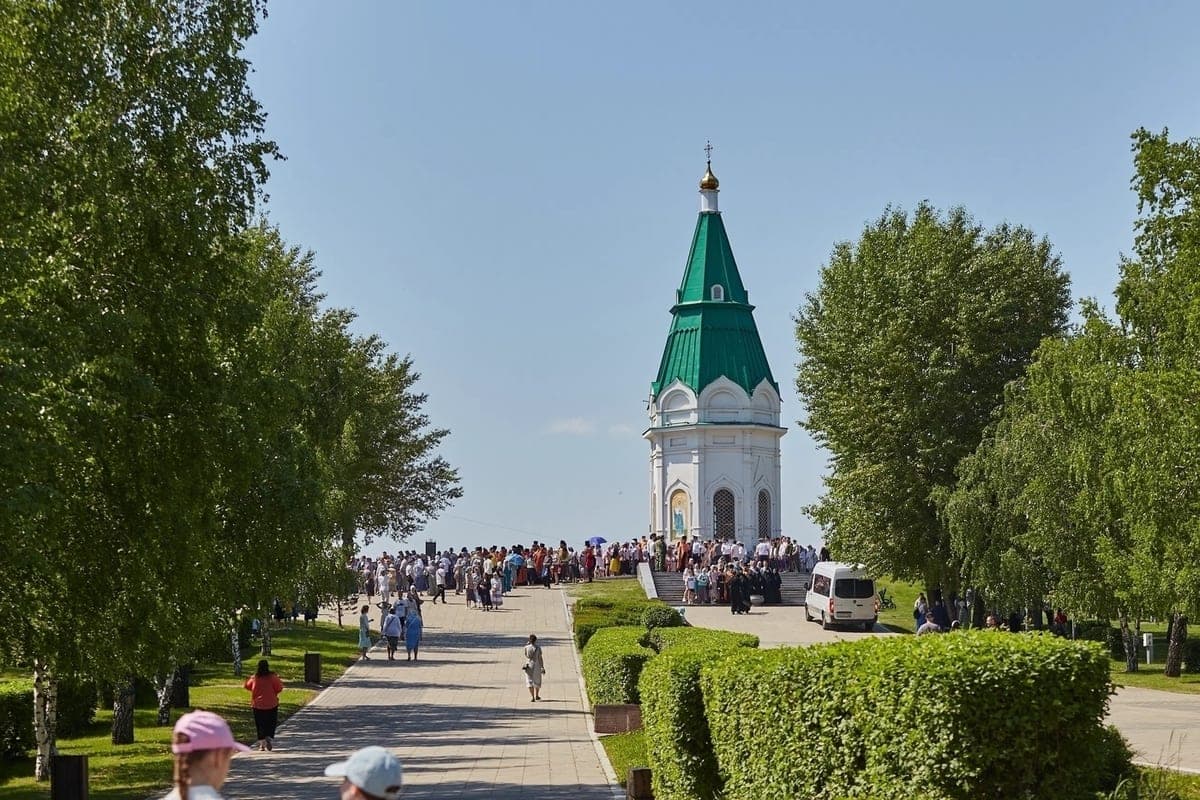
The Paraskeva Friday Chapel, standing on top of the Guard Mountain, is not just an architectural monument, but one of the main symbols of Krasnoyarsk, familiar throughout the country with the ten-ruble bill
From the Cossack Watch to the Stone Chapel
The place where the chapel stands today was originally connected with the defense of the city. There was a wooden watchtower, from which the Cossack watch watched the approach of "non-peaceful" neighbors - Yenisei Kyrgyz, Mongols and Dzungars. Later, a wooden cross was erected on this site with memorable dates of the foundation of Krasnoyarsk and all the sieges that fell to the lot of the prison.
According to legend, on the day when the cross was put up, the townspeople caught the icon of St. Paraskeva Friday in the Kache River. It was to her, the patroness of cattle and fields, as well as an assistant in economic needs and the search for suitors, and decided to dedicate the future chapel.
The first wooden chapel appeared here in 1805 - it was cut down by the merchant Novikov in memory of his happy salvation. And the stone building, which we see today, was built in 1852-1855 by architects Y. Alfeev and Y. Nabalov at the expense of gold miner and philanthropist Peter Kuznetsov.
Architecture and the “ten-ruble” symbol
The chapel is an octagonal brick tower in the ancient Russian style. Its height reaches about 22 meters to the cross, and the length of each face is 2.4 meters. The architecture was influenced by the Nativity Cathedral built in the same years by the project of Konstantin Ton.
On the feast days to the chapel twice a year, a procession from the cathedral was organized. Citizens on vows went to “Ninth Friday” to beg for a groom, bride, children or get rid of diseases.
Widely known chapel brought the image on the front side of the Russian banknote worth 10 rubles sample 1997. On the coupon field of the bill there is also a watermark in the form of its silhouette.
Surikov, Popov and Soviet Desolation
The site next to the chapel was a favorite place of work of the artist Vasily Surikov – here he created sketches. In August 1887, the inventor of radio Alexander Popov observed a solar eclipse from this place. In memory of this event, a memorial plaque was installed on the eastern facade of the chapel.
After the revolution, the chapel faced difficult times. In the 1930s, the cross was demolished from the dome, and for a long time the building was in desolation. Restoration began only in 1973-1975 under the project of architect A. S. Brusyanin.
Revival and modern appearance
Divine services in the chapel resumed in 1994, and in 1996 it was transferred to the Russian Orthodox Church. At the same time, the internal and external appearance of the building was significantly changed: the walls were painted with frescoes, heating was carried out, a new gilded dome was installed.
In 2012, underwent cosmetic repairs: replaced the poppy, ennobled the territory, the wooden cross was replaced by a granite. And in 2014, serious restoration work was carried out – the plaster layer was restored, the historical green color of the roof and the original size of the poppies were returned.
Today, the Paraskeva Friday chapel is an architectural monument of federal significance and a place of pilgrimage for hundreds of Krasnoyarsk residents and guests of the city. From its platform, the best panorama of the central part of Krasnoyarsk opens, and on weekends you can meet brides and grooms who come for a photo shoot. Here you can see the archive and modern frames of the Chapel.


