
What Belarusians want and what they care about. Results of the third block of large-scale social research
What Belarusians want and what they care about. Results of the third block of a large-scale study
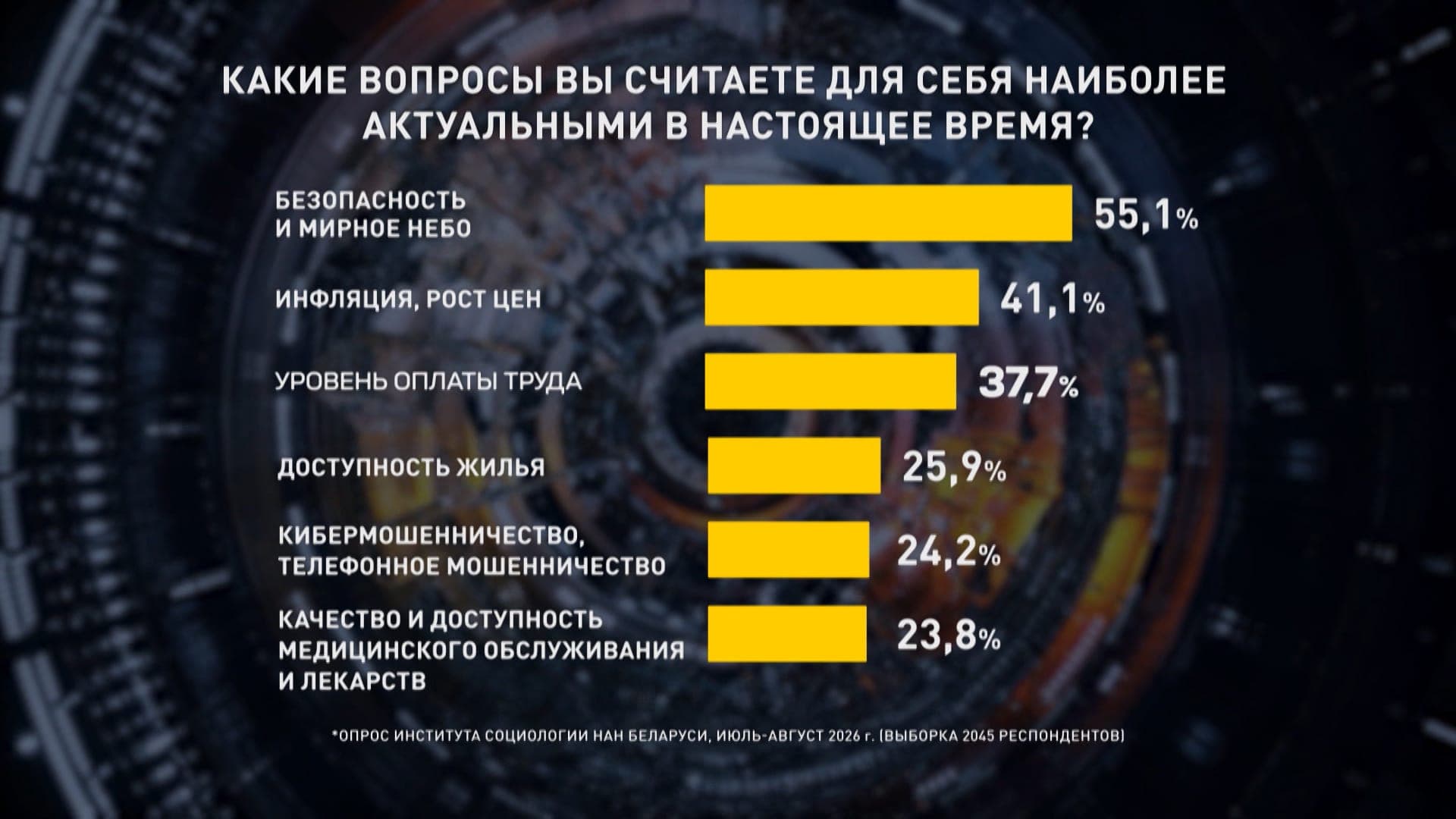
Belarus values peace and maintains a strategy of good relations with all countries, regardless of political differences. Sociologists have published the results of the third – final – block of large-scale research. It concerns the international agenda and what matters in everyday life – security, information, communications.
For Belarusians, peace is not only the absence of war, the conditions for development. For the first time in the history of sociological research, peace and security are more important than store prices and inflation. Health and housing are almost as exciting as phone scams. A little less pensions, tariffs for utilities. Not so acute – ecology, quality of education, corruption, leisure.
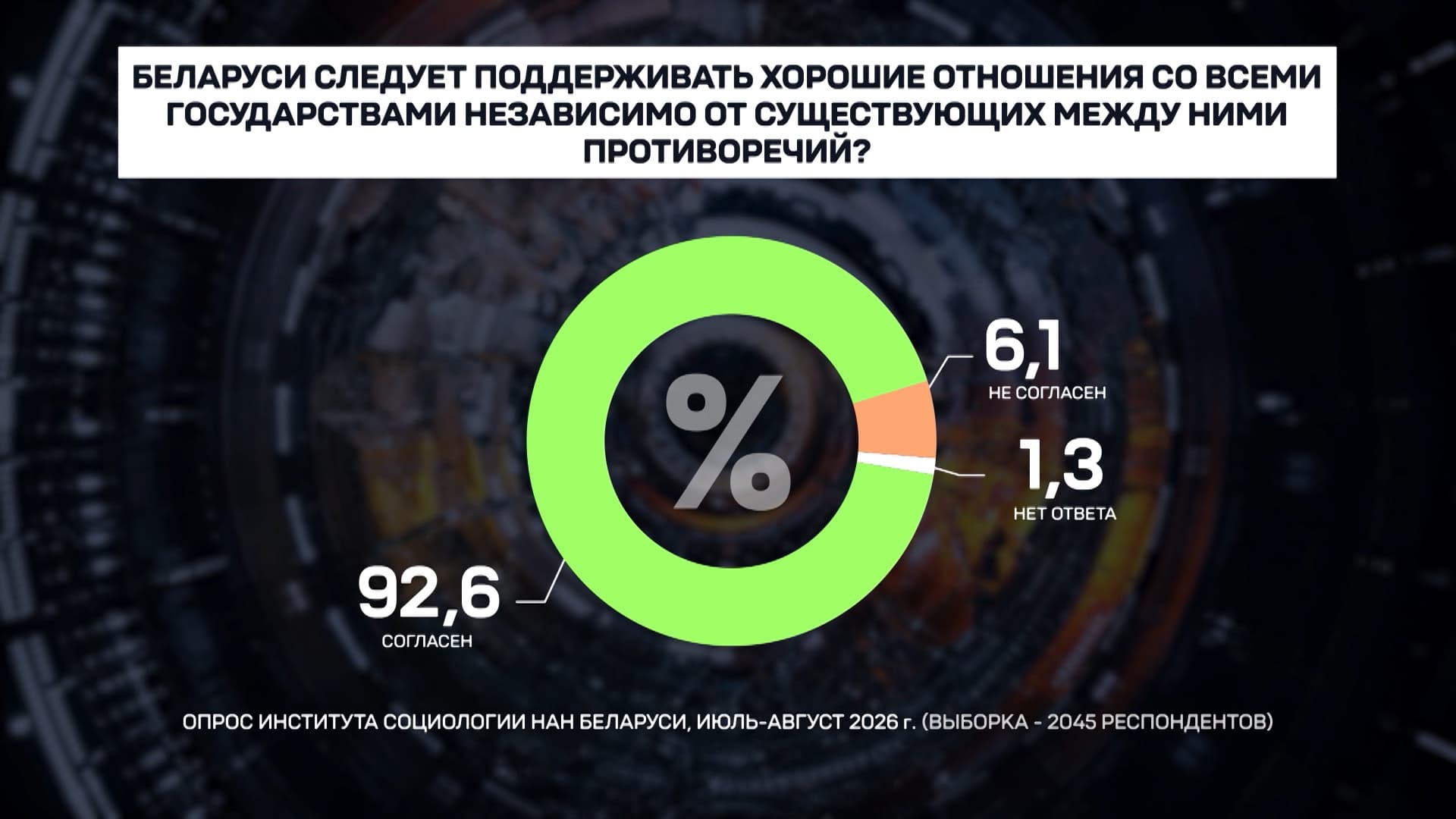
Vitaly Punchenko, Deputy Director of the Belarusian Institute for Strategic Studies: Despite all the geopolitical difficulties, which, despite the confrontation, Belarusians retain rational thinking, conflict-free thinking, and maintain common sense. The overwhelming majority of Belarusians, 92.6%, are in favor of building good relations with all countries of the world, regardless of the existing contradictions between them.
Human relations, not a national feature, have always been the defining principles of friendship and a solid foundation for cooperation. Half of the respondents support further rapprochement with Russia, supported the opinion by the development of tourism and other areas. There's a trend towards China. Most of the young people showed a desire to learn. And even a cautious but optimistic rapprochement with the United States. Sociologists associate such a course of thought with frequent contacts, as well as the desire to stop the war near our borders. Friendship in general is characteristic of the Belarusian mentality, it is worth looking at the ethnic structure of our country, where representatives of 150 nationalities live.
Alexander Rumak, Commissioner for Religious Affairs and Nationalities of the Republic of Belarus: These days there is a festival of Belarusians abroad, Belarusians from different countries of the world, from the Russian Federation, from the Baltic States, from Poland, from Italy, from the United States of America. And they confirm that here they see something completely different from what they hear in the media, they see kindness, respectful attitudes of people. They talk about the difficulties that they overcome in order to come to their native land.
The majority of Belarusians responded positively to the question of trust in the state media. They are interested in what is happening in the country and the international agenda. Television has not sunk into oblivion, most receive information through the Internet, and this is also the reality of time. People over thirty are most involved in what is happening, interest increases as they grow older. There is another information-neutral category: 20% are not interested in what is happening. According to sociologists, this is good and not good, rather the reality of the information world, which not everyone is able to withstand, someone prefers to concentrate on themselves.
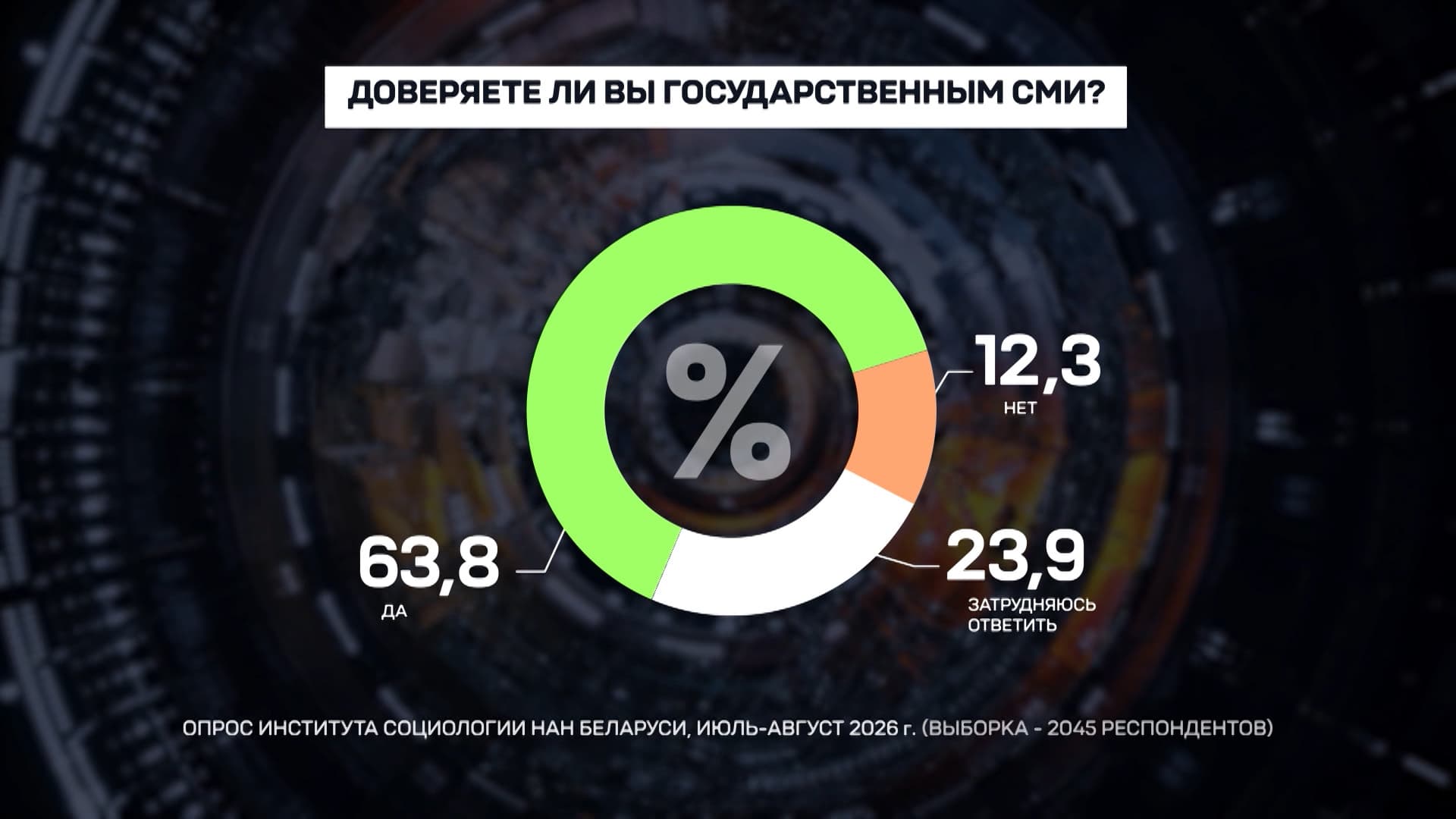
Nikolai Buzin, Chairman of the Standing Committee of the House of Representatives of the National Assembly of Belarus: Let's make a comparison. Currently, 32% of the US population trust Donald Trump. Merz, the German chancellor, boasts no more than 10% support.
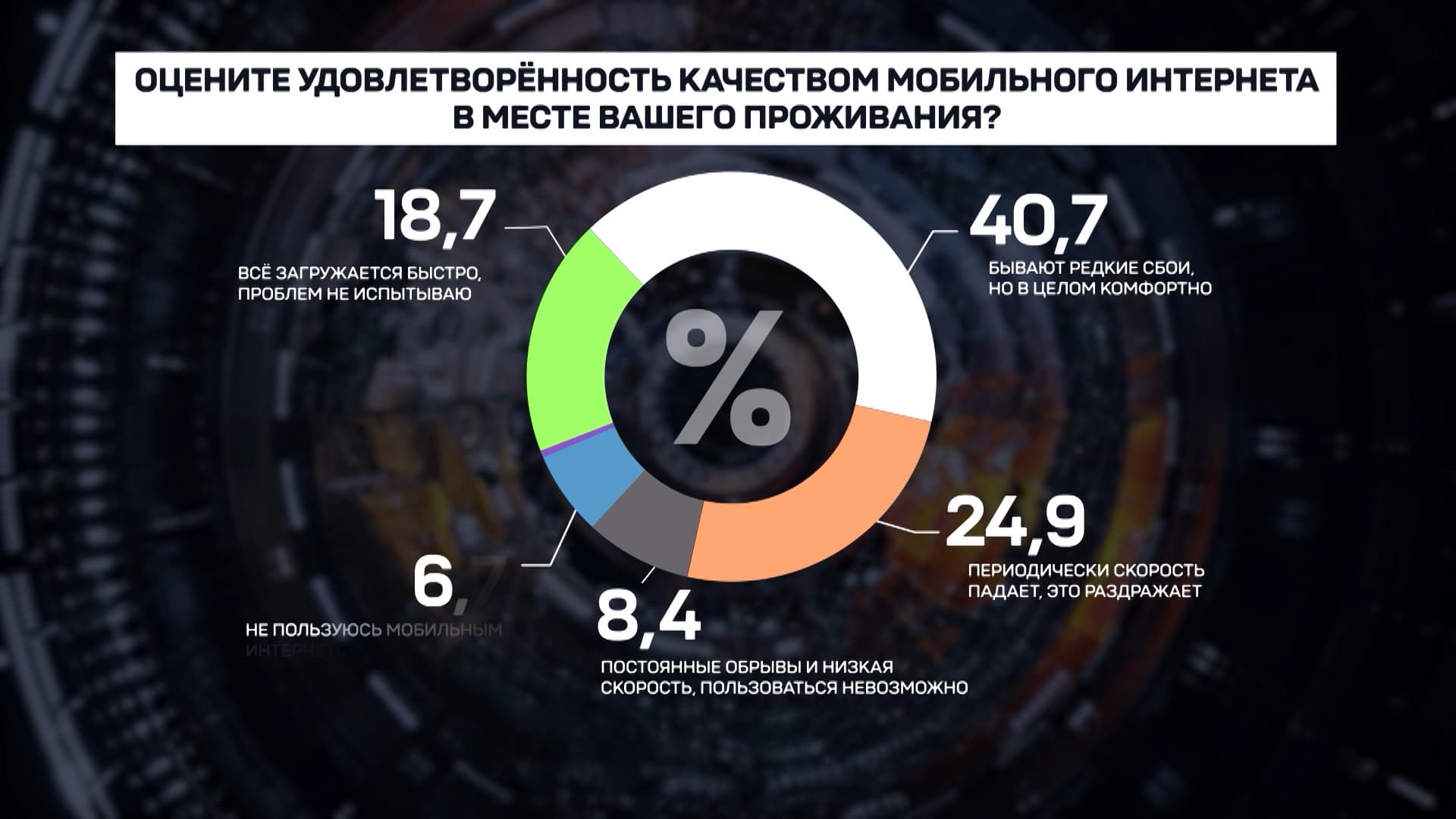
As for the issues faced by every Belarusian in society, at home, at work, opinions may vary by age and territorial basis. For example, 40% of mobile Internet users report rare communication failures, most often dissatisfied with young people and residents of rural areas. When asked about shopping, with the growing popularity of marketplaces, most still prefer stores. As for road safety, a third of pedestrians surveyed expressed concern.
Nikolai Sukhotsky, Deputy Director of the Institute of Sociology of the NAS of Belarus: Of course, there is something to strive for here, because, again, the level of satisfaction and security in Minsk and the regions. It is clear that in the capital, this issue is more concerned about citizens, capital residents. And therefore, of course, in this regard, we can continue to think about the regulation of these issues. Because, of course, it seems to me, the issue of traffic safety and especially the movement of pedestrians, scooters, it is necessary to monitor these issues in detail, to monitor and improve this situation.
Two thousand people shared their opinion, the balance of ages and gender equality were observed. Social research – not for the sake of interest, but a sensitive barometer – makes it possible to diagnose vulnerabilities in society. Where does it hurt? What's good? What plans? All the data will be carefully analyzed and drawn conclusions – this will allow you to see the strengths and weaknesses of all important areas. And take into account in the further development strategy of the state.


