
What it is to spend a Sunday in French and why Russians dream about it
Russians, tired of permanent stress, today a new fashion for “weekend idleness”, they are also “French Sundays”
According to recent studies around the world, almost every modern adult resident of the metropolis lives in conditions of constantly focused attention and unlimited accessibility. In other words, we are always connected and invariably effective, and to demonstrate the opposite is to immediately reduce the degree of trust in ourselves, and accordingly, our status. Yet behind closed doors, even the most effective are increasingly admitting that they are tired of being.
- I have one secret dream, the top manager of a large enterprise admits on condition of anonymity. I will never talk about it out loud, because the employer for such a dream can fire, and relatives will call a psychiatrist. The dream is to lock yourself in an apartment, turning off the doorbell and all phones, not to open or answer anyone. And don't bite yourself for it. Believe it or not, I cherish this dream more than any bonuses, trips or new things.
“Get off the damn wheel,” in her own words, our interlocutor can not because of the family. At one time, eternal employment spoiled her relationship with her husband, and a high income allowed her not to make any concessions. As a result, on her shoulders are two teenage children who are used to not knowing anything about refusal, as well as an elderly mother receiving expensive treatment. The lady manager is sure that in her situation, she can only quietly hate her job.
But since 2024, when the International Stress Institute, based in Canada, released a study showing that people who practice at least one day a week without tasks are 30% less likely to suffer from professional burnout and show greater effectiveness on weekdays, a trend in the West has begun to abandon productivity, at least on weekends. Initially, the employers themselves promoted it in their own interests, wanting to see employees rested on Monday, rather than exhausted by a “productive weekend”. For less than two years, the fashion for “legal weekend idleness” has also occupied social networks: influencers promote it under the tempting name “French Sunday”. This is a conscious rejection of the 24/7 productivity that has worn many out: no to-do lists, no attempts to “success all,” no race for self-development on the weekend. Adults, exhausted by the race for “successful success”, try to regain the right to legal “do nothing”, realizing that this is the only way to fight burnout.
Rest in French!
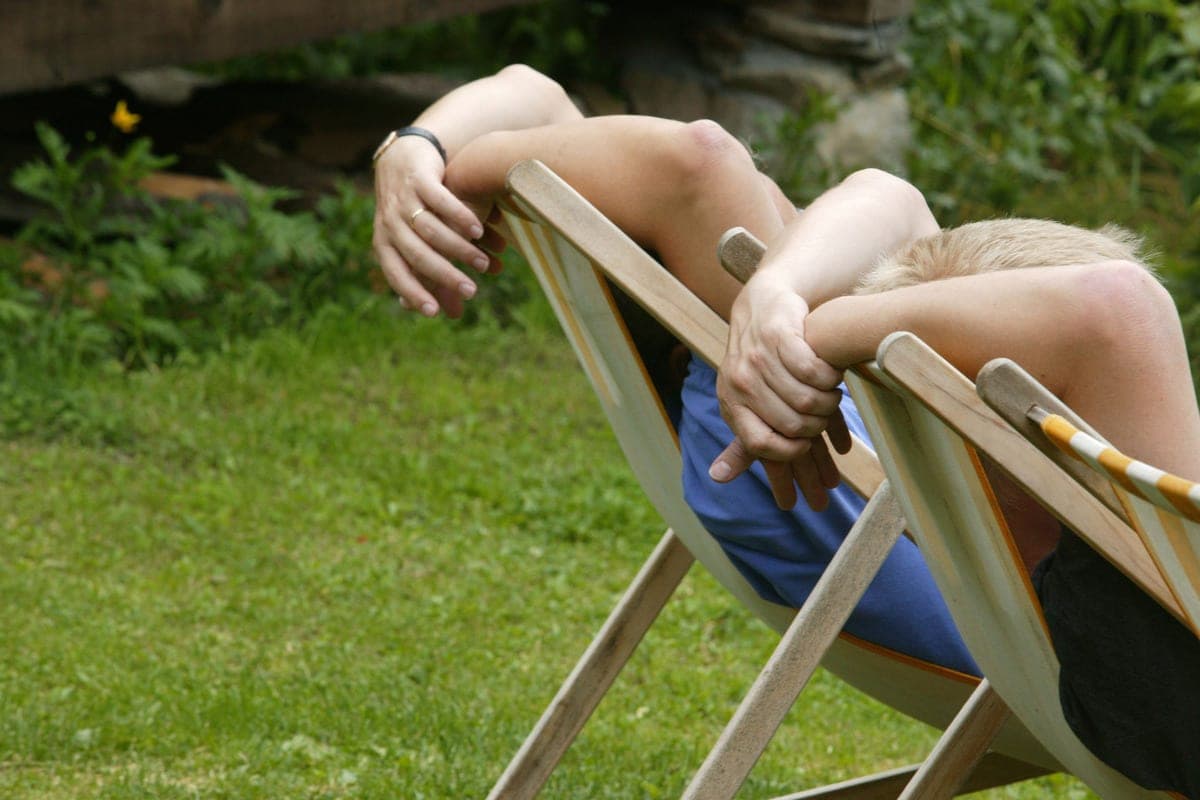
Thus, a trend was born, which social networks are described by words that many people have missed - sweet imperfection, slight negligence, slowness, enjoyment of the moment ... The time of ostentatious success and uninterrupted employment has dragged on and had time to tire, let’s finally live for ourselves! Agreed? French Sunday is a day you allow yourself to spend, putting aside the guilt of a “failed day off.” No list of tasks, planned self-development and desire to benefit from every free minute in general - and most importantly, no regrets about the "wasted" day. However, the concept of “French Sunday” is not just laziness. This is a conscious mental health strategy. The bottom line is simple: on Sunday, a person does not do “useful” things. He doesn't iron shirts for a week, doesn't answer work letters, doesn't plan a family budget, and doesn't take children to museums for educational purposes. This is a time for contemplation, slow breakfasts, reading books and “aimless” walks.
Supporters of this idea connect it with France and Europe as a whole because Sunday is traditionally considered a time for family, family communication and recuperation. In many European countries, on this day, even shops and catering services work on a shortened schedule or do not open at all, which involuntarily forces people to move away from the daily bustle and devote time to themselves and their families.
- The most difficult thing for people is to stop optimizing and making productive every second of their lives, even after hours, says American psychologist Alex Snyder, for his compatriots this is also a big problem. We have the right to decide for ourselves what “time spent usefully” means, only for some reason we forgot about it.
On this day you need not to set an alarm clock and do everything slowly and aimlessly, just like that - eat, walk, communicate. It is necessary to “continue” to regain connection with others and with yourself.
- Such a rest really benefits, agrees therapist Angelika Zubova. We always advise to lead an active life, find an exciting activity, include physical activity in the daily schedule and so on. But there are periods when these useful things can and should be postponed to give respite to both the head and the body. As the non-stop drive to “catch up to success” and benefit from every minute ends up exhausting and devastating.
“Leave yourself alone. And me too
Domestic psychologists agree with Westerners that abandoning productivity 24/7 is a protective reaction of the psyche. But in what is happening today with many of our fellow citizens, they correlate not so much with the “Euromode”, but with the forgotten philosophy of downshifters, over which energetic careerists and hunters for “successful success” sneeringly laughed about 15 years ago. Downshifters in the well-fed pre-pandemic years were those who for no apparent reason, except for their own internal moods, gave up career and social ambitions, leaving for peace and self-discovery in places where it did not matter who achieved what, no one asked about it and judged others by their position in society and money. At first, such islands of peace were considered Indian Goa, Indonesian Bali and the small islands of Thailand.
- When I first came to Goa, and it was 15 years ago, in the midst of round-the-clock competitions, who is more successful, both in real life and in virtual life, I was greeted with the motto “Be in the flow and trust the space,” says Vlad, a Muscovite who escaped to the Indian wilderness as a manager. I was so driven and exhausted, although no one in my Moscow circle believed it. Well, you have a great salary, career prospects, a cool car, expensive watch - how can you be exhausted?! But my intuition told me that my resources were at their limit, and I needed a pause if I didn't want to go on artificial stimulants forever. The worst thing is when you don’t want anything else, and everything you do is through strength. And to be in the flow and trust the space is, in simple terms, to do nothing, only to contemplate, you can inside yourself, and reflect. Or you can not even think, you do not have to report to anyone. And you can keep quiet. You don't owe anyone anything but yourself. I don't owe myself anything.
According to Vlad, in Goa at one time even seminars were held on the topic of how to leave yourself and others alone. Because it's a lot harder than many people think. However, then the cult of money and hierarchy reached the Goan party: at first, all those who found the strength to abandon the usual way of life, abandoning the city bustle and benefits that bring their business or work for a “cool uncle” were considered cool. But then among equals began to appear those who are "evener" - the most enlightened, the most promoted gurus, all sorts of seminars and trainings turned from help to a way of earning - and everything returned to normal. I guess that's how people work.
Contrary to what has been said, not all Russian psychologists are inert: some, if you believe them, managed to change the vector. Today, when even the most purposeful began to bend under the weight of exorbitant stress, attitudes to so-called “mental hedonism” – allowing yourself to do nothing – have changed. However, not everyone has yet understood how to use this kind of hedonism. After all, this is not physical hedonism, when you know to enjoy carnal joys - eat, drink, love
- Leaving yourself alone is an idea, in fact, not bad, says psychologist Andrei Vashchenko. But, having made such a decision about yourself, you will have to leave your loved ones alone, including children. Not everyone understands that. And even those who understand don't realize how difficult it is. Mental or moral hedonism is confused by many with bodily hedonism, when a person consciously allows himself any carnal pleasures and enjoys it. The meaning of non-physical hedonism is also based on the level of self-permission, but on a different level. For example, can you afford to spend the whole weekend with your phone turned off? Do you care about the traditional cleaning of the apartment and the purchase of groceries for a week? Can you do it if your family is hungry and in the mud?
According to the estimation of shrinks, faced with those who want to “take and drop everything”, the greatest difficulty of moral hedonism is that some can overdo it, and others, let’s say, can not cope. The latter threatens more those who have a special need to paint minute by minute even the weekend is just not, they just believe that being effective every minute of your life is cool. And they drive themselves into a tight schedule, and with it, into stress. And watching as their environment continues to hunt for “successful success”, they will not be able to pause enough time to recover and will not get out of the “Groundhog Day” and the associated stress. And also add to it the feeling of guilt for those days or even hours on which fell out of the unspoken contest.


