
Digital transformation of Russian industry: from individual solutions to connected platforms and new business models
How to combine data, human equipment, and AI tools into a single lifecycle environment
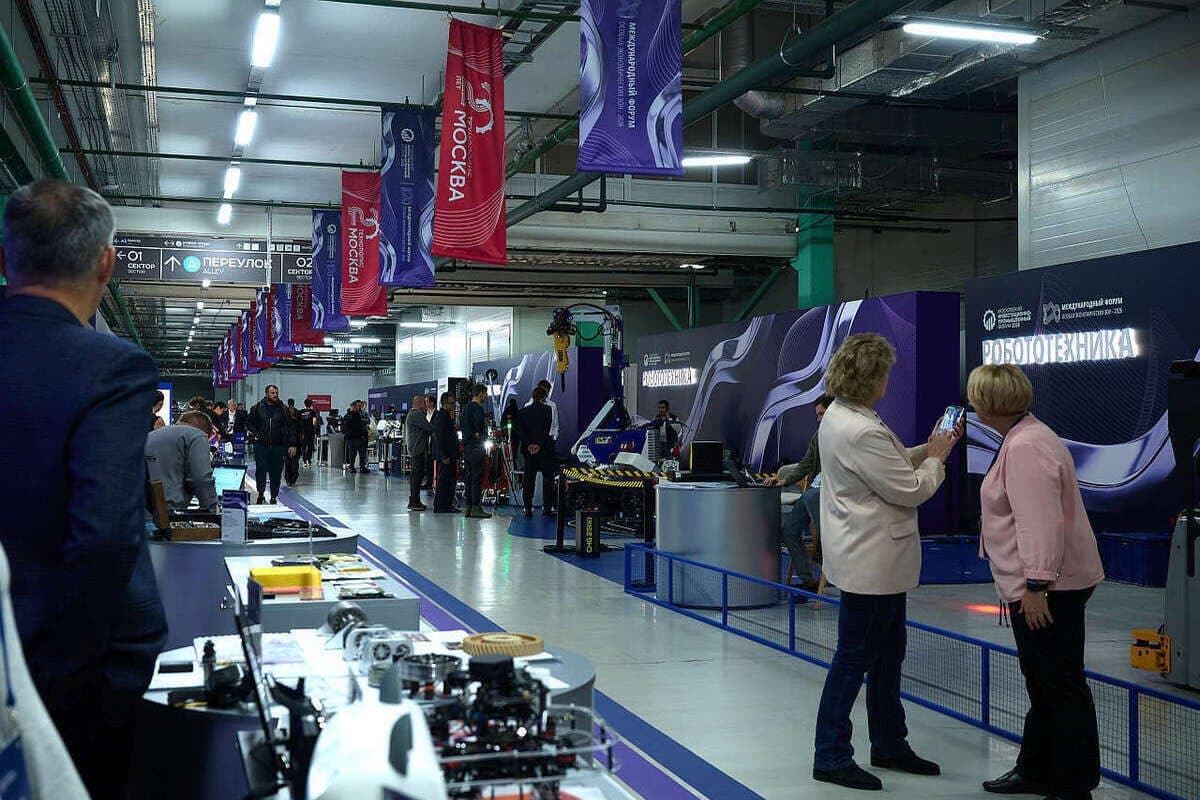
At the session of the Moscow Investment and Industrial Forum, experts discussed the transition from disparate digital products to integrated platforms covering the path from engineering idea to operation. The introduction of connected systems, robotics and artificial intelligence allows to reduce the development time, make production more transparent and preserve the unique knowledge of enterprises. The discussion resulted in practical steps to improve labor productivity and create a unified digital environment.
Pavel Bilenko, CEO of Dijikai, began with the fundamental question of value creation. “Most of all create industrial enterprises – leaders and directors of industrial enterprises”, – said the speaker. He introduced an interactive service with 12 digital entities to argue with. “Among them, for example, Mr. Afanasy Kozlov – in digital incarnation he is sometimes rude, stands on the edge,” said Bilenko.
“The important question is: are we fast enough to turn experiences into new skills to achieve goals?” As a solution, he proposed the concept of “Netflix for Industrial Enterprises,” a library of pre-recorded materials. “We do not have enough time to develop this array,” he explained. The company is also working on a chain compensation index, which assesses the completion of production ties by analogy with the Chinese experience in building clusters.
Timur Islyayev, co-owner and CEO of GRT Consulting, summed up the interim result, noting that “it is not the number of systems that matters, but how the process is built.” He urged the participants to join the club of manufacturers and the sites "Production of Moscow" and "Technopolis", stressing that high-quality data on machines is the basis of intelligent management.
Vasily Churanov, Managing Partner of Tsifra Group, revealed the topic of industrial data in practice. “For industrial artificial intelligence to work, data is also needed,” Churanov said. Tsifra Group monitors 18,000 machines from 430 customers (15-18% of the market). Ten years ago, measurements showed shocking figures: machines actually worked only 30% of the time, idle 70%. Now the installation of the monitoring system gives an increase in productivity by 5%, and systematic work with analytics by another 10-15%, which saves factories hundreds of millions of rubles.
The main problem was the fragmentation of data. “Everyone collected data in their own way, and they could not be compared,” the speaker explained. To solve the problem, Zifra Group initiated the development of national standards. “In 2025, we issued 8 national standards related to the collection of industrial data; in 2026 we plan to release about the same,” Churanov said.
Anton Meshcheryakov, head of industrial projects of the Skoltech AI Center, spoke about the creation of fundamentally new approaches for technological sovereignty. “Our difference from classical integrators is that we are looking for answers to questions that are not yet in the world scientific literature,” he said. In 2018, the Institute began developing its own software stack, which became critical in 2022.
Meshcheryakov warned of the dangers of the accumulation of “dead” technologies, comparing the situation with AI and the history of digital twins. To avoid inefficient algorithm re-creation, Skoltech is developing a multi-agent engineering AI system. “Its goal is to unite disparate agents into a structured system,” the speaker explained. In a pilot implementation in mechanical engineering, it shortened the layout time of the workshop from weeks to three days, reducing capital costs.
The session showed that Russian industry is moving from experiments to deep integration. Success now depends on 3 factors: rigid data standardization, the creation of platform AI solutions and the development of human capital.


