
Commemoration Day of the Great Martyr Eustathius Plakida: what can and cannot be done on October 3
On October 3, Orthodox Christians commemorate the Great Martyr Eustathius Placidus, his wife Theopistia, and sons Agapius and Theopist
History of the holiday
Saint Eustathius before baptism bore the name Placidus and was a Roman military commander under the emperors Titus and Trajan. He came from a noble family, possessed great wealth, and his bravery in the war was so well known that the mere name of Placida aweed his enemies.
Before he knew Christ, Placidus did many good deeds: he fed the hungry, clothed the naked, helped the needy and freed many of the prisons. Once on a hunt, he pursued a deer that stopped on a high rock. Placidus suddenly saw between the horns of the animal a shining Cross, and on it the crucified Son of God. Astonished, he heard a voice, “Why do you persecute Me, Placidus?” Falling from the horse, Placidus asked, “Who are you, Lord?” He answered, “I am Jesus Christ, God incarnate for the salvation of men.”.
Placidus believed and was baptized with his wife and two sons. In baptism he received the name Eustathius, his wife – Theopistia, and his sons – Agapius and Theopist.
The Lord warned Eustathius of impending trials like those of righteous Job. Soon the saint lost all his possessions, and during his journey to Egypt he lost his wife and children. For many years he wandered in poverty, but did not murmur at God. Later, the emperor found him and returned him to the rank of military commander. During the campaign Eustathius miraculously found his wife and sons. However, under the new emperor Hadrian, who arranged a pagan festival, Eustathius refused to offer sacrifices to idols. The enraged emperor martyred the Christian and his family.
In Russia, Saint Eustathius (in the Russian manner - Astafia) was called the Windmill. At this time, strong winds often blew, and in their direction the weather was judged for the coming days and for the whole winter. “Everyone is a windmill,” they said.
What to do on October 3
On this day, believers visit temples, where services are held in honor of the Great Martyr Eustathius and his family. The saint is prayed for strengthening faith, patience in sorrows and help in difficult life situations.
In Russia on October 3, it was customary to ventilate clothes and bedding. People believed that the wind blows disease and failure out of things.
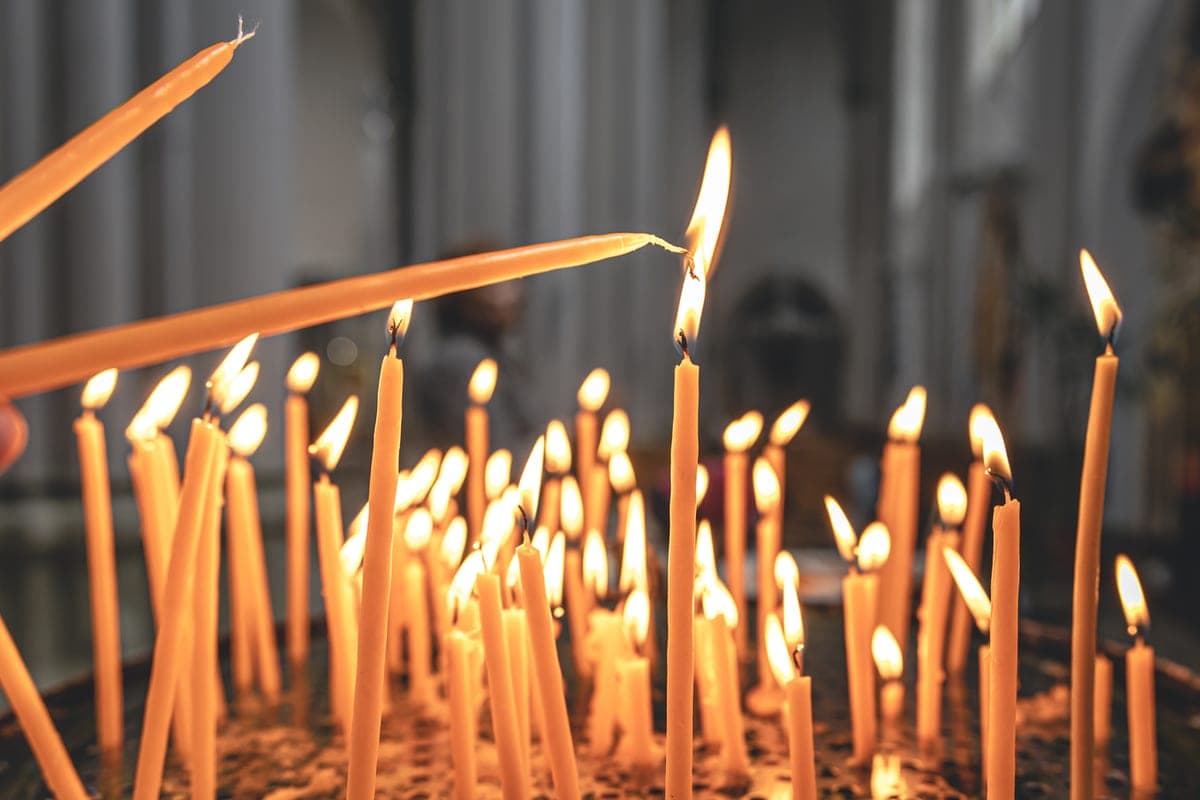
Housewives washed windows and mirrors, adding holy water to the water to prevent evil forces from entering the house. The dwelling was fumigated with juniper, St. John's wort or wormwood - it was believed that this protects against evil spirits. In the evening, a candle was lit to protect the house.
On this day, they cut down late cabbage, touched by the first frosts. It was believed that after the cold it acquires a special taste and is ideal for salting.
Men fertilized the land with manure - this was supposed to ensure a rich harvest the following year.
Traditional treats on Astafia Vetryak were considered pancakes. The hostess baked them according to different recipes - from vegetables, on kvass and not only.
On this day, the wind was also talking: they threw hot coals into the fire, fanned the flames and asked the fire to burn more. Then the women struck the aspen branch on the threshold of the house, believing that such a rite would save the house from misfortune.
It was believed that on the night of October 3 to 4, you can see a prophetic dream. To do this, you need to lie down before midnight and eat a few nuts before going to bed.
What not to do on October 3
People's signs for October 3
The main focus of the day was the wind. In his direction judged the weather for the coming days and for the whole winter:


