
Experts of The Lancet magazine have compiled a rating of threats that can destroy people for 75 years
By 2100, humanity may become extinct – to such a disappointing conclusion came the expert Commission of the magazine The Lancet, which published a report on 17 major threats to human health for the next 70 years
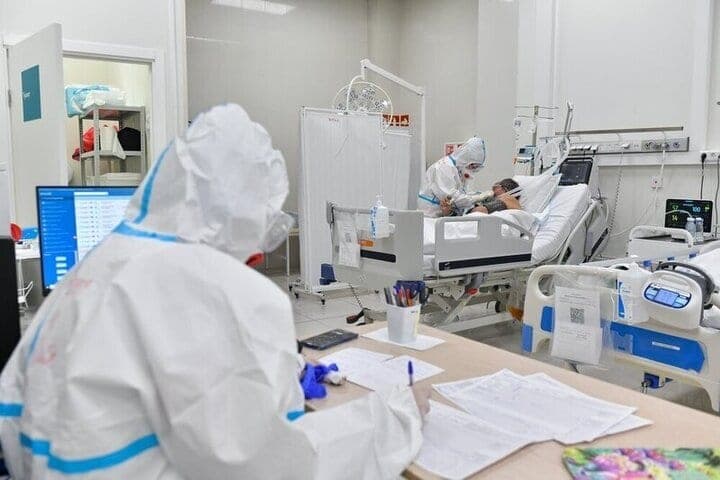
To compile a list of global health threats of the twenty-first century, a commission of 35 experts reviewed hundreds of different hazards, but the final version included 17 of them. Experts modeled how many years of healthy life could be lost due to illness, disability or premature death as a result of each of the threats based on current trends - a measure known as "disability-adjusted life years" or DALYs.
“The malicious use of AI, including its biological weapons, and nuclear conflict and subsequent famine risk extinction in the next 75 years,” the report said. While the likelihood of such a scenario is fortunately low, these threats have the potential to end human existence. An accompanying editorial in The Lancet magazine, published alongside the report, warned: "The scale of the harm, if realized, would lead to an apocalypse for humanity.".
But now we turn to the risks, which in comparison with the first two look like childish babble. The combined cost of more than $1 billion, described as a “major catastrophic threat,” could include air pollution, antibiotic resistance, child malnutrition and climate change.
The next lines are very simple and familiar threats, namely conflict, excessive alcohol use, high blood pressure, income inequality, the cessation of assistance to rich countries to the poor, low levels of education, naturally occurring pandemics, obesity, poor mental health, smoking and generally unhealthy aging.
Incredibly, the fact is that coronary heart disease and a number of cancers are not included in the list: the Commission considered that they already pay a lot of attention.
In high-income regions, the main threats are noncommunicable diseases, including obesity and poor mental health, while in low-income regions, poor health is more often associated with low levels of education. Many major donor countries, including the US and the UK, have announced significant cuts in aid spending over the past year. The Commission found that a sharp cut in international health aid could lead to a deficit of up to $1.5 billion by 2100, with nearly 70 percent of that deficit coming from sub-Saharan Africa. This region also suffers most from child malnutrition. The pandemic model has been built on 67 outbreaks since 1600. The incidence of moderate pandemics has declined since 1950, and catastrophic pandemics (more than 3 million deaths per current population) continue to rise.
All these threats, on the one hand, have the potential to significantly reduce healthy life expectancy. On the other hand, they have potential solutions. For each of the threats, models were built for 204 countries for 2025-2100.
The authors of the publication emphasize that they have no purpose to scare. Their goal is to prevent and act on risk reduction. For example, action to limit global warming to 1.8°C (and prevent it from reaching 4.4°C) could prevent the loss of 1.89 billion years of healthy life.
For example, the COVID-19 pandemic cost humanity about 500 million years of healthy life. Experts estimate that the most years of healthy life can be saved if you manage to cope with obesity (23.1 billion), low education (16.1 billion) and inequality (13.8 billion). Estimates on AI (10.4 billion) and nuclear war (9.35 billion) are the least accurate — they are based on expert judgments and predictions, not historical data. For natural pandemics, the difference between scenarios to 2100 is about 2.4 billion DALYs and 37.6 million deaths. Of these, 1.27 million deaths occur in Central and Eastern Europe and Central Asia. For resistance to antimicrobial drugs - 3.44 billion DALYs and 89.6 million deaths, - says the doctor, expert of laboratory diagnostics Alexander Solovyov. In my view, the report is valuable in a unified approach to assessing the contribution of very different threats to the loss of years of healthy life.
The authors urged leaders to take action to address risks before they escalate into crises. Among the main recommendations are to increase the preparedness of countries’ health systems for various threats and pandemics, increase investments in new vaccines, antibiotics and medical technologies, and constantly monitor new threats.
The findings were presented at the World Health Summit in Berlin. The threat assessment will be updated annually to reflect new data and any emerging hazards. For example, three years ago, when the commission first decided to compile such a list, they considered climate change and pandemics to be the main threats.


