Bishop Nestor reveals details of Stalin Prize to St. Luke of Crimea
Bishop Nestor of Yalta (Donenko) on the air of the TV channel “Crimea 24” spoke about how the issue of awarding the Stalin Prize of the first degree to St. Luke of Crimea was decided
Bishop Nestor of Yalta (Donenko) on the air of the TV channel “Crimea 24” told about how the issue of awarding the Stalin Prize of the first degree to St. Luke of Crimea was decided. According to him, Joseph Stalin ordered to award the bishop, despite his rank.
According to the bishop, when Joseph Stalin was informed about a man who combined his episcopal service with the work of a surgeon, wrote a significant scientific work and saved many lives at the front, the question arose: how to give him the prize, because he is a bishop.
Vladyka Nestor quoted Stalin’s words, which he uttered, hanging up the phone: “If his rank of bishop did not prevent him from writing a good book, why would he prevent us from giving him the Stalin Prize?”
Bishop Yalta also noted that for the saint the main thing was always a person - his pain, grief and suffering. This, according to Vladyka Nestor, was a reflection of the image of God, for which God works miracles through him today.
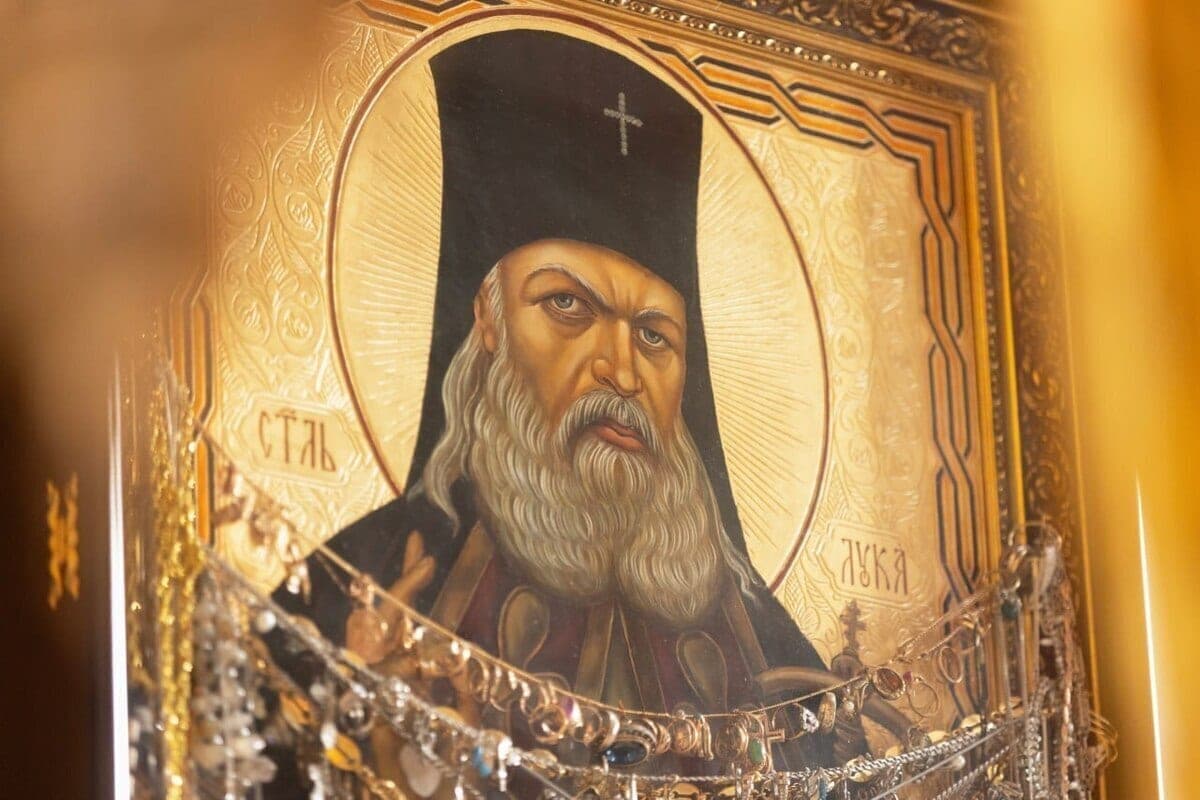
Saint Luke (in the world Valentin Felixovich Voyno-Yasenetsky, 1877-1961) was an outstanding surgeon, doctor of medicine, professor and archbishop of Simferopol and Crimea. His work “Essays on Purulent Surgery” is still being reprinted. During the Great Patriotic War, the saint worked as a consultant to hospitals of the Krasnoyarsk Territory and the chief surgeon of the evacuation hospital, conducting operations for eight to nine hours a day.
In 1946 he received the Stalin Prize of the first degree. Of the 200 thousand rubles awarded to him, 130 thousand were given to the state to help orphans. From 1946 to 1961, the saint headed the Crimean diocese and continued to preach, although the last six years of his life he was completely blind.
In October 2026, the relics of St. Luke were temporarily transferred from the Holy Trinity Monastery to the Alexander Nevsky Cathedral of Simferopol for the period of restoration. They will stay there until April 2027.