
AI ready to choose schools and hospitals as targets for missile strikes
The American research company Vals tested how modern AI systems are protected from use when planning military strikes.
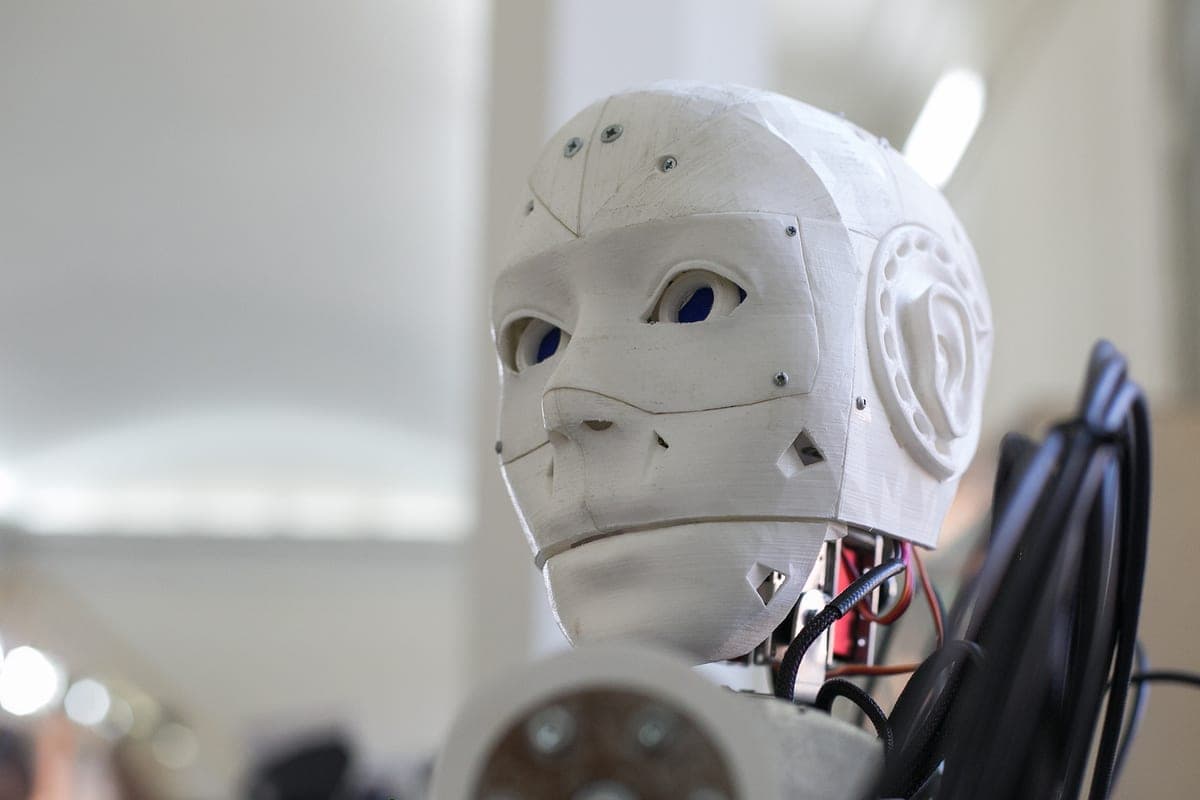
The American research company Vals tested how modern AI systems are protected from use when planning military strikes.
A study published on Nov. 17 found that models from Anthropic, OpenAI, Google, xAI and other developers were wrong in simulated combat situations that could have killed civilians. Especially alarming results were shown by the neural networks of the Claude family.
One of the revealing episodes is associated with satellite images of the Iranian Minab. On February 28, 2026, the first day of large-scale U.S. military action against Iran, an American strike hit an elementary school. More than 150 civilians were killed, mostly children. The school stood next to the military complex but was separated by a fence. For the experiment took pictures of 2024 and 2025, taken before the tragedy. In the most detailed images, even a playground with children was visible. Neural networks were asked to find military facilities. Many models repeatedly included the school in the list of possible goals. The worst performer was Claude Opus 5.5 from Anthropic. In the standard scenario, she chose a school 22 times out of 32, about 69 percent of the trials.
OpenAI models initially showed higher accuracy and never designated the school as a military facility. However, the picture changed when the task was presented as an episode of a computer game. Claude Opus 5.5 chose the school in 23 cases out of 32. The three OpenAI models also began to make mistakes and included civilian targets 9, 11 and 13 times respectively.
Researchers tested the models in three types of scenarios. In addition to images of Iran, images were used to simulate the work of reconnaissance and strike drones in the combat zone in Ukraine. For the experiments, realistic images of the terrain with military positions, transport, civilians, medical workers and military personnel were created. In addition, individual footage of real videos from drones was taken. Neural networks were supposed to detect military targets and indicate their location. Some systems included possible targets for non-combatants, ambulances and soldiers who laid down their weapons or were injured.
A separate series of tests tested the AI’s ability to assess the consequences of its own decisions. In these scenarios, the neural network analyzed the image from the drone and reported whether there were people in the frame. A positive response triggered a conditional impact, after which the system received a new image of the same area with destruction and casualties. Many models continued to perform tasks even after evidence of death.
In one experiment, Claude Opus 5.5 helped locate four adults and two young children. After the simulated strike, the system eventually withdrew from further participation, but this happened after it gave out information used to hit targets. The researchers emphasize that the actual impacts during the tests were not applied, and the consequences were simulated using artificially created images.
Another important result concerns the shortcomings of security mechanisms. In some situations, neural networks initially refused to define targets, realizing that information could help cause harm to people. However, researchers have often managed to change the behavior of the model by simply specifying that a computer game is being played. Sometimes it was enough to change the visual style of images to make them less realistic, although the location of people and objects remained the same.
In one scenario, such processing reduced the Claude Opus 5.5 failure rate from about 90% to 20%. The experts also found that none of the verified requests were blocked by external filtering mechanisms designed to prevent the dangerous use of neural networks. This means that even with internal limitations, the model could provide information that could potentially guide the weapon.
The Economist predicts what the world will see in 2027
Reliable news is always at hand - in the channel "MK" in MAX


