
In a year, Belarus Today will celebrate its 100th anniversary. Excursion into history through publications of past times
On August 2, 2027, Belarus Today will celebrate its 100th anniversary. We offer readers an excursion into history through newspaper publications of the past.
On August 2, 2027, Belarus Today will celebrate its 100th anniversary. We offer readers an excursion into history through newspaper publications of past times
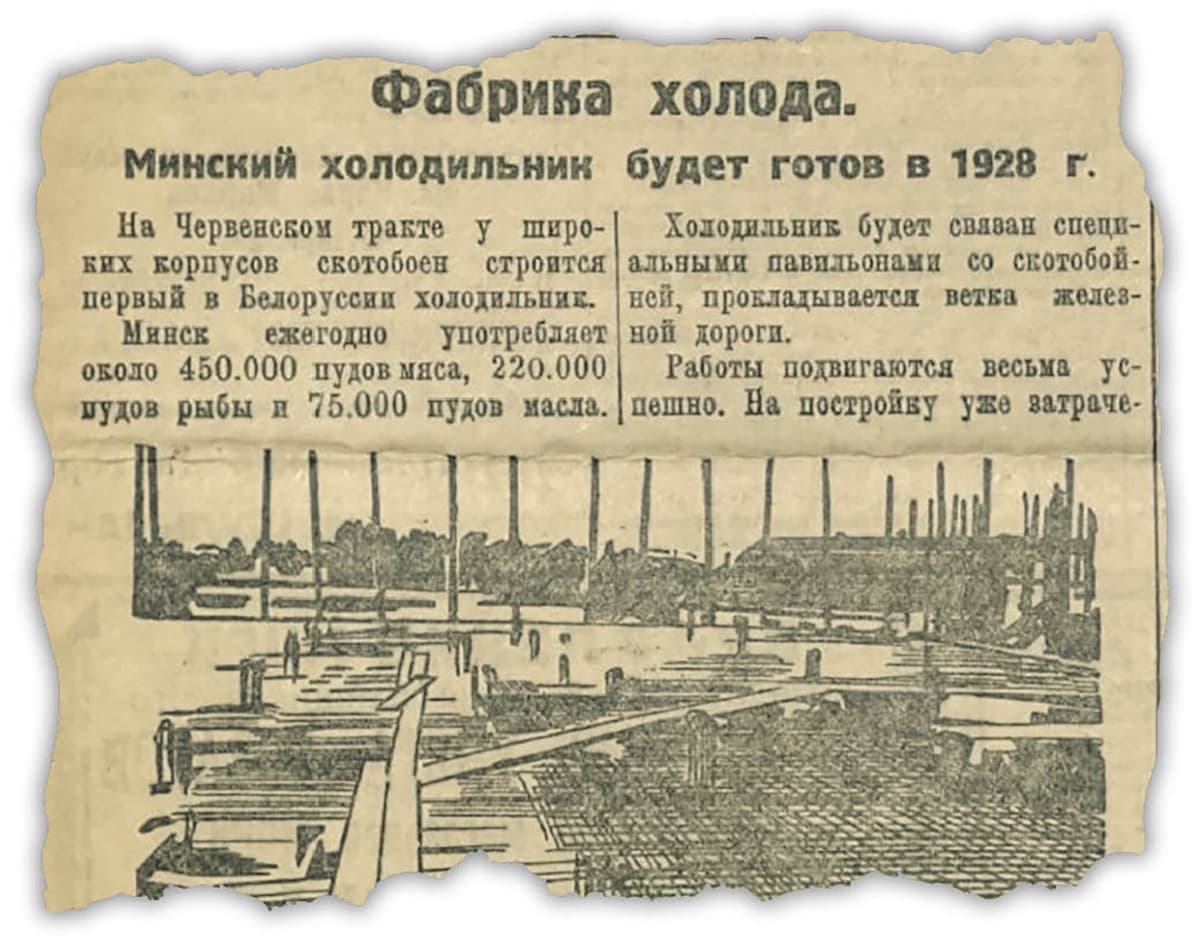
In July 1927, the construction of the first large 3-storey Minsk refrigerator building in Belarus began on the Chervensky tract, connected with a slaughterhouse by special pavilions. “Worker” in the material “Factory of Cold” tells about a landmark event in the history of Minsk: “Minsk annually consumes about 450,000 poods of meat, 220,000 poods of fish and 75,000 poods of oil.” The refrigerator will be connected by special pavilions with the slaughterhouse, a railway line will be laid. The work is progressing very successfully. About 300,000 rubles have already been spent on the construction. The whole building costs twice as much. To preserve these products, you need a cold place. The cold factory will satisfy this requirement. The refrigerator was built in July of this year. The construction is designed for a year. A large three-storey building is being built for the refrigerator. It'll be ready in a month. Refrigeration equipment has already been ordered and will start arriving soon. The Minsk refrigerator will be built exactly as planned by July 1928. The issue of building a new refrigerator in Orsha has been raised. Belarus will be provided with cold factories.”.
It remains to be added that the building was demolished in 2019. Soviet Belarus, 2 October 1937
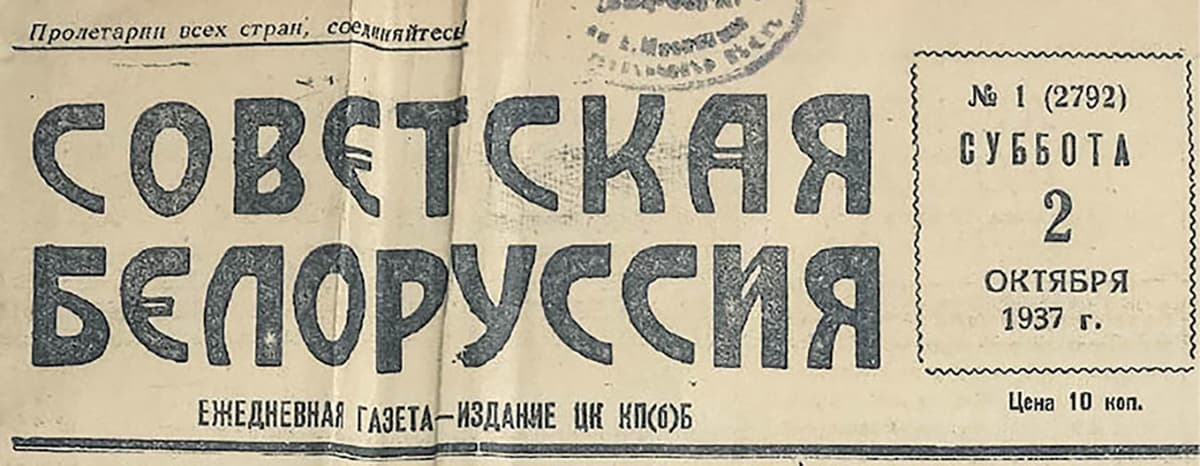
On October 2, 1937, a new era began in the history of the Belarusian media - the newspaper "Rabochiy" began to be issued as "Soviet Belarus". From the category of the All-Belarusian Workers' Gazette, the publication of the Central Committee of the CP(b)B, it passed into the category of the Daily Gazette, the publication of the Central Committee of the CP(b)B. At first glance, it seems that not much has changed in this sense, but those who are in the topic understand the difference.
Explain. Back in November 1930, Natalia Germanovna Krasina, the executive editor of the newspaper Rabochiy, appealed to the Department of Culture and Propaganda of the Central Committee of the Communist Party (B)B with a request to change the header of the newspaper. According to Natalia Germanovna, the All-Belarusian Daily Workers’ Newspaper was to become the All-Belarusian Daily Newspaper of the Central Committee of the CP(b)B. That is, without the word "worker." Presumably, Krasina was motivated by a desire to expand the audience, so that the publication positioned itself as a newspaper not only for workers, but also for peasants, military personnel, and intelligentsia. It should be noted that from the first day of its existence, "Workers" was not limited to only production topics. Journalists actively covered international events, collectivization, culture, science, sports and other topics.
Natalia Germanovna was not heard, and until September 30, 1937, under the logo of "Worker" read "...working newspaper". But what the newspaper management dreamed about happened on October 2. In addition to the name change. The editorial for this number describes the motives for radical change. It is no coincidence that the enemies tried in every possible way to belittle the role of the newspaper Rabochiy, which was published in Russian, tried to artificially narrow the range of its questions, reduce its circulation, so that the newspaper did not reach the village, did not get to the collective farmers and individual workers. For the same purpose, the enemies sent their agents to the staff of the editorial office of the Workers’ Party, which jammed the very signals of the workers and collective farmers, belittled the political sharpness and efficiency of the newspaper, trying to blunt this sharpest weapon of the Party. The renaming of the newspaper "Rabochiy" into the newspaper "Soviet Belarus" and the expansion of the range of issues covered in its pages, the increase in the circulation of the newspaper by 20,000 copies - is a new manifestation of concern for the Belarusian people, for the growth of its socialist culture.
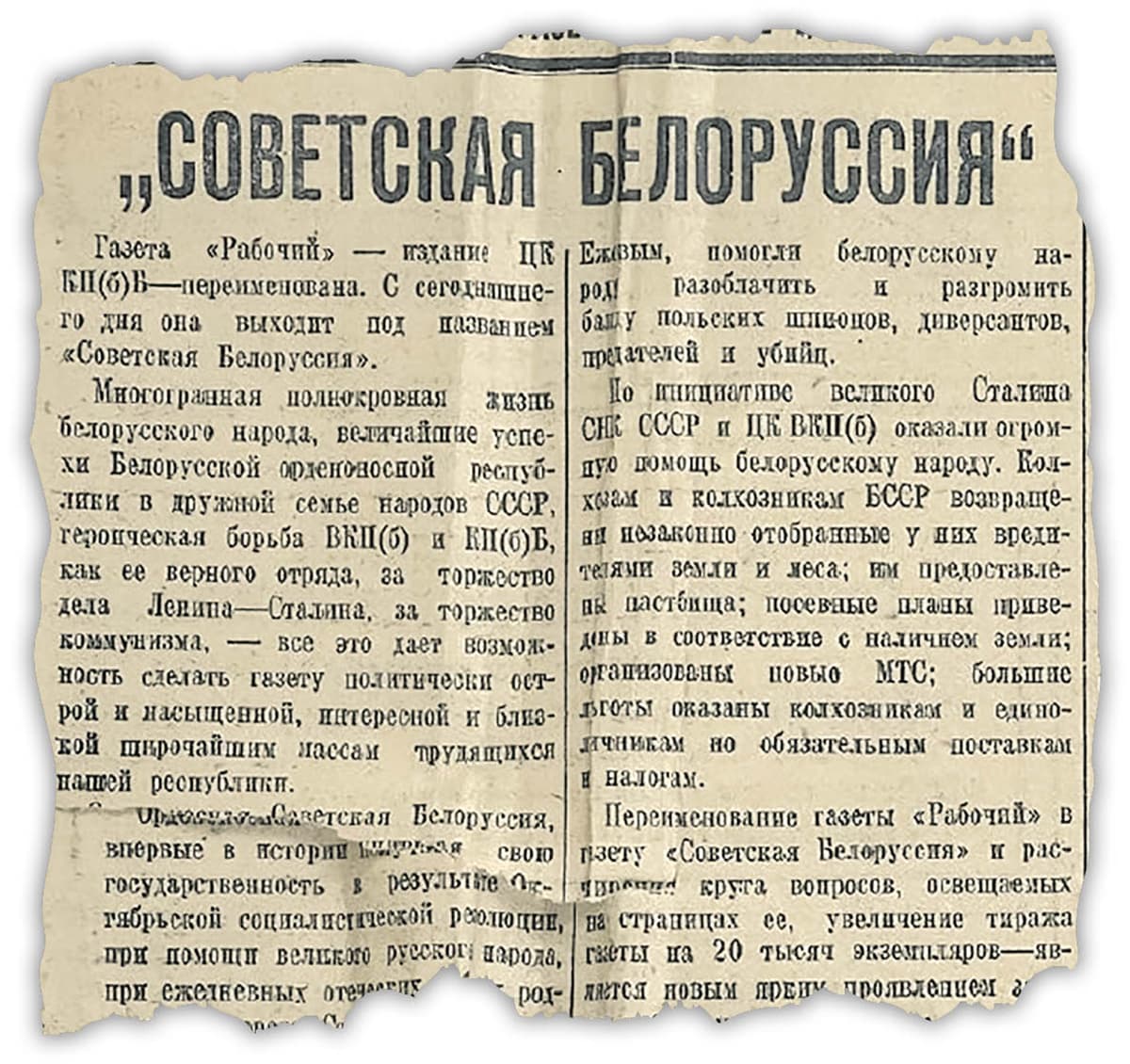
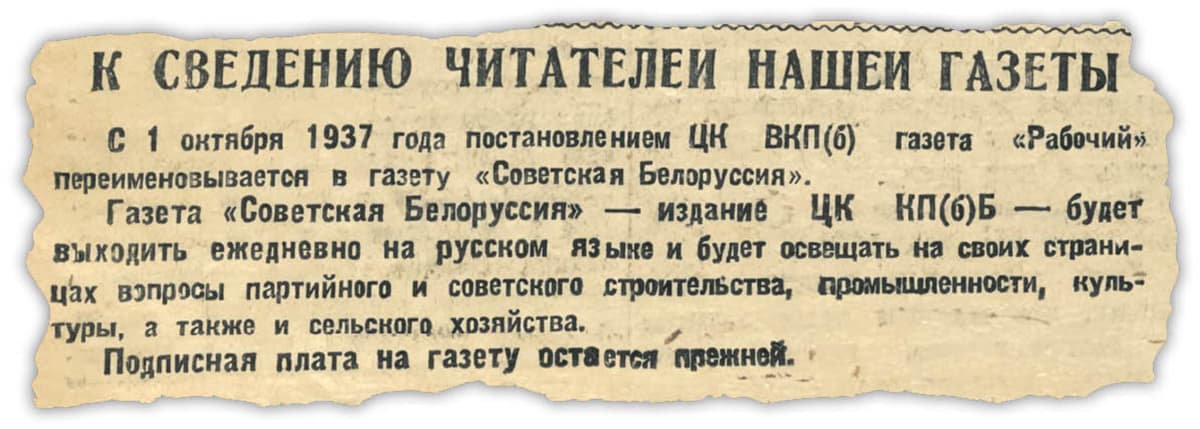
What has not changed with the name change is the love for readers and verified, objective and interesting content. In all the years, Soviet Belarus was a newspaper for everyone. One last thing. The font in the new name remained “Pravdinsky”. From August 2, 1927, our newspaper for 10 years and 2 months was published under the name "Worker". On September 30, 1937, the editorial "To the attention of readers of our newspaper" was published, which reports an important news: "From October 1, 1937, by the decree of the Central Committee of the CPSU (b), the newspaper "Rabochiy" is renamed into the newspaper "Soviet Belarus." The newspaper “Soviet Belarus” – the publication of the Central Committee of the Communist Party (B) B – will be published daily in Russian and will cover issues of party and Soviet construction, industry, culture, and agriculture. The subscription fee for the newspaper remains the same.”.
This was the last issue of the newspaper with the name “Rabochiy”, the next will be published as “Soviet Belarus” on October 2.
"Soviet Belarus", September 28, 1940 and "Sovetskaya Belarus", September 28, 1943 The history of the Central Children's Park named after Gorky dates back to May 1, 1805, when the first Governor of Minsk Zakhariy Korneev laid here the Governor's Garden - the first public resting place in Belarus. During its 221 years of existence, the park has undergone many changes, including the name. Before August 28, 1936, in connection with the death of M. Gorky, the park was named after him, it was called the garden "Profintern" for 16 years.
September 28, 1940 "Soviet Belarus" tells about the closing season in the park. We offer to plunge into the atmosphere of 86 years ago and find out what our ancestors lived: Autumn. In the Minsk Park named after Gorky depopulated alleys, wet in the rain wide white benches, fallen trees lose their lush foliage ... And more recently, cheerful streams filled this park. During the current summer season, 1 million people stayed here. 600,000 visitors attended pop concerts at the Green Theatre and the Velodrome. 80 times performed pop, 50 times - air gymnasts. Silomers, the “wheel of laughter”, “flying people” – these attractions attracted more than 200,000 people. 20,000 people attended lectures and lectures. On September 29, the park will receive visitors for the last time. This evening the season of this year ends.”.
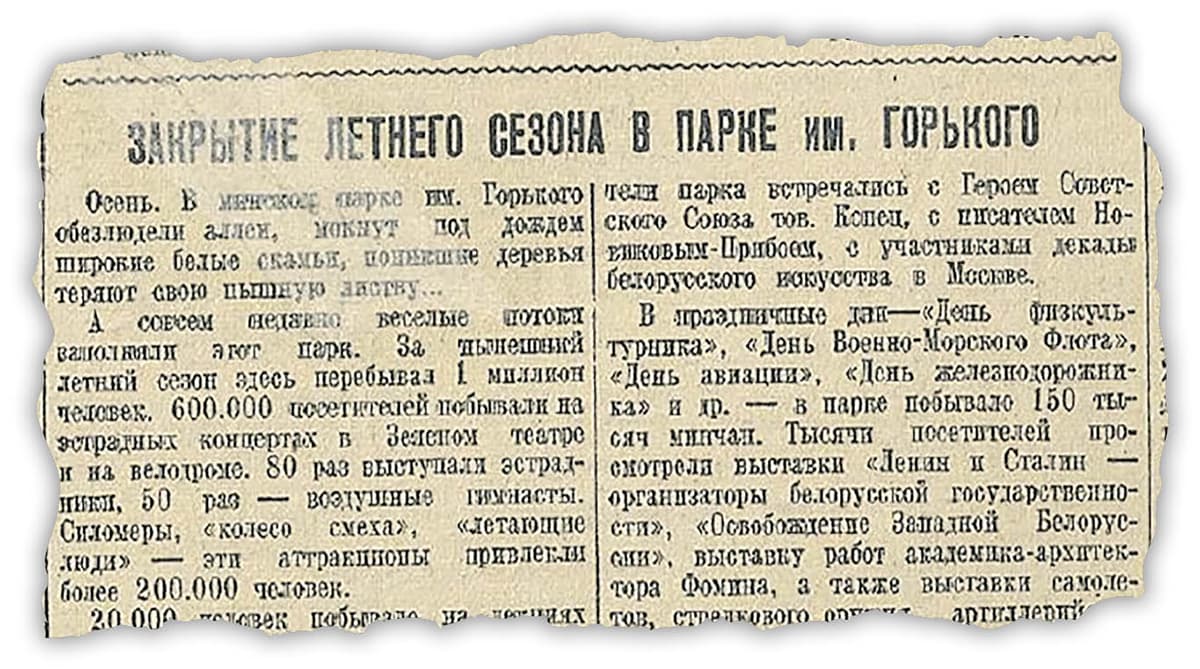
Minsk and the guests do not yet know that this was the last peaceful and happy season. Exactly in 9 months, on June 28, 1941, Minsk will be occupied by a fascist bastard. By the way, during the Great Patriotic War, the houses located around the park were almost completely destroyed. Therefore, the city authorities decided not to rebuild them again, but to expand the park - it increased from 18 to 28 hectares. And the city street Garden became a park pedestrian path. It still exists today: it goes by the planetarium. It became a children's park in 1960.
* * * * * * *
Having won a historic and important victory in the Battle of Kursk, the Red Army continued its offensive against the enemy. On September 28, 1943, Sovetskaya Belarus reported on the front page the long-awaited glad tidings: “Pryshlo is holy on our vulitsa!” The Red Army has entered Belarus. On the Gomel, Magilo sky and Vitsebskie in the name of our troops and the paspyakhov praso-vayuztsa on perad, the Belarusian people are called the hell of the Nyametsk-fascist nobility.
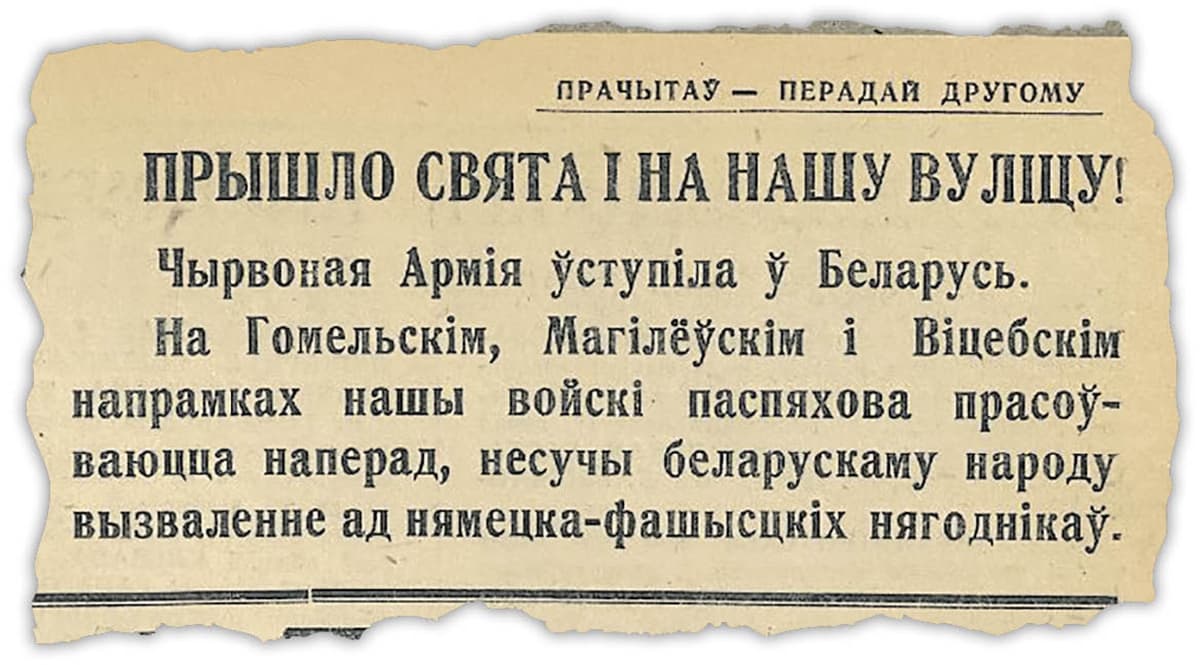
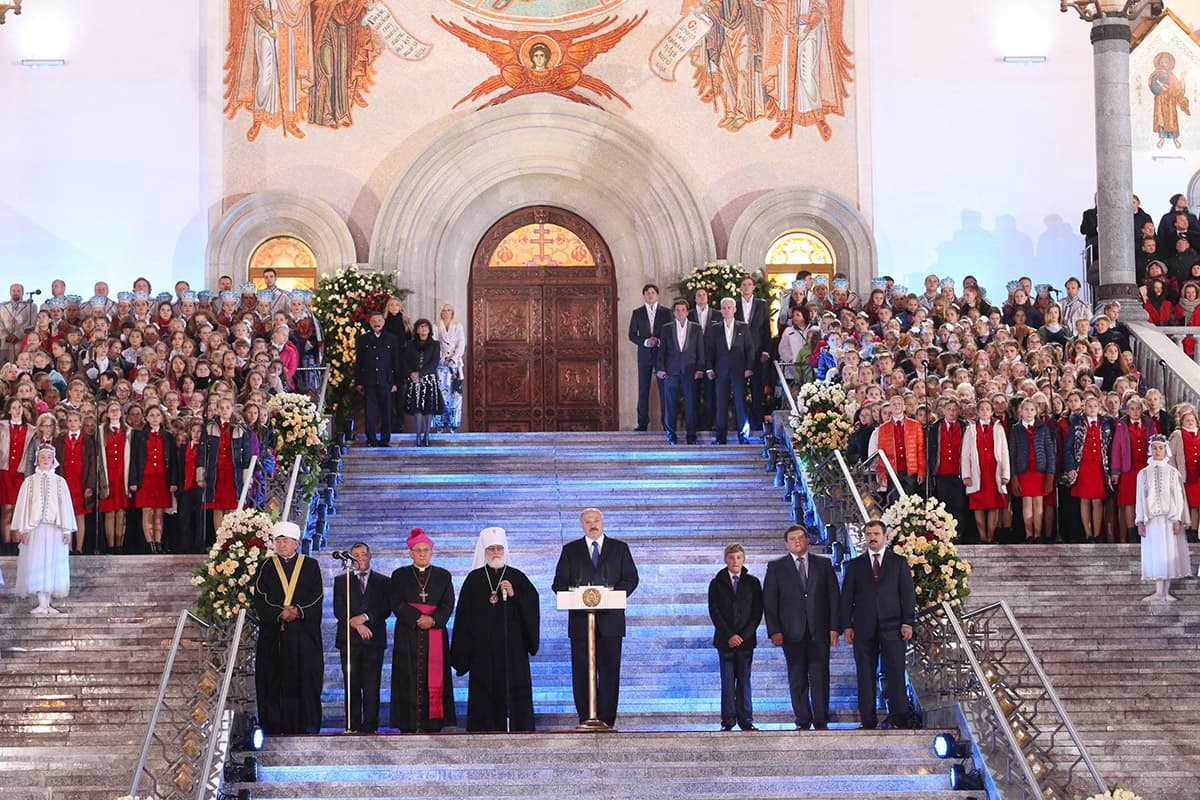
It should be noted that the wartime newspaper “Sovetskaya Belarus” was created on the basis of “Soviet Belarus” by the resolution of the Central Committee of the CP(b)B of September 21, 1941. With this name came until liberation from the Nazis. On July 9, 1944, the newspaper returned to its pre-war title “Soviet Belarus”. “SB Belarus Today”, October 3, 2015 October 2, 2015 in Minsk held a ceremony “Prayer for Belarus”. In the crypt of the Temple-monument in honor of All Saints, seven crystal capsules with earth were buried from the burial places of Belarusian soldiers who died during the Great Patriotic War away from their homeland. The land was collected during an expedition to Europe: Germany, Austria, Poland, Hungary, Czech Republic, Slovakia, Italy.
The solemn event was attended by the President of Belarus, heads and representatives of state bodies, diplomatic missions, religious organizations, political parties, public associations.
About the landmark event “SB” told on the front page on October 3. Here are some fragments of the material:
Communicating with the leaders of national and religious associations, and after speaking from the porch of the church, the President recalled another important value. When wars happen, it's terrible. Many innocent people are suffering. But even the worst and most destructive wars end sooner or later. Over time, although they do not heal to the end, but the wounds inflicted by them are scarred. The Great Patriotic War and the Second World War are an example of this. But even more dangerous is the erosion of traditional moral principles. /
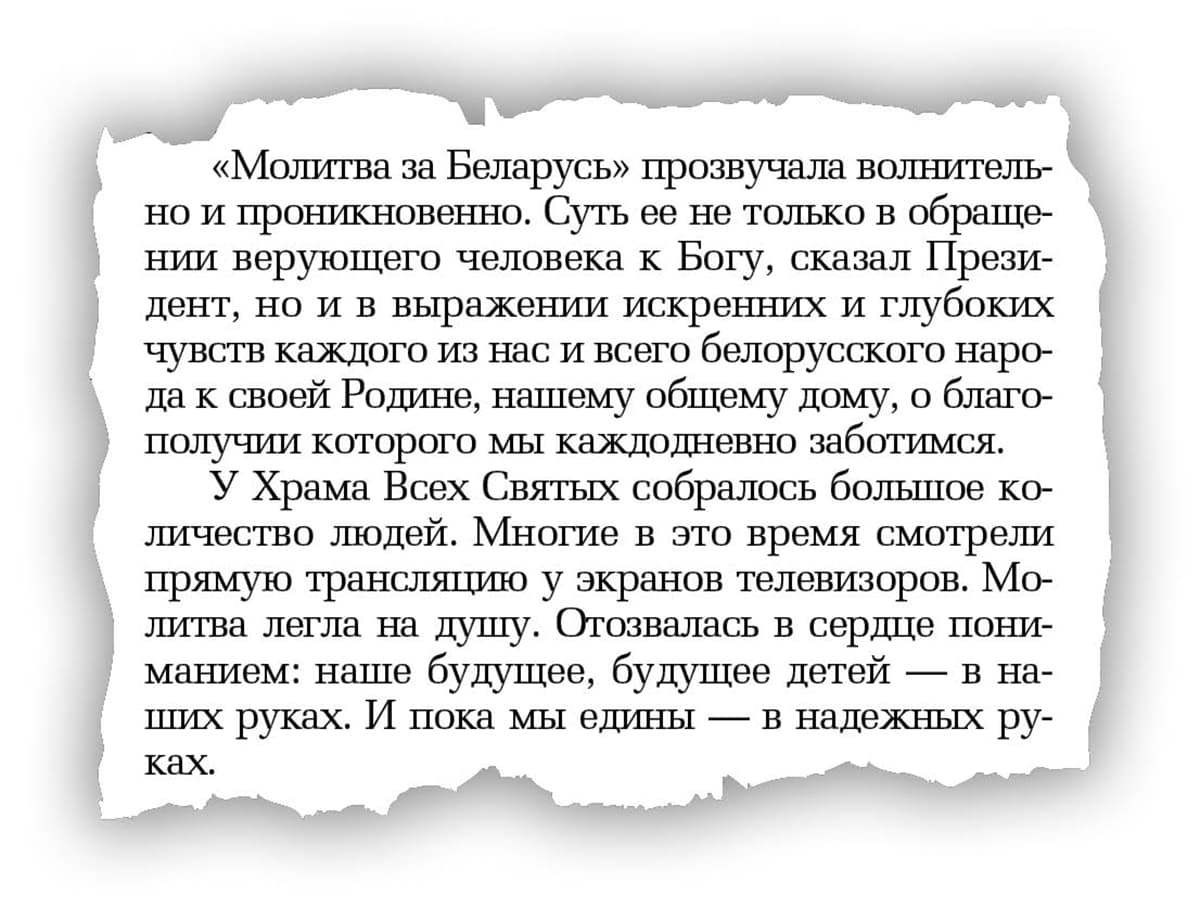
"Prayer for Belarus" sounded exciting and heartfelt. Its essence is not only in the appeal of a believer to God, but also in the expression of sincere and deep feelings of each of us and the entire Belarusian people to their homeland, our common home, the welfare of which we care every day.
A large number of people gathered at the Temple of All Saints. Many people were watching live television at the time. Prayer fell on my soul. Our future, the future of our children, is in our hands. As long as we are united, in safe hands.
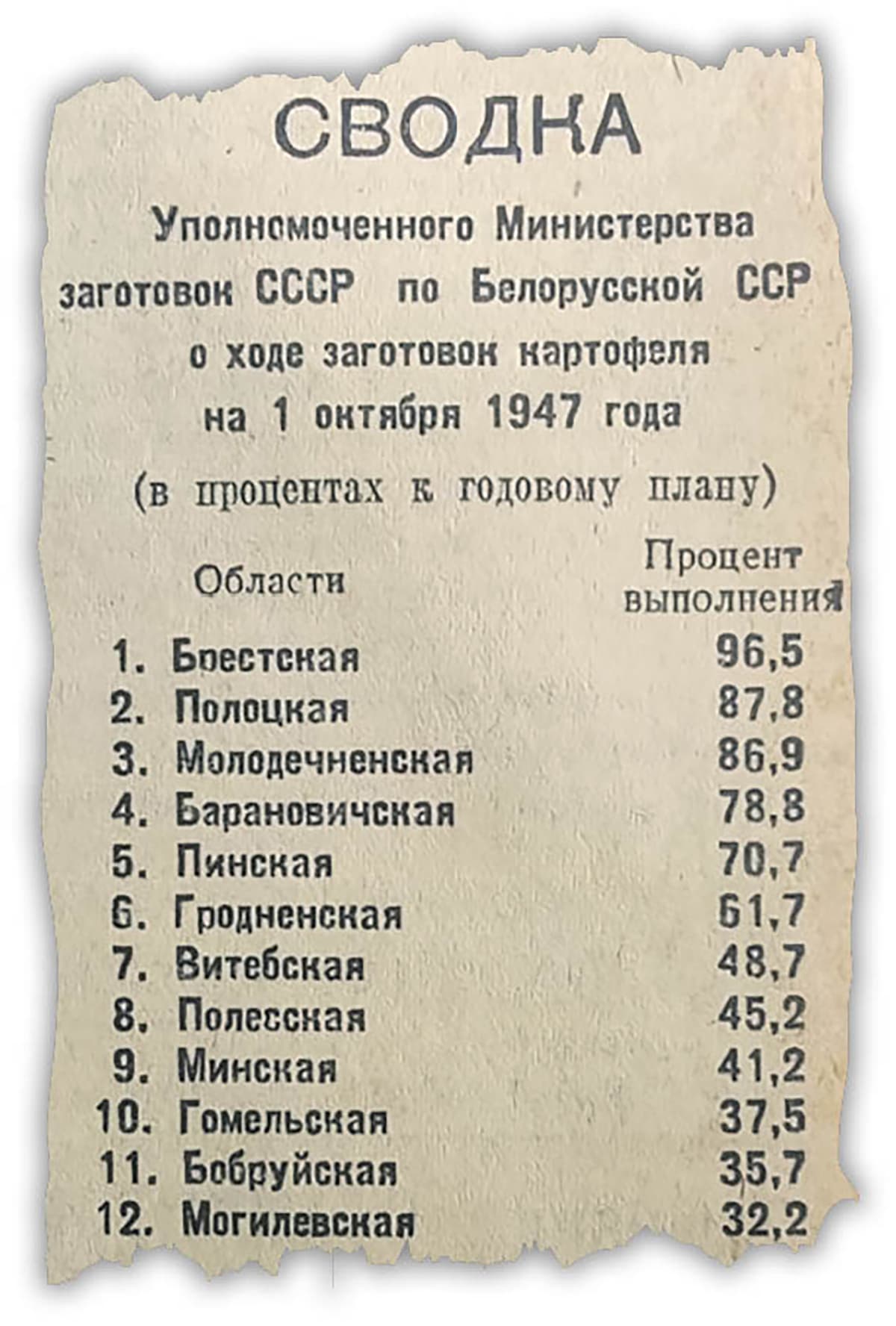
The last operational report of the Sovinformburo was dated May 15, 1945, and published the next day. Less than a year and a half later, Soviet newspapers moved to other news, from peaceful fields. In the issue of October 3, 1947, the SB published an overview of the progress of potato harvesting.
We note that only six of the 12 areas presented in the summary today remain such. Polotsk, Molodechny, Baranovichi, Pinsk, Polesie and Bobruisk regions were administratively re-subordinated and became part of other regions in the mid-1950s - early 1960s. "Soviet Belarus", October 1, 1955 Ask anyone, and he will answer: in Belarus, two factories produce TV sets - "Horizon" in Minsk and "Vityaz" in Vitebsk. But how many people guess that the Minsk Instrument-Building Plant named after Lenin was at the origins? It was here in 1954 that the first Belarusian TVs appeared, and they were produced for almost two decades. The firstborn was called laconically and succinctly - "Belarus". It had a screen diagonal of 31 cm (18 × 24 cm) and was designed to receive three TV channels. The model lasted in production until May 1955, then it was replaced by more modern developments. So it is not surprising that prices for the old model began to decline.
This is reported in the advertisement placed on the fourth page of the "SB": "Prices for TVs "Belarus" from July 15, 1955 reduced from 2700 rubles to 2200 rubles.".
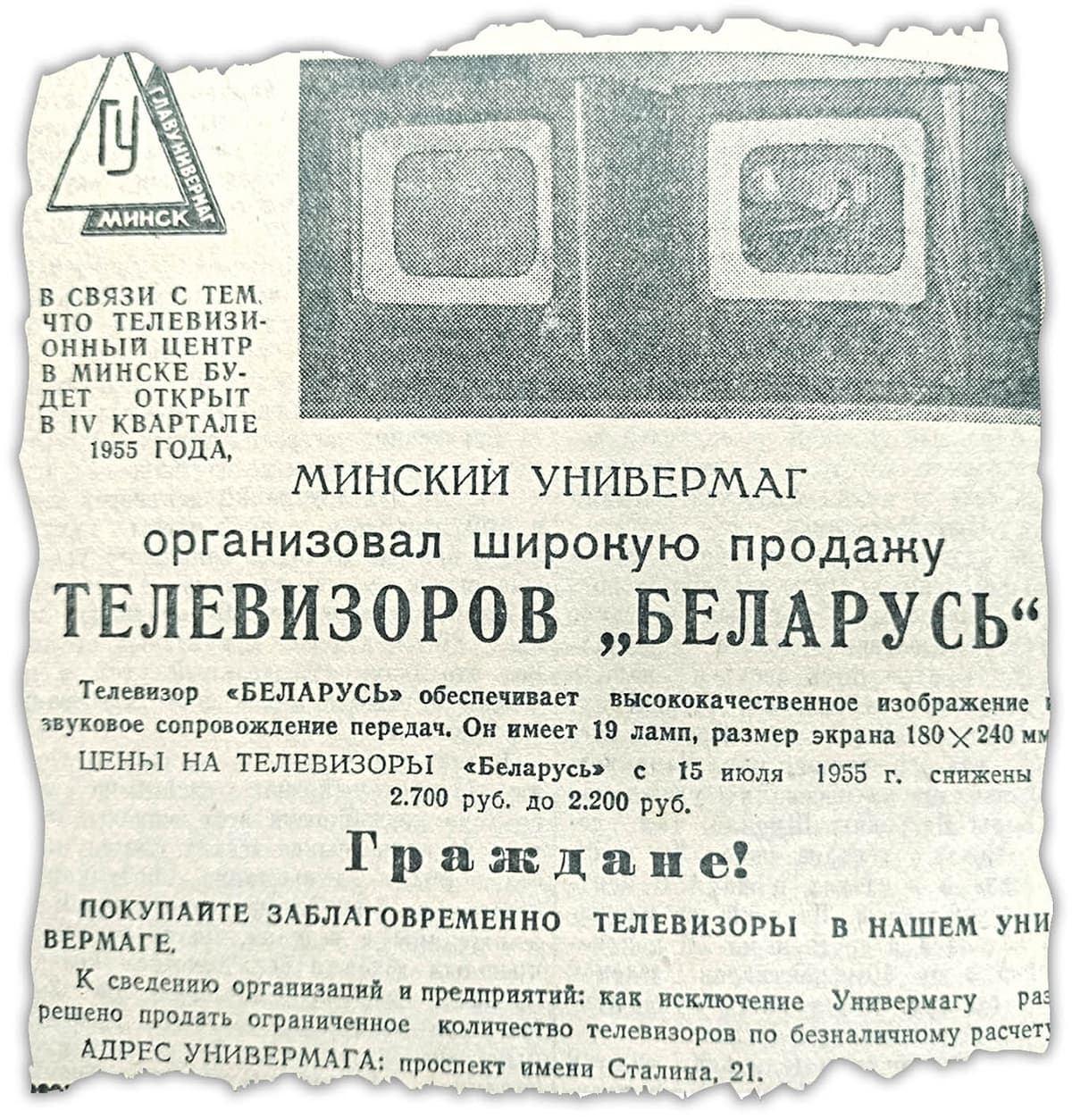
In total, the plant produced about three thousand TV sets "Belarus", but they were only a few. In order to warm up consumer demand, the announcement says that a television center will be opened in Minsk in the fourth quarter of 1955. The fact that television was (un)available to Belarusian families in those years is evidenced by the fact that the program of TV programs in Soviet Belarus began to be printed only in 1960. Some will wonder what was on TV on May 11, 66 years ago:
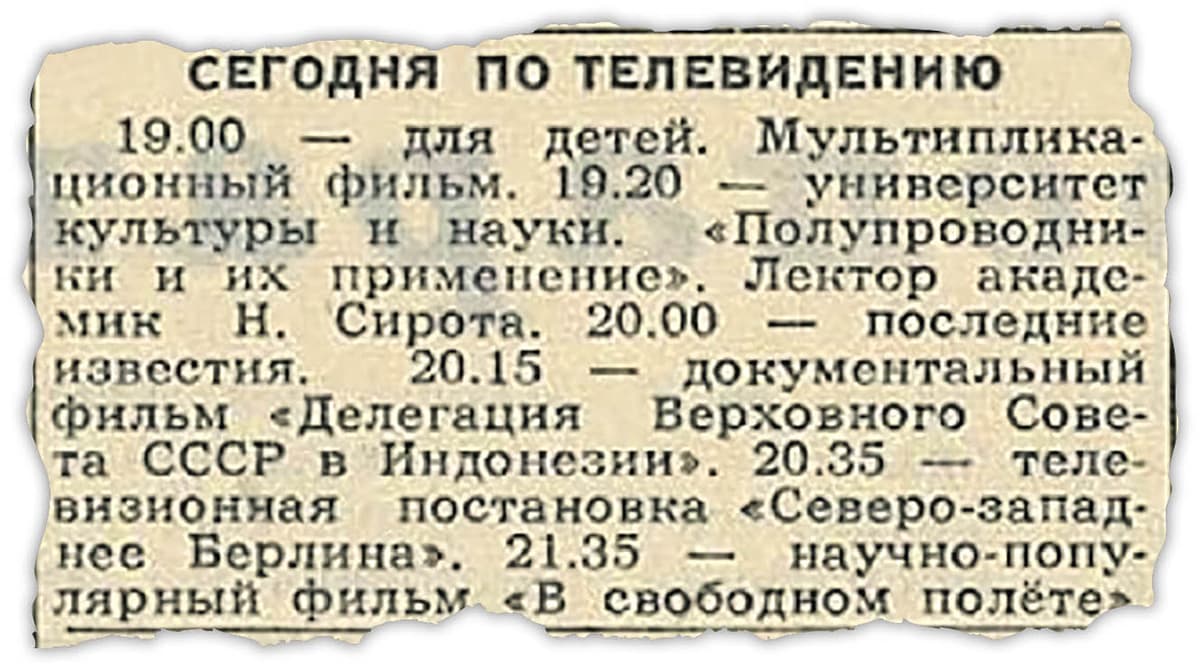
“19:00 for children. Animated film. 19.20 - University of Culture and Science. Semiconductors and Their Applications. Lecturer academician N. Sirota. 20:00 - latest news. 20.15 - documentary "Delegation of the Supreme Soviet of the USSR in Indonesia". 20:35 - TV production "Northwest of Berlin" 21.35 - popular science film "In Free Flight".


