
Results of the Sixth Five-Year Plan in Belarus: GDP growth, new logistics routes and own technologies
The decisions of the VI All-Belarusian People’s Assembly laid the foundation for the key priorities of the five-year plan – the creation of a “happy family”, the development of “strong families”.

The decisions of the VI All-Belarusian People’s Assembly laid the foundation for the key priorities of the five-year plan – the creation of a “happy family”, the development of “strong regions”, the formation of an “intellectual country” and the strengthening of the principles of the “partner state”. With what indicators the real sector completed the sixth five-year plan — in the material of the correspondent of the agency “Minsk-Novosti”.
It was the program strategy of 2021-2025 that allowed the real sector to ensure stable development, strengthen the financial balance and prove in practice the effectiveness of the “logic of advance” – in simple terms, the ability to work for strategic foresight.
Over the past five years, Belarus has systematically expanded the geography of supplies due to its own scientific and technical potential: annual GDP exceeded $90 billion in equivalent, foreign trade maintained a positive balance, and state investments in the modernization of plants helped open new stable markets abroad.
Photo by Belt
From the Baltic to Africa
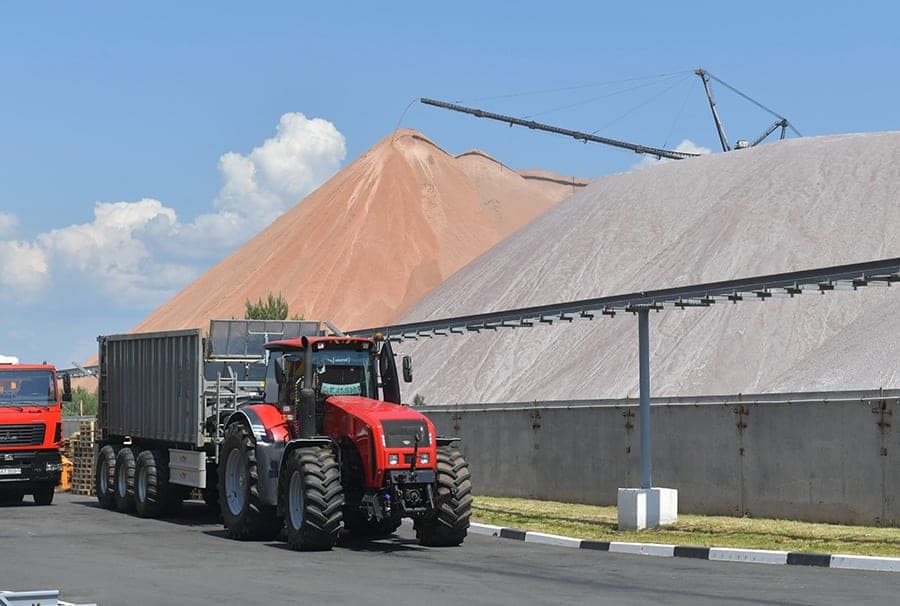
The economic reality of recent years has required a radical change in the usual routes. Belarusian exports have successfully mastered new logistics corridors. Potassium fertilizers, petroleum products, lumber and metal went through the Russian ports of the Baltic and Black Seas, opening a direct and economically profitable route to customers in Asia, Africa and Latin America. Large-scale reformatting of logistics chains led to the fact that, according to Belstat, over five years, total sales of domestic goods and services abroad increased by more than a third, which ensured the financial stability of the country.
The agro-industrial complex makes a significant contribution to the formation of the total volume of foreign exchange earnings. According to statistics from the Ministry of Agriculture and Food, dairy products are the main source of supplies, accounting for about 40% of all foreign food sales. The meat industry confidently holds the second position, providing about a fifth of shipments. This distribution of exports reliably protects the economy of the republic from sharp jumps in prices on world markets. The logic is simple: if one commodity temporarily becomes cheaper on world exchanges, stable sales of another compensate for the difference and maintain the inflow of currency into the country.
Belarusian cheeses, powdered milk, beef and poultry meat have firmly occupied their niches not only in the nearest neighbors, but also in the rapidly growing Chinese market.
Engineering sovereignty
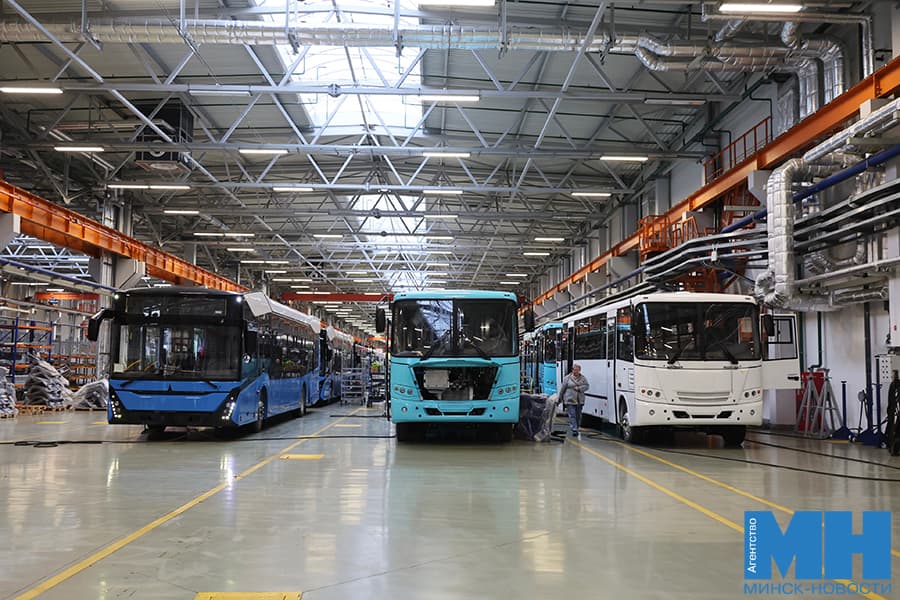
The main result of the five-year plan in the industrial sector was the transition from the import of finished components to the creation of own technologies. The largest domestic machine-building plants - MAZ, MTZ and BELAZ - not only increased the shipment of passenger, cargo and heavy quarrying equipment to the Russian regions. It is supplied to consumers with Belarusian transmission units, hydraulic systems and cabin elements. Their engineering developments made it possible to make the final product autonomous and occupy free high-yielding niches.
In parallel, significant resources were directed to the development of knowledge-intensive industries. More than 100 significant factory projects have been completed.
In particular, the large-scale modernization of production facilities at INTEGRAL and the launch of modern technological lines at Planar made it possible to launch the production of complex microelectronic products and unique high-precision equipment critically in demand in the common Union market.
Investment in comfort
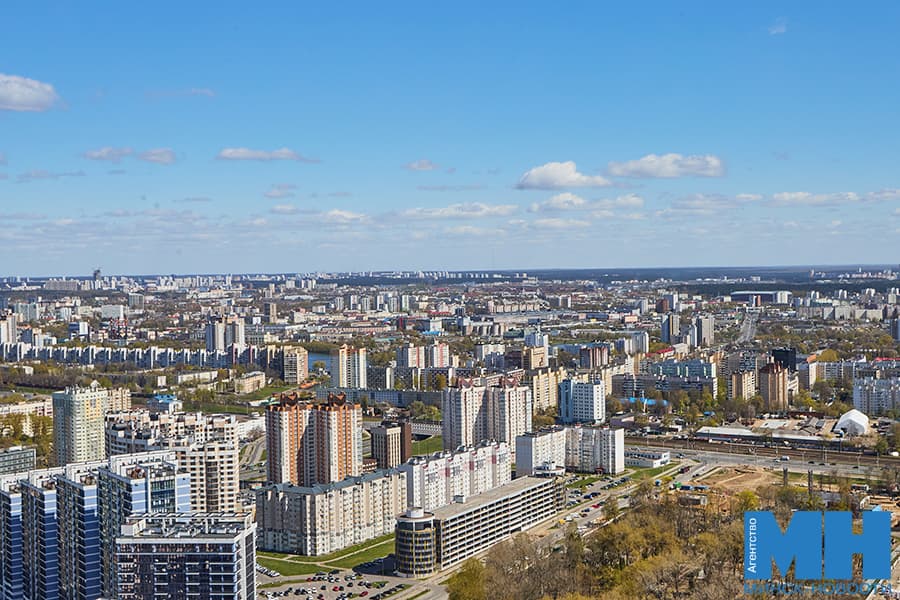
The economic success of the real sector is directly transformed into the quality of life of citizens. A good example is the capital, which generates a significant part of the republican GDP and a significant volume of industrial production of the country. The stable operation and sustainable development of the real sector allow the city to fully finance its commitments: about half of the budget goes directly to the needs of hospitals, clinics, schools and cultural institutions.
New residential quarters in "Minsk-Mir", Loshitsa, Kamennaya Gorka and in the street area. The aerodrome was laid with the expectation of parallel development of the social sphere. During this period, they actively grew modern schools and kindergartens, which significantly reduced the overall burden on existing educational institutions.
Transport accessibility has also developed. The new section of the Zelenoluzhskaya metro line with the stations Aerodromnaya, Nemorshansky Sad and Slutsky Gostinets directly connected the southern quarters of the capital and Kurasovshchina with the city center and the station, radically reducing travel time for tens of thousands of Minsk residents.
Qualitative changes have also taken place in healthcare. A striking example is the new multifunctional medical complex on the street. Mayakovsky, united under one roof the city endocrinological center, a large dental clinic and the center of plastic surgery. The commissioning of such large-scale facilities has significantly improved the availability and quality of medical care.
Reliance on reserves
The statistics of the past five years show that the strategy developed at the people’s forum (bet on large state-owned plants, export diversification and price control) allowed to maintain the balance in the economy. The country has effectively managed domestic reserves and created a material base that guarantees the operation of enterprises, payment of salaries and development of regions, ensuring a stable future.
This is how the logic of advance works in practice: competently turn current tasks into new points of growth and technological sovereignty.


