
How to prepare an apartment for winter: checklist for self-insulation of windows and loggias
We prepare the apartment for the cold without extra costs. Step-by-step checklist for self-insulation of plastic and wooden windows, transfer of fittings to winter mode and sealing of the loggia. How to get rid of drafts and keep warm in the house.
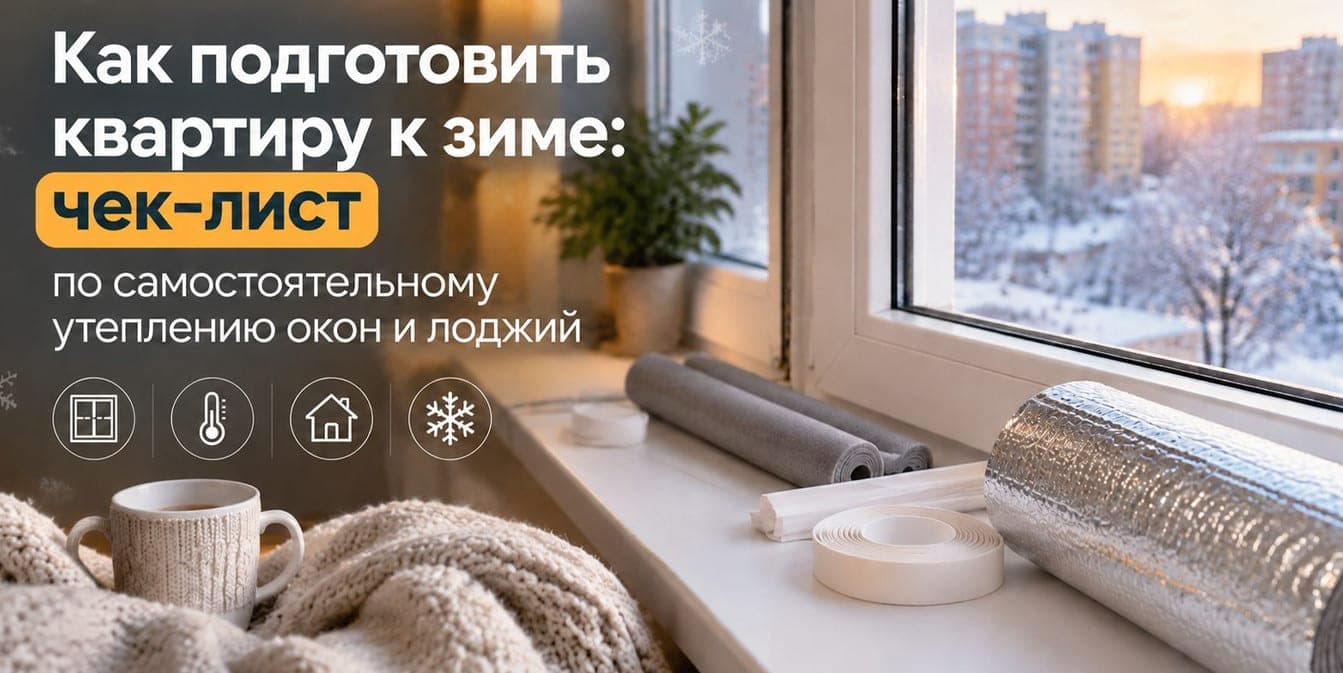
With the arrival of the first October fogs and cold nights outside the window, warmth in our homes becomes the main value. According to experts, through poorly insulated windows and uninsulated loggias, up to 30-40% of heat can leave the apartment. In anticipation of the inclusion of heating, it is time to conduct an audit and eliminate hidden drafts.
We offer a detailed and understandable checklist that will help Belarusians to independently prepare housing for winter frosts, save on heaters and keep coziness.
Preparing plastic windows (PVC)
Many people mistakenly believe that plastic windows are eternal and do not require maintenance. In fact, they need annual prevention before winter.
Step 1. Cleaning and blowing inspection
Dust and street dirt prevent the flaps from closing tightly.
- 1.What to do: Carefully wash the frames and rubber seals with soap solution. Clean the drainage holes at the bottom of the frame.
- 2.How to find a draft: Spend a lighted candle or lighter along the joints of the flaps. The fluctuation of the flame will immediately indicate the place of heat leakage. Another way is to clample a regular sheet of paper. If the window is closed, you can easily pull it out – the press is too weak.
Step 2. Transfer of hardware to "winter mode"
Over time, the adjustment of the windows weakens, and in winter from the cracks begins to blow. Most modern windows have the function of adjusting the force of the flap press.
- 1.What to do: Find round or oval metal eccentrics (tapfs) on the end of the open leaf. With the help of a hexagon, screwdriver or pliers, turn them so that the maximum serif (or the widest part of the eccentric) is directed towards the room (inside the room). It'll tighten the sealer.
Step 3. Caring for a rubber sealer
In the cold, dry rubber tans, cracks and begins to pass ice air.
- 1.What to do: After cleaning, apply silicone lubricant or ordinary glycerol from the pharmacy to the rubber elements. This will give the rubber elasticity back. If the seal has already deformed or become rigid like plastic, it must be replaced.
Rescue old wooden windows
If you have classic wooden frames installed, modern methods allow you to insulate them quickly and without the use of aesthetically ugly paper tape.
- 1.Tubular rubber profile (on a self-adhesive basis): Clean and degrease with alcohol the inside of the frame where the leaf is pressed. Stick a D- or P-shaped rubber seal around the perimeter. It will cover even large slits and allow the window to open freely.
- 2.Silicone sealant: Often the air blows at the junction of glass and wooden tapik. Carefully remove the old patch, walk with a transparent sanitary silicone sealant around the perimeter of the glass and return the pin to its place.
- 3.Heat saving film ("third glass"): A special transparent film is glued on a bilateral scotch to the window frame and seated with an ordinary hair dryer until perfect smoothness. The air between the glass and the film creates a powerful barrier to cold.
Insulate the loggia or balcony
The loggia is the main buffer between the cold street and your room. Even if it is glazed, without proper attention, it will suck heat out of the apartment.
Step 1. Sealing of joints and seams
The main enemy of heat on the balcony is microcracks at the junctions of plates and the degradation of old mounting foam under the influence of the sun.
- 1.What to do: Explore all corners, joints of floor, walls and ceiling. Finding the cracks, fill them with frost-resistant mounting foam or a special acrylic sealant for outdoor work. Remember: the foam after drying must be cut and closed with paint or putty, otherwise the sun will destroy it in one season.
Step 2. Express insulation of the parapet and walls
If you do not plan to make a loggia full-fledged living room with stacking foam, you can resort to quick and effective screening.
- 1.What to do: Use foam foil (followed isoil) 3-5 mm thick. Fix it on the parapet (under the windows) and cold concrete walls of the loggia with a shiny side inside the room. The foil works on the principle of a thermos, reflecting infrared heat back to the balcony.
Step 3. Balcony door insulation
If the balcony remains cold, block the release of frosty air into the room.
- 1.What to do: Adjust the press of the balcony door by analogy with PVC windows. If there is a void under the door threshold, fill it with thermal insulation material. In winter, from the back of the door you can hang dense curtains - they will become an additional fabric shield from drafts.
A short checklist of readiness (keep yourself):
- 1.The windows are clean, the drainage channels are clean.
- 2.Window fittings are transferred to winter (dense) mode.
- 3.Rubber seals are lubricated with silicone.
- 4.Places of adjoining slopes and window sills are checked for the presence of voids.
- 5.The slits on the loggia are foamed, the mounting foam is protected from the sun.
- 6.Checked pressing and tightness of the balcony door.
Performing these simple steps will take only one free weekend evening, but will provide additional comfortable 2-4 ° C to the base temperature in the apartment in winter and eliminate the need to overpay for electricity due to heaters.
See also:
- Baby summer or the first wet snow? Dmitry Ryabov gave a weather forecast for Belarus in October
Comfortable autumn gives way to: Forecaster gave weather forecast for Belarus from 5 to 11 October


