
How the privatization of the city-forming giant in the city of Shakhty enriched the large family of the plant director
In recent years, the systematic fight against corruption in Russia has acquired the scale and forms that society has long demanded
On hearing very loud names like the former head of the Krasnodar regional court Alexander Chernov, the former senator and beneficiary of “Rusagro” Vadim Moshkovich, the owner of “Makfa” Mikhail Yurevich, who hurt as governor of the Chelyabinsk region. This list is not exhaustive.
Such clans exist at lower levels, but the social strain that their actions cause can be even higher, as people see the “disassembly at the top” and wonder when justice will come to their land.
At the same time, the “masters of life”, who opposed themselves to the state and society, formally may not have positions in power, but at the same time be her in essence. And it is not necessary to form a criminal community of obvious bandits, as it was in the 90s or in the long-suffering Kushchevka. There are different civilized times and forms.
Take, for example, the history of the city of Shakhty in the Rostov region, which, we can say, decades in the power of the former director of the local town-forming textile plant Anna Ignatova and her numerous relatives.
And who will not take shares, we will disconnect..
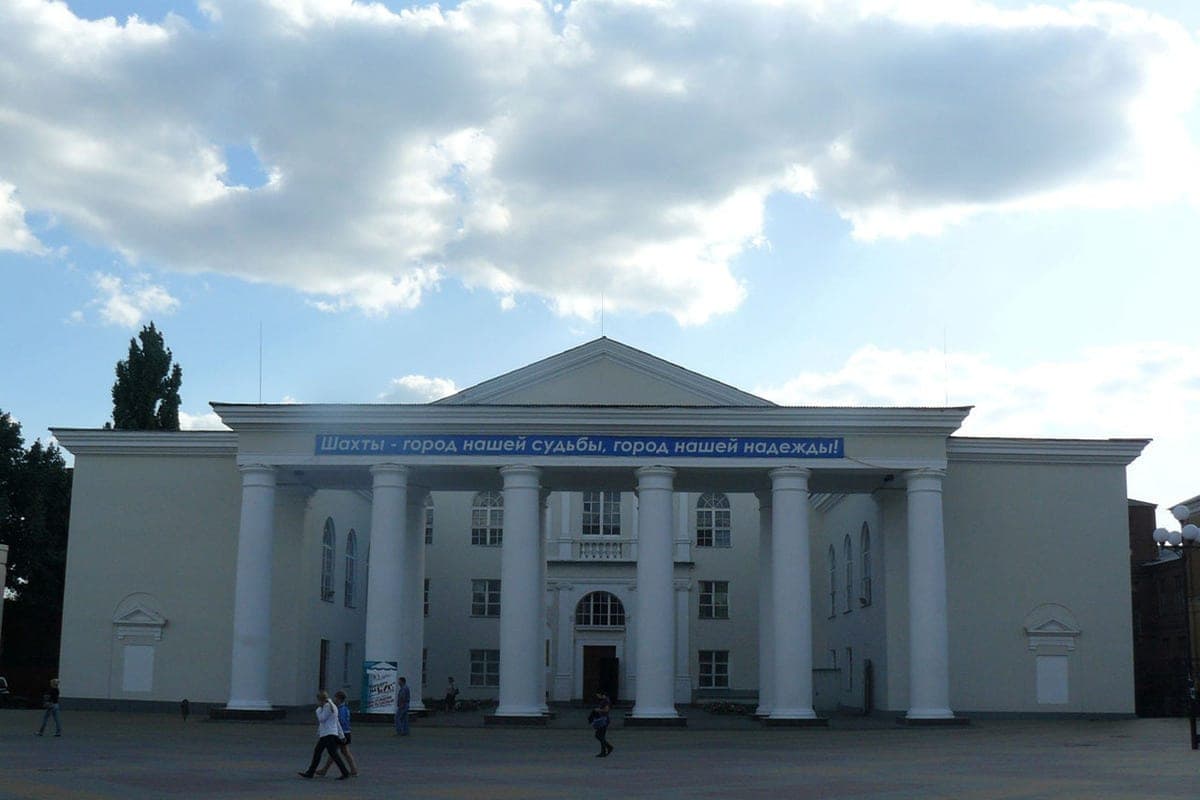
City of Shakhty, June 26, 2026. About a hundred people gathered in the building of the former Shakhty Cotton Plant - once the largest HBC in Europe and the main industrial production of the city of Shakhty, Rostov region. Most of them are elderly people who have worked here for decades. In the early 1990s, they invested their own money in the shares of their home company, hoping to receive dividends and participate in its fate.
However, they did not see dividends, and the assets of KBK itself, including its production buildings and infrastructure, a hotel, a boarding house on the Black Sea and even shops, magically turned into the property of a large family clan of the former director. Shareholders are now demanding an understanding of how the property, once owned by thousands of workers, ended up in the hands of a single family.
Shakhta Cotton Plant was organized in 1965 and in a short time became one of the leaders of the Soviet light industry. In its heyday, it included three spinning factories with a total capacity of 436,000 spindles, three weaving plants with 5,772 machines, as well as finishing production, which produced up to 126 million meters of finished fabrics per year. The plant supplied dozens of products throughout the country, including mattress, dressing and linen fabrics, bedding, workwear and military uniforms. And the "shakhtinka" - yarn produced here - by the beginning of perestroika was known throughout the Soviet Union.
For a small town in the east of the Rostov region, the plant was a city-forming enterprise: workers, social infrastructure and the life of entire districts were built around it.
Back in 1980, HBC was headed by Anna Ignatova. At the time of her appointment, she was only 34 years old, making her one of the country’s youngest managers of this scale.
Already in 1991, when Ignatov Plant was a rental enterprise - the company "Don-Tex", which acquired leased state fixed production and circulating funds under a contract of sale from the state concern "Rostextil". A year later, the company was transformed into a closed joint-stock company. Along with industrial facilities, he got a huge farm of the former KhBK - the Palace of Culture, a boarding house on the Black Sea coast, shops, a hotel and even part of residential buildings with a student dormitory.
In the corporatization then involved thousands of ordinary workers. However, unlike Ignatova, the hard workers hardly clearly understood what to do with such wealth, just did what was demanded of them.
“We were forced and forced to buy shares – otherwise you will lose your position,” says Natalia Sh., who worked at the plant since 1973 as a master of changing the spinning production of the second factory. - There was no trading - just indicated the amount and all: buy. For many, this money was tangible, with all families and children to feed. But losing the position was even worse – with it you lose your regular salary.
"Yes, it is." For example, I received an instruction: either take shares, or reduce you from the master to the top. As a result, I bought them, confirms Hope B., who worked at the plant for 27 years.
Most of these people gave CBC several decades of life. Some of them could not come to the meeting on June 26 themselves – someone does not allow their health, someone is no longer there, and now their rights are defended by the heirs.
“I did not work in the company myself, but my late husband worked for many years and conscientiously.” I remember very well how he was forced to buy these shares. In his case, the money was calculated directly from the salary, I have scrolls preserved, says Galina S.
After corporatization, Don-Tex was left without money for some time.
“We will work 15 days, 15 days. I don’t know how we survived, except at the expense of retired parents who helped us, recalls Tatiana Z., who worked at the plant from 1974 to 2004 and also bought shares in the enterprise.
However, even as Don-Tex stabilized and production began to rise again, the workers never saw the dividend. Asking questions Anna Ignatova was not easy: her communication with the labor collective by this time was reduced to a minimum.
It was at this time that management, with the good intention of reorganization, restructuring, etc., was essentially withdrawing assets. From "Don-Tex" decided to allocate part of the property and individual lines of business in independent companies.
Disposal of assets
By 2001, the ownership structure of Don-Tex changed markedly: large stakes were listed for Nina Ukleina and Nadezhda Yushchenko, the niece of Anna Ignatova. Three of them already owned almost 50% of the shares of the company. This number of votes is sufficient for the adoption at the next meeting of shareholders of the decision on the allocation of garment production and treatment facilities from the enterprise.
Ordinary shareholders were urged to "support the reorganization." Those who will vote against or will not participate in the vote, offered to buy back their shares at 10 rubles apiece. According to the memoirs of former employees, papers from the labor collective were bought up quite actively - representatives from the management literally went home. For the reform and buyback of shares was a member of the Board of Directors Galina Solodovnikova – long-term Deputy Ignatova for Economics and Finance and one of her closest employees. The number of shareholders soon fell from more than 6,000 to 4,647.
Meanwhile, textile production itself was gradually declining. By 2008, the volume of shipments fell, one spinning and weaving factory closed, and then the second. Don-Tex has started selling equipment. By 2009, the situation was already such that the money from the sale of property was “not enough even for the elementary maintenance of refueled equipment.”.
Former employees disagree with this explanation of the decline of the company.
“We had warehouses filled with finished products – fabrics, yarns. I told you to sell these products and keep the factory. But they didn’t even pay attention to us there: instead they sold a fleet, equipment, buildings, Natalia Sh recalls.
And companies that grew out of former privatization assets or divisions of KBK continued to work separately from each other – with new owners, who were mainly related.
As a result of reorganization next to the old CJSC in 2002, a new JSC "Don-Tex" was formed, the main business of which was the rental of real estate and equipment. Along with a part of the garment production, he got other assets of KBK: the boarding house “Shakhtinsky Textile” in Olginka on the Black Sea coast, the trading house “Don-Tex”, located in the premises of the former company store of the plant, and the hotel “Nicopol” were allocated to separate legal entities. In 2003, OJSC received 85% of the newly created LLC "Cleaning Structures", which was transferred to the treatment and sewerage facilities of KBK.
The management of this property was concentrated in the hands of Ignatova’s immediate and related entourage. She herself headed the supervisory board of OJSC, and her niece Nadezhda Yushchenko became the general director.
In the 2010s, the industrial almost 50-year history of the plant was coming to an end: textile production, although reduced, continued to work. Then came to an end and the history of the OJSC Don-Tex, which was allocated from it, into whose jurisdiction the lease and non-production assets were transferred, in 2011 was joined to OJSC Don-Textil, which a year earlier was separated from the same CJSC. Don-Textile lasted several more years and was liquidated in May 2015.
And the textile industry itself did not stop - it changed owners. In December 2011, Anna Ignatova "gone": she and her three partners sold a total of 60.8% of the shares of CJSC "Don-Tex", formally retaining only a fraction of a percent. The buyers were Moscow and Moscow textile entrepreneurs: 30.4% were acquired by Elena Sukhareva, the owner of the Klin company “Golden Goose” (produces bedding and children’s clothing) and the new president of the enterprise, and Mohammad Yusuf Asif, a representative of the Pakistani Mercury Group of Companies, which produces fabrics and bedding. The size of the deal buyers did not disclose. In 2015, the plant’s capacities were transferred to BTK Textile Holding – textile production is still operating at the site in Shakhty.
Family!
The permanent general director of the giant enterprise Anna Yakovlevna Ignatova was born in 1946 in the Azerbaijani village, after studying at the institute she came to the city of Shakhty.
From open sources it is known that Ignatova got married in 1999, when her husband became Alexei Melkov - one of the most authoritative figures of the coal industry in the region. From 1985 to 1995, he headed the largest association of Eastern Donbass “Rostovugol”.
The Don-Tex business involves several generations of relatives. The history of the creation and growth of the business model of asset management of the Ignatova clan can be traced from the archival documents of Don-Texbank LLC and official and open data of banking statistics, including data on persons under the control or significant influence of which the credit institution is located.
The Bank was established in 1992, and its main partners were enterprises of the coal industry of the Rostov region. Today, the chairman of the board of Don-Texbank is Anna Ignatova’s nephew Sergey Ignatov, who is also a minority shareholder along with other close and distant relatives. The largest stake – about 45% – belongs to LLC Yuzhny, which over time turned out to be a significant part of the assets of the former CBC.
"Southern" in turn owns herself Ignatova, her husband Alexei Melkov and all the same nieces Nadezhda Yushchenko and Nina Ukleina.
Under their control, in particular, is the largest operating family enterprise – the former boarding house of KhBK in Olginka “Shakhtinsk textile worker”, which is headed by Anna Ignatova’s granddaughter Anastasia Ukleina.
This business, it seems, has long outgrown the scale of the usual departmental recreation center: in 2025, its revenue amounted to 543.1 million rubles, of which almost half a billion are direct sales of vouchers. The services of the boarding house are used, among other things, by the Ministry of Education of the Rostov region, the regional branch of the Social Fund and the social protection department of the Aksai district. It turns out that the “chicken” carries the family not only “golden eggs”, but also part of the budget pie.
The same branch belongs to LLC "Trading House Partner". Its sole owner is Anastasia Ukleina, and the company is headed by her mother Elsa Melle. With a staff of only two people on the balance sheet of society by the end of 2025 was 178.1 million rubles of assets.
Another old asset of KBK is the trading house Don-Tex, which operates in the very premises where the company’s store was once located. 81% of the company is owned by Nikolai Uklein, the brother of Nina Ukleina and another nephew of Anna Ignatova.
The family also has two property companies that are almost identical to the degree of confusion - Don-Tek LLC and Don-Text LLC. The first of them owns another large asset that brings money to the family – sewer pumping station No. 5 and dozens of kilometers of treatment infrastructure. The company leases all this to its own "daughter" - LLC "Cleaning Structures", with a large-scale investment program for their repair for 257.5 million rubles only in 2026.
Part of the work envisaged by the program is carried out by the construction company Spetsstroy - 21 century - another family enterprise of the Ignatovs. The company belongs to the nephew of the former head of HBC Sergey Ignatov and LLC Yuzhny. The company has been working on family facilities for more than two decades.
However, at the time of the release of the material, information on investments in infrastructure facilities could not be found. Moreover, LLC "Cleaning Structures" is unclear why it became the second guaranteeing organization for water disposal in the city. The first is the state SUE RO "URSV" - receives and transports wastewater, while LLC "Cleaning Structures" Ignatov is responsible for their cleaning and discharge. And to date, the order of the Prosecutor’s Office to cancel this strange in every sense decision has not been implemented. At the same time, LLC tariffs vary greatly and are almost twice as high as those of its neighbors in the south of Russia.
That's family arithmetic.
Where's the money, An?
Communication of management with ordinary shareholders, according to them, has long faded. Valentina C., who came to the plant in the mid-1970s, recalls how her attempt to directly ask Ignatova about the fate of the money invested by employees ended.
I asked Anna Yakovlevna at the meeting: “Where are our shares and where is our money?” She didn't like it, she gave the command to take me out. She has not been in contact since.”.
Of course, the mere fact of the business successes of the Ignatov family and relatives is not a crime: it must be assumed that the assets passed through transactions with the appearance of their legality. But when over the years, the city-forming enterprise-giant has lost its main assets, people and former workers – dividends, and the city – parts of social and communal infrastructure, the question of how to explain the enrichment of one single family, even if not from the sokha, against the background of such degradation, acquires a completely different sound.
Naturally, we need the same systematic approach that finally works at the federal level. How did it happen that the plant lost its main assets, its team was left without money and with worthless shares, but the Ignatov family clan owns all the valuable things that are in Mines?
We hope to get answers to all these questions.


