
How a turquoise bird adapts in Kalmykia
About a rare species of Kalmykia, zizovoronka, told in the Ministry of Natural Resources of the region.
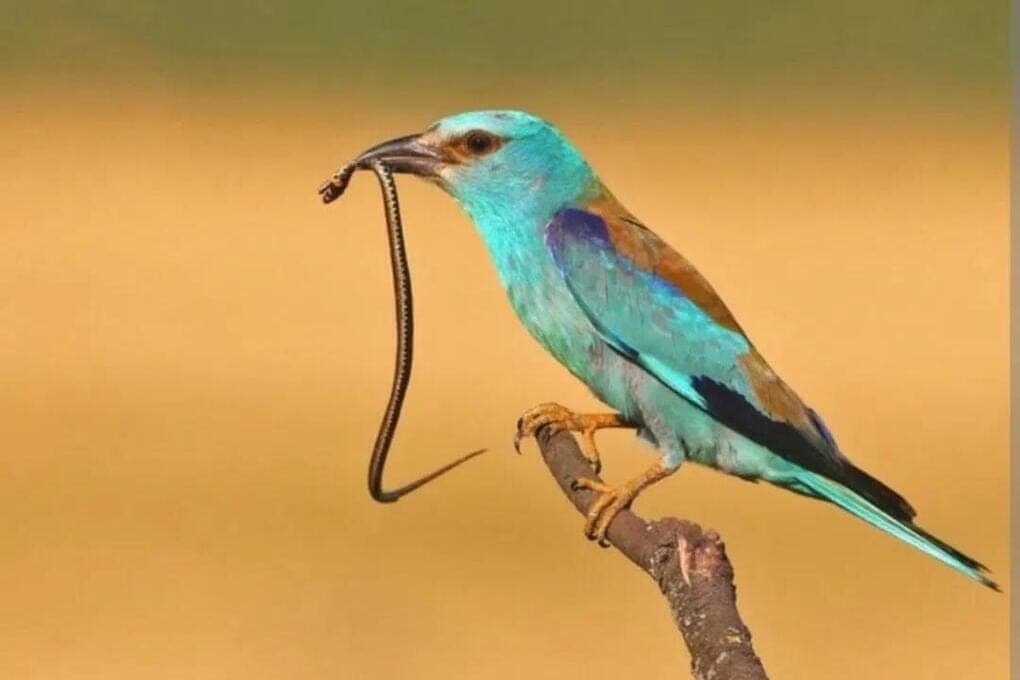
About a rare species of Kalmykia, zizovoronka, told in the Ministry of Natural Resources of the region.
This species of bird family is listed in the Red Books of the Russian Federation and the Republic of Kalmykia.
A sizor funnel about the size of a checkmark or jay. Body length is 30-34 cm, wingspan - 65-75 cm, weight - about 100-190 grams.
The bird is exceptionally heat-loving and migratory. In September, she leaves her native expanses and goes on a grandiose journey to the south, covering thousands of kilometers above the seas and deserts. Birds winter in Africa. It returns to Kalmykia one of the last - at the end of April, in May, when the steppe is already well heated and an abundance of large insects appears.
Sizo funnel is a virtuoso ambush predator. Her favorite tactic is to sit still on an elevation - poles, power lines, dry branches or cliffs - and look closely for prey on the ground. It benefits agriculture and the steppe by destroying large pests: locusts, bears, blackbodies, and also catches lizards, small snakes and rodents.
Originally, the kiosk is a duplex rider. But in the conditions of open Kalmykia, the bird showed miracles of adaptation: it willingly occupies burrows in sandy and clay cliffs of beams and ravines (often in the neighborhood of foot-and-mouths), settles in the crevices of old abandoned livestock buildings, stone ruins and mudslides, and if it finds old forest belts, it occupies hollows in trees.
In many regions of Russia and Europe, the number of zizovorok fell sharply. The main threats to the species are death on the power lines, the use of toxic chemicals in the fields, the destruction of old forest belts and the factor of anxiety at nesting sites.
“A viper is a living decoration of the Kalmyk steppe. Let the turquoise flare of the turquoise funnel continue to be a sign of the Kalmyk summer: the preservation of this rare species is a guarantee that the steppe will not lose one of its brightest inhabitants, the ecologists wished.


