What is the holiday today: October 10, 2026
October 10, 2026 is the 283rd day of the year according to the Gregorian calendar. There are 82 days left until the end of the year. In the XX and XXI centuries, this date corresponds to September 27 according to the Julian calendar. We tell you what holidays are celebrated today in Russia and the world, what events have gone down in history, who of the celebrities was born and died on this day.
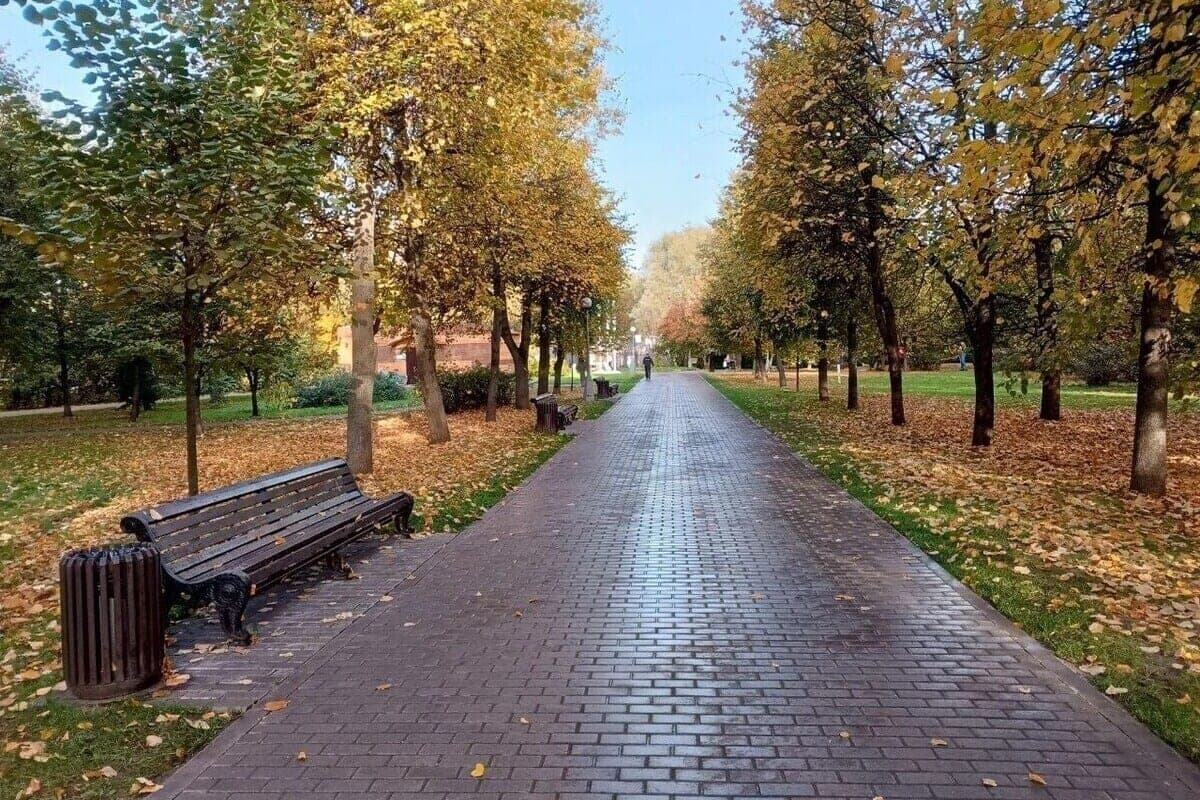
Among the unusual holidays of the day are Lavash Day (thin bread made of wheat flour and water, common in the Caucasus and in some countries of Asia; in 2014, the tradition of preparing Armenian lavash was included in the list of intangible cultural heritage of UNESCO) and Leaf Runching Day - an autumn holiday when you can go for a walk and listen to the rustle of fallen leaves under your feet.
National holidays in other countries: in the Republic of China - the Festival of Two Tens, in Cuba - Independence Day, in Poland - the Day of planting trees.
According to the Orthodox calendar, on October 10, the memory of the martyr Kallistrat and his squad is celebrated: Gymnasius and others (304), St. Savvatius Solovetsky (1435), Hieromartyr Peter (Polyansky), Metropolitan Vrutitsky (1937), Hieromartyr Dimitry Shishokin, Presbyter (1918), Hieromartyrs Herman (Kosolapov), Bishop of Volsky, and Michael Platonov, Presbyter (1919), Hieromartyrtyr Theodore of Bogoy (17), Priestry of Ipodor of the Year of Rome (704), Ipodochy (Ipodochyatochristochristius of Rome (175), Ipodor, Ipodochyatochristochristius of Rome (Imia (Ipod, Ipodochyatochristochristochristochristochristochristochristius, 704) (19875) (I).
Also on this day is honored the memory of Yaroslav Vladimirovich the Wise (d. 1054), included in the Volyn Saints Cathedral, and his wife (d. 1018), presumably monastic named Anna and buried in the St. Sophia Cathedral of Veliky Novgorod.
October 10, 2026 is a special day in the national calendar. The Orthodox Church remembers the Monk Savvatius of Solovetsky, and the people have long called this date Savatius the Beecher. It was believed that it was by this time that the "bee nines" are completed - the last days before wintering, when beekeepers remove hives into omshaniks and thank the saint for the summer work. In 2026, the day falls on a Saturday, so you can combine housework with quiet family time.
October 10, 2026 is the day when the folk tradition is closely intertwined with the church memory of St. Savvatius. On this day, it is important not so much to follow the signs as to keep peace in the soul, take care of loved ones and gratefully accept the gifts of autumn. A spoonful of honey at the morning table, according to legend, will make the morning happier, and the whole year sweeter.
Saint Savvaty Solovetsky is one of the founders of monastic life on the Solovetsky Islands, the original of the Solovetsky monastery. The exact date of his birth is unknown. He lived in the late XIV - the first half of the XV century. The first information about his monastic life is connected with the Kirillo-Belozersky monastery. Savvatius came to this monastery in 1396 and took monastic tonsure there. For many years he bore all obedience, distinguished by humility, gentle love for the brethren and strict life. He prayed a lot, observed fasting and strictly performed monastic obediences.
However, soon the attention of monks and laity began to burden the ascetic. He wanted a more secluded life, so he asked permission to leave the monastery. The next place of his service for some time was the Transfiguration Spaso Monastery on Valaam - the stony island of Lake Ladoga. But even there the worldly glory did not leave the humble elder.
Finding a secluded place
In search of a place where he could live far from people, the monk learned from the inhabitants of the Russian North about Solovetsky Island in the White Sea. There were no permanent settlements, and fishermen came only for fishing. Savvatius asked the Valaam rector to release him to Solovki, but the brethren did not want to part with him. The abbot and the monks did not wish to release the holy elder. Then, at the direction of God, Savvatius left the Balaam monastery at night and went to the shores of the White Sea.
For some time the ascetic remained in the chapel near the mouth of the Vyga River, in the town of Soroki. There he met the Monk Herman, who asceticized in hermitage. Herman lived near the chapel and already knew Solovetsky Island. He told Savvatius about the area and agreed to travel together.
The foundation of the Solovetsk monastery
In 1429, the monks prepared a boat, took a supply of food and necessary tools, and then went to the White Sea. On a taut boat, praying to God, the elders set off on the harsh sea and three days later reached Solovetsky Island. The ascetics settled near the lake, near the future Sekirnaya Mountain. In this place, the hermits raised a cross and put a cell. They gave themselves food and prayed a lot. In the harsh conditions of the North, they struggled for several years and consecrated the deserted island with their labors.
According to legend, soon a family who lived in fishing decided to settle nearby. However, the fisherman's wife had a vision - two young men appeared to her, who ordered the couple to leave the island, intended exclusively for monastic life. After that, the couple left. For the next six years Savvatius and Herman lived in solitude on Solovki.
The Reverend's End
In 1435, Hermann went to the mainland for supplies. Savvatius was left alone and soon fell seriously ill. Feeling the approach of death, he decided to leave the island to confess and commune before his death. On a small boat, the monk independently crossed the White Sea to the mouth of the Vyg River. In two days the monk sailed to the mainland, and ten versts from the Vygi River met Abbot Nathanael, who was going to commune a sick peasant. The abbot granted his wish and listened to the story of his exploits on the island.
Arriving at the temple on the Vyga River, the holy elder prayed to thank God for Communion, locked himself in a cell and began to prepare for departure to eternal villages. At that time, the Novgorod merchant John landed on the shore. Having received the blessing, he offered the monk some of his wealth, but he was refused. Wanting to comfort the merchant, Savvatius suggested that he stay until morning, promising prosperity on the way. Suddenly, an earthquake began and a storm rose on the sea. Frightened, the merchant remained, and in the morning, entering the cell, he saw that the elder had already died. Together with the abbot Nathanael, they buried the monk in the chapel. It took place on September 27, 1435 in the old style, which corresponds to October 10 in the new style.
Continuation of monastic life on Solovki
After the death of Savvatius, monastic life on the island continued. Herman returned to Solovki with St. Zosima, around whom the brethren gathered and a permanent monastic community began to form. Therefore, Savvatius and Herman are considered the originals of the Solovetsky monastery, and Zosima - one of its direct organizers. In 1465 Zosima and the brethren transferred the relics of Savvatius from the mainland to Solovetsky Island and laid them in the Transfiguration Church. Thirty years after his death, the holy relics of Savvatius were transferred by the Monk Zosimas and the brethren to Solovetsky Island.
In the Soviet years, the shrine was taken from the monastery. In August 1992, the relics of Savvatius, Zosima and Herman were returned to Solovki. Now they are in the Solovetsky monastery: in winter - in the church of St. Philip, in summer - in the Transfiguration Cathedral.
Church worship
The Church reveres Savvatius for his strict ascetic life, prayer, humility and devotion to the Christian faith. In the liturgical texts he is called a mentor of monks and a prayer book for people. The memory of St. Savvatius Solovetsky is celebrated on October 10 in a new style. On this day, the Orthodox remember his death and exploits.
Savvatius lived in the XV century and chose the monastic path, abandoning worldly vanity. Together with the Monk Zosima, he founded a monastery on the Solovetsky Islands, which later became one of the most important spiritual centers of the Russian North. Solovetsk monastery for centuries remained a stronghold of Orthodoxy, a place of prayer and spiritual feat.
Savvaty Beeper in the folk tradition
In the national calendar, the date of October 10 is known as Savvaty Beechnik. This name is associated with the Monk Savvatius of Solovetsky and the ancient tradition to complete by this time the main works on the apiary. In Russia, Savvatia ended bee nines - nine days, during which it was necessary to prepare bees for winter. Beekeepers cleaned the last hives in the omshaniks and asked their children to pray to Saint Savvatius. The fact is that beekeeping and beekeeping were considered affairs requiring a special moral purity, which young children possessed.
It was believed that after October 10, bee colonies finally prepare for winter, so the day was perceived as a special milestone for beekeepers. In the popular view, the disorder on the apiary could have a bad effect on the wintering of bees, so the owners tried not to postpone such work. The tradition of completing beekeeping cares by this date is mentioned as one of the central features of the day.
The Russian people had many sayings and proverbs about bees and their main product, honey. Among them are: “Apple for apples love, bee for honey”, “Bornik is bitter, but its honey is sweet”, “Butter is sweet, and honey is better”. It was believed that the queen bee carried the keys to summer to warm lands. To do other work than beekeeping was considered a great sin on this day. They said that everything done today would not be good.
In the old days, on October 10, they tried to complete the main work on the apiary. Beekeepers inspected the hives, removed them for wintering, insulated the walls and checked whether the bee families had enough food. Preparing hives for the cold was considered the main business of Savvaty Beecher.
The Spiritual Meaning of Honor
Saint Savvatius Solovetsky left a deep mark on the history of Russian monasticism and Orthodox culture. His life is an example of strict asceticism, humility and desire for solitary prayer. He did not seek glory and honor, but, on the contrary, fled from worldly attention, wanting to devote himself to God. Founded by him together with Herman Solovetsk monastery became one of the most important spiritual centers of the Russian North, a place where many generations of monks carried their feat.
For believers, Savvaty Solovetsky is an intercessor and prayergiver, the patron of beekeepers and all who work on the earth. He is approached with requests for spiritual help, forgiveness of sins, healing from illness and support in difficult circumstances. Beekeepers pray to the saint for the safety of bee families during the winter and a good honey harvest next year.
The Church reminds that prayer to the saint does not replace work and reasonable care, but is perceived as an appeal for spiritual support. In the Orthodox tradition, saints are people who through their lives have shown an example of faith and love for God, and through them believers receive help and strengthening.
Name day and memory
According to the church saints of the name day on October 10, people are baptized with names associated with the memory of the saints of this day. In the lists of birthdays there are Aristarchus, Benjamin, Victor, Herman, Dmitry, Ignatius, Mark, Michael, Nikon, Peter, Savva, Sergey, Theodore and Filimon. Savva remembers the Monk Savvatius of Solovetsky, since the name Savvatius is the church form of the name Savva in the corresponding tradition of the saints.
It is customary to treat birthdays as a spiritual memorable date, and not as an ordinary secular holiday. On this day, you can visit the temple, pray to your patron saint, confess and commune, if a person is prepared for the sacraments. Congratulating the birthday boy, it is appropriate to wish him health, peace, strength of spirit and help of the heavenly patron.
Saint Savvatius of Solovetsky is a saint whose life became an example of humility, prayer and love for God. He founded the Solovetsk monastery, which for centuries remained a stronghold of Orthodoxy in the Russian North. His memory is celebrated on October 10, and on this day believers remember his exploits and turn to him with prayers. In folk tradition, this day is associated with the completion of bee nines and the preparation of apiaries for winter. Savvaty the Beekeeper is the patron saint of beekeepers and all who work on earth with faith and love.
Namedays today are celebrated by Orthodox: Aristarchus, Zinaida, Ignat, Kallistrat, Mark, Savvatius. Catholic names: Pauline, Francis.
October 10 in the national calendar - Savvaty Beechnik, Savaty Beekeeper. On Savvatiya ends the cleaning of hives in omshaniks. Today is the last day of bee nine. Zosim and Savva are considered the patrons of bees - on this day the people are treated with cookies on honey.
It was believed that the queen bee carried the keys to summer to distant warm lands. He said, “Not a woman, not a widow, not a husband.” He drives children and feeds people.”.
Notes:
680 – Battle of Karbala, the event is often seen as the beginning of the division between Sunni and Shia branches of Islam.
732 - Battle of Poitiers.
1471 Swedish forces of the Elder Wall defeated the Danes at the Battle of Brunkeberg.
1503 – Russian vodka was first obtained by the monks of the Kremlin. It was originally used as an antiseptic.
1607 – the capture of Tula ended the uprising of Ivan Bolotnikov.
1632 – the army of voivode Michael Shein moved to Vyazma. The military operations of the Smolensk War began.
1661 – In London, a dispute between the ambassadors of Spain and France ended in assassinations and led to a diplomatic scandal (September 30, old style).
In 1789, church property was nationalized in revolutionary France.
1794 – Kosciuszko Rebellion: The Battle of Matsejovica occurred, which ended with the victory of the Russian army and the capture of Tadeusz Kosciuszko.
1806 – War of the Fourth Coalition: First Empire troops under Marshal Lann defeated the Prussians at the Battle of Saalfeld.
In 1846, despite British opposition, a double wedding took place at the Bourbon House. Queen Isabel II of Spain married Francisco de Asis Bourbon, Duke of Cádiz, and her younger sister, heir to the throne, Louise Fernanda of Spain, to Antoine of Orleans. On the same day, Triton, the largest moon of Neptune, was discovered by the English astronomer William Lassell.
1853 - The first meeting of two great composers - Richard Wagner and Ferenc Liszt. The meeting was organized by the 15-year-old daughter of Lista Kozima.
1865 – American John Wesley Hyatt patented a billiard ball made of celluloid, finding a synthetic material to replace ivory balls.
In 1868, the Ten Years' War for Cuba's Independence from Spain began. Astronomer James Watson discovered the main belt asteroid (106) Dion.
In 1874, the Russian Empire announced the first ever storm warning for the Baltic Sea.
1882 – The Bank of Japan is founded.
1907 – The October strike in Hungary begins on Red Thursday.
In 1911, the Wuchang Uprising broke out in China, which became the catalyst for the Xinhai Revolution.
1918 – as a result of long preparation of the reform, a new spelling was finally and officially introduced in Russia. The passenger ship Lenster was torpedoed by the German submarine SM UB-123, killing more than 500 people.
1919 – The Entente and the United States declare an economic blockade of Soviet Russia.
In 1926, the Hong Kong-Guangzhou strike of 1925-1926 was stopped.
1931 – by the decision of the All-Russian Central Executive Committee, the name Naryan-Mard (hereinafter Naryan-Mar) was assigned to the newly formed village in Nenets NO.
1932 – Dnieper hydroelectric power station was inaugurated. In Kharkiv Institute of Physics and Technology for the first time in the USSR conducted a nuclear reaction to split the atomic nucleus of lithium.
In 1933, the world’s first detergent went on sale. Near Chesterton there was a plane crash Boeing 247 - the first terrorist attack in the world's history in commercial aviation.
1935 – A military coup took place in Greece, ending the Second Greek Republic. The Glucksburg monarchy was restored. George Gershwin's opera Porgy and Bess premieres on Broadway.
1939 – a treaty was signed between the USSR and Lithuania, according to which the Vilna region passed to Lithuania.
1941 – Georgy Zhukov was appointed commander of the Western Front. Nazi troops occupied the Ukrainian city of Sumy.
1943 – The Order of Bogdan Khmelnitsky was established in the USSR.
1945 – The Workers’ Party of Korea is founded.
1956 – the first production car GAZ-M21 “Volga” was released. R6D-1 crash in the Atlantic, 59 dead.
1957 - President D. Eisenhower was forced to apologize to Ghana's finance minister, who was refused service in a restaurant in Dover, Delaware, because of the color of his skin.
1963 – The Treaty banning nuclear weapons testing in the atmosphere, outer space and under water enters into force.
1964 – The XVIII Olympic Games begin in Tokyo.
1967 – The Treaty on the Principle of Activities of States in the Exploration and Use of Outer Space enters into force.
1970 – Fiji is declared an independent state within the British Commonwealth of Nations.
1971 - near Moscow as a result of a bomb explosion, a Tu-104B aircraft of the Ukrainian UGA crashed, killing 25 people.
1973 – a secret resolution of the Central Committee of the Communist Party of Ukraine on strengthening the fight against unregistered religious sects was adopted.
1980 - The Farabundo Marti National Liberation Front is formed in El Salvador.
In 1990, students in Kiev went on hunger strike demanding Ukraine’s independence. Bashkiria proclaimed itself a union republic within the USSR.
1993 – the beginning of NTV broadcasting at 21:00 (in St. Petersburg).
1997 - French actress and animal rights activist Brigitte Bardot is fined $1,600 for trying to prevent a lamb from being sacrificed by Muslims. DC-9 crash near Nuevo Berlin, 74 dead.
In 2003, George W. Bush announced the creation of the Commission for the Promotion of a Free Cuba.
In 2006, the social network VKontakte was launched. At Stour Airport in Norway, a BAe 146 of Atlantic Airways crashed during landing, killing 4 people.
2007 - Sheikh Muzafar Shukor became the first astronaut from Malaysia, going into space on the Soyuz TMA-11 spacecraft.
In 2009, the foreign ministers of Armenia and Turkey signed the Zurich Protocols, which were never ratified or entered into force.
In 2010, the Netherlands Antilles ceased to exist as a single autonomy within the Kingdom of the Netherlands.
2015 – Ankara terrorist attack, more than 100 dead.
Giuseppe Verdi (1813–1901) was a great Italian composer whose operas La Traviata, Rigoletto and Aida are the golden fund of world culture.
Bruno Freundlich (1909–2002) was an outstanding Soviet theater and film actor, People’s Artist of the USSR. Viewers remember him for his roles in the films Alexander Popov and Two Captains. He is also the father of the legendary Soviet actress Alice Freundlich.
Grigory Antipenko (1974) is a modern Russian actor who received popular love thanks to the role of Andrei Zhdanov in the TV series “Don’t be born beautiful”.
Alexey Kravchenko (1969) - theater and film actor, People's Artist of Russia, known for his roles in the films "Go and See", "Brigade" and "Spetsnaz".
Alexei Konstantinovich Tolstoy (1817-1875) was a Russian writer, poet and playwright, one of the creators of the immortal image of Kozma Prutkov.
Dmitry Bortnyansky (1751-1825) was a Russian composer, one of the founders of Russian choral classical music.
Vladimir Soshalsky (1929–2007) – theater and film actor, People’s Artist of the RSFSR, master of the episode and characteristic roles.
Svetlana Miseri (1933–2021) – Soviet and Russian actress of theater and cinema, People’s Artist of the RSFSR.
Alexey Prosecutorov (1964–2008) was a Soviet and Russian skier, 1988 Olympic champion and world champion.
October 0, 2026, Orthodox believers celebrate the day of memory of St. Savvatius Solovetsky, and in the national calendar - the holiday of Savvatius Beecher. This date coincides with the end of the Bee nine, the period from 2 to 10 October, when beekeepers completed the season and prepared bees for wintering. Saint Savvatius in Russia was revered as the patron saint of bees, so the morning of the feast began with a visit to the church and prayers to the saint - he was asked for spiritual help, forgiveness of sins, healing and support in difficult circumstances, and beekeepers prayed for the safety of bee families in winter and good honey collection the following year.
After the service, the ancestors returned to everyday worries: they transferred the last bee houses from the apiary to insulated omshaniks and checked whether the bees had enough food. The housewives necessarily baked honey gingerbread for the holiday - they were served to the family in the morning, and the remaining crumbs were given to the birds to preserve prosperity and prosperity in the house for the whole year. Some honey stocks were left for the winter as a home remedy for colds, coughs and sore throats. Also on Savvatia it was customary to share honey with relatives, neighbors and friends: a generous treat was considered a good sign, promising abundance and luck.
There are many bans associated with the holiday. On October 10, they tried not to start significant new cases, so that the efforts did not turn into losses, the exception was made only for necessary household chores and work on the apiary. It was impossible to quarrel and find out relationships, make big deals, sleep long in the morning, cut hair, go to the forest alone and take things without permission of the spouse. Peasants carefully watched nature: if the bees left the flyers ajar and behaved calmly, waited for a mild winter, and if tightly closed - severe frosts; thunder foreshadowed a short and snowy winter, rain with snow - January thaws, and the first snow - the establishment of permanent frosts in about forty days.
October 10, 2026 in Russia, the Moon is in the waning phase of the Moon in the sign of Libra. This is a period when the emotional background tends to balance, but the energy is already declining - it is time to take stock, complete what has begun, restore order in relationships and finances. Libra adds themes of partnership, justice, aesthetics and diplomacy.
Aries (March 21 – April 19)
Taurus (20 April – 20 May)
Twins (May 21 – June 20)
Cancer (June 21 – July 22)
Leo (July 23 – August 22)
Virgo (23 August – 22 September)
Libra (September 23 – October 22)
Scorpio (October 23 – November 21)
Sagittarius (November 22 – December 21)
Capricorn (22 December – 19 January)
Aquarius (20 January – 18 February)
Pisces (19 February – 20 March)
The waning moon is the phase of completion, purification and summing up. It does not favor beginnings, but it is ideal for closing old cases, getting rid of excess, ending relationships that have exhausted themselves, and restoring order. The Moon in Libra adds themes of partnership, justice, harmony and diplomacy. During this period, the need for balance increases, but there may also be a tendency to hesitation, indecision and the desire to please everyone.
How to behave:
October 10, 2026 is the day of completion, harmonization and soft restoration of order. Use it to close the gestalts, build relationships, and set the stage for the new one that comes after the new moon.
Is it possible today, October 10, 2026, to cut hair and nails - a question that with the waning moon in Libra is solved more in favor of nails than hair: the waning moon is traditionally considered favorable for cutting nails, as it helps to "cut off" excess, slows down their growth and strengthens the nail plate, but with hair it is more difficult - Libra refers to the signs associated with beauty and harmony, and in themselves they do not prohibit cutting, but the waning phase can weaken the effect: hair will grow more slowly, and the result of cutting hair may not be a bold option for the 20th year, but you would like to adjust your hair with a steady growth, but it is also to take into account the order with today, if you want to change your hair, if you are not to change your hair, so much, then you want to change your hair, if you are able to change your hair in order, then you are not to change your hair in order of the year.
October 10, 2026 is a date that already attracts the attention of a numerologist, because before us there are two dozen: the tenth day of the tenth month. In numerology, ten is the number of completion of a cycle, transition to a new level, synthesis of accumulated experience. The one represents the beginning, the leadership and the will, and the zero is the potential, the emptiness from which the new is born, and at the same time a sign that something has come to an end. Two dozen, standing next to each other, create a powerful double impulse of completion: it is not just the end of a stage, but the closure of an entire chapter, after which space is freed for fundamentally different things. If you add up all the dates – 1 + 0 + 1 + 0 + 2 + 0 + 2 + 6 – you get 12, and then 3, that is, the final vibration of the day still leads from the hard ten to the easy and creative triple, which suggests that the completion will not be dramatic, but rather softly, through communication, self-expression and internal acceptance.
The double ten in the date reinforces the theme of responsibility and maturity. Ten is the result, the amount of effort, so October 10, 2026 is especially noticeable all that a person has accumulated over the previous period: debts, promises, unfinished business, old connections. Numerologically, it is a day of reckoning and at the same time of liberation – not in the sense of punishment, but in the sense of natural summing up. The two zeros next to the ones emphasize that much rests on the potential, not on the concrete: plans can be grand, but not yet formalized, and today it is good to translate them into clarity - write down, speak, structure. At the same time, the combination with the waning moon in Libra, as on this day, adds to the need for justice: if somewhere there was a skew, imbalance, dishonesty, double ten will make you feel it and push you to correct.
Special attention should be paid to the symmetry of "10.10" - it is perceived as a mirror, as a point of equilibrium. In numerology, such dates are considered portals: what happens on this day tends to be reflected and repeated, so it is important to follow your words and actions. Two dozen are also associated with duality: a person can fluctuate between two options, two people, two roles, and the task of the day is to choose rather than get stuck in hesitation. A unit of ten encourages independence, and a zero reminds you of trust in the flow: not everything needs to be controlled, some processes will end by themselves if you stop holding on to them. In financial terms, the double ten does not favor major undertakings - it is rather about closing loans, repaying debts, avoiding unnecessary spending; in personal relationships - about honest conversation and ending ambiguities.
The final energy of October 10, 2026 is the energy of the completed circle and the quiet transition. Two dozen say: the cycle is closed, the experience is collected, it is time to let go of the old, even if it was once expensive. The trio derived from the sum of the date softens this process, adding communication, creativity and ease, and the waning Moon in Libra helps to do this beautifully, diplomatically and without unnecessary conflicts. The best thing you can do on such a day is to restore order in your affairs and thoughts, complete what stretches, say important words, thank the past and not drag it into the future. Double ten does not like fuss: the calmer and more conscious you live this day, the cleaner will be the transition to a new stage, which will begin very soon.
Sleep on the night of October 10, 2026 falls into a special energy frame: astrologically it is the eve of the day of the waning moon in Libra, and numerologically - the night before the date with a double ten (10.10). The waning moon in Libra makes dreams soft, aesthetic and socially colored: they often pop up people from the past, unfinished conversations, scenes of reconciliation or, conversely, a sense of injustice that asks for permission. Libra is a sign of partnership and balance, so dreams of this night often show us our relationships with other people and where the balance is broken: someone pushes, someone gives more than they receive, someone has long been waiting for an honest word. As the moon wanes, dream plots are more often associated not with the future, but with the past - these are not prophecies about new events, but rather summing up, saying goodbye, purifying, releasing what has accumulated.
Numerologically, the night of October 10 is influenced by two dozen - the number of completion of the cycle, transition and maturity. A dream dream on such a night is rarely accidental: it usually indicates that in your life came to the end - a relationship, a habit, a stage, a promise, a duty. The double ten reinforces the theme of “reflection”: if in a dream you see a mirror, water, repetitive scenes, familiar faces in unfamiliar situations – this is a sign that the past comes back not to stay, but to be let go. The sum of the digits of the date gives a triple, which means that the key to interpretation often lies through the word: it is not so much the image itself that is important as the phrases, names, intonations spoken in a dream, as well as what you yourself said or heard. It's good to record a dream in the morning without trying to "decipher" it right away - the double-ten likes clarity, and the meaning is often revealed throughout the day through a chance encounter, conversation, or sudden insight. If the dream was calm and bright, it is a sign that the completion will pass gently; if disturbing or repetitive, it tells you that you are holding on to something that it is high time to let go.
On October 10, Libras are born.
The air will warm to 12 degrees, without precipitation.
The air will warm up to 10 degrees, rain, cloudy.
October 10 - geomagnetic activity 2 points. Weak field disturbances, safe for the atmosphere and weather-dependent people.
FBI Technique: How to Tell If Someone Is Lying to Your Eyes