
What is the holiday today: November 16, 2026
Today, November 16, 2026, is the 320th day of the year according to the Gregorian calendar. This day is rich in memorable dates, historical events and birthdays of outstanding personalities. Let’s take a closer look at what is being celebrated today.
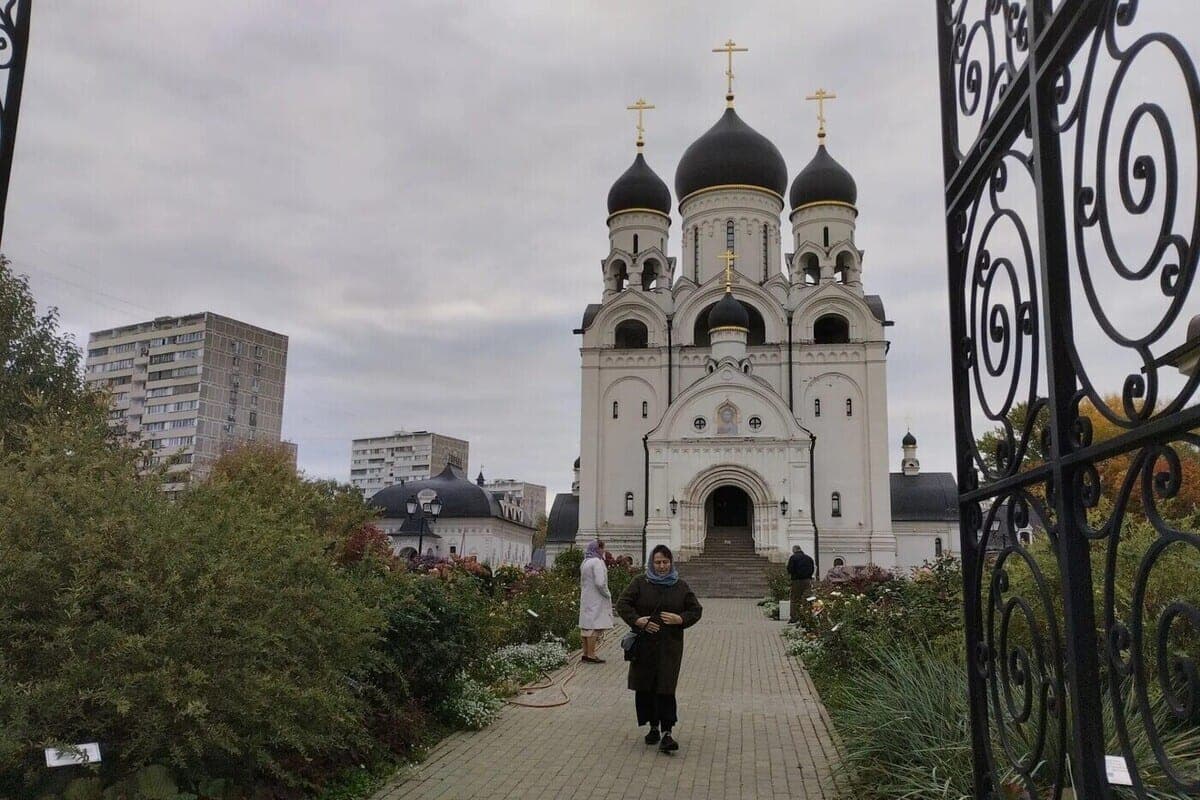
In Russia, on November 16, two holidays are celebrated:
In the international arena, this day is dedicated to important social topics:
According to the Orthodox calendar on November 16 (in the new style), believers remember a number of saints and events:
Today, November 16, 2026, the Orthodox Church honors the memory of several saints at once, and in the national calendar this day is known as Anna Klodnaya - a date that, according to legend, finally "bridges the way to winter." This day is associated with many traditions, rules and restrictions that have been developed in Russia for centuries. Let's figure out what to do and what to avoid today.
Why is November 16 so special?
This day has two semantic centers. The first is church: believers remember the holy princess Anna Vsevolodovna, the daughter of the Kiev prince Vsevolod Yaroslavich and the Greek princess. She was one of the most educated women of pre-Mongol Rus, took tonsure in St. Andrew’s Monastery in Kiev, became his first abbess and founded the first school in Russia for girls. The people worshipped her as an intercessor and healer.
The second is the memory of the martyrs Akepsim, Joseph and Aifalus, who suffered for their faith in Persia in the fourth century. According to legend, 80-year-old Bishop Akepsim, 70-year-old Presbyter Joseph and Deacon Aifal spent three years in prison, suffering hunger and thirst, but did not renounce Christ. After the execution, God glorified them with miracles: a tree grew on the burial site of Aifala, the fruits of which healed the sick.
These stories largely determined the popular prohibitions and customs of the day.
Popular prohibitions and signs have no strict scientific or dogmatic ecclesiastical justification. However, they retain the wisdom of our ancestors, reminding us of mercy, respect for elders and taking care of the house on the threshold of winter.
In the national calendar on this day our ancestors noticed the following signs:
Today, November 16, 2026, people with a variety of names celebrate their names. According to the Orthodox calendar on this day congratulate Agapius, Aifalus, Akepsim, Alexander, Atticus, Basil, Vincent, Vladimir, George, Eudoxius, Eustratius, Ilya, Joseph, Marin, Nicholas, Paul, Peter, Sevir, Simeon, Sergei, Fedor and Theodotus. Female names today at Anna, Eudokia, Snandulia, Theodota and Photinia - these names are associated with the memory of the saints whom the church remembers on November 16. Anna occupies a special place among the birthday people: in the national calendar, the day was called “Anna Cold” in honor of St. Princess Anna Vsevolodovna, the founder of the first school for girls in Russia.
In popular beliefs, it was believed that those born during this period have an attentiveness to detail and the ability to maintain balance in changing circumstances. They were credited with the ability to create an atmosphere of stability and soft order around them. Namedays on Anna Klodnaya were perceived as a symbol of perseverance and calm inner strength, and the day itself was celebrated at home - with baking, jelly and kind words to the perpetrators of the celebration.
Holy Princess Anna Vsevolodovna is one of the most educated and outstanding women of pre-Mongol Russia, the daughter of the Grand Duke of Kiev Vsevolod Yaroslavich and the Greek princess, the daughter of the Byzantine Emperor Constantine Monomakh. She was born in the second half of the XI century in a family that was the bearer of both Russian statehood and Byzantine spiritual traditions. It was this origin that largely determined her own path, her desire for enlightenment and monastic service.
Family and origin
The family to which the princess belonged occupied a special place in the history of Russia. Her father, Vsevolod Yaroslavich, spoke five languages, patronized the church and monasticism. Anna’s brother, the future Prince Vladimir Monomakh, also went down in history as a ruler who paid special attention to faith, education and upbringing. In an environment where knowledge and piety were valued, Anna grew up. Her mother, a Greek princess from the Monomakh family, brought to the family Byzantine cultural and spiritual traditions that had a huge impact on the future life of the princess.
Engagement and personal drama
Anna was engaged to the Byzantine prince, but the political union never took place. According to one version, the groom was forced to be a monk. This personal drama only strengthened the princess’ determination to devote herself to God. Instead of worldly life and dynastic marriage, she chose the path of monastic service, which proved no less significant for the history of Russian culture and education.
Tonsure and abbess
In 1086 Anna took tonsure in the St. Andrew Monastery founded by her father in Kiev and became his first abbess. She was engaged not only in the improvement of the monastery and economic issues, but also developed the library, brought books from long journeys. Under her leadership, the monastery turned into a center of spiritual enlightenment, where knowledge, bookliness and piety were valued. It was here that the princess began to implement her ideas about what a female monastic ministry should be.
Trip to Constantinople
In 1089 Anna went to Constantinople, where she studied the monastic traditions of the East. From this trip she brought a new Metropolitan John to Russia. Its goal was to develop spiritual education in the country. Staying in the Byzantine capital allowed her to get acquainted with Eastern monastic practices and transfer them to Russian soil. This trip was an important stage in the formation of Anna as a church figure and enlightener.
The first school in Russia for girls
One of her most important undertakings was the creation of the first school for girls in Russia. At the Andreevsky Monastery, the princess organized for young pupils training in writing, crafts, singing and the basics of Christian morality. This institution was unique for its time. Anna made the traditions of female education, borrowed from Byzantium, part of the Russian cultural environment. Later, her example was followed by Sister Eupraxia, who also adopted monasticism and supported the development of the female community. The school at St. Andrew’s Monastery became the prototype of future women’s educational institutions in Russia, and the princess herself went down in history as one of the first Russian enlighteners.
Gift of healing and reverence
The name of the princess is also associated with the legend of her gift of healing. Anna helped the sick and instructed people in word and deed, she was revered among the people as an intercessor and healer. That respect continued after her death. People came to her for advice and consolation, and her image of a merciful and wise mentor firmly entered the people's memory. It was this veneration that led to the fact that the day of her memory became a special holiday in the national calendar - Anna Kholodnaya.
Death and burial
Anna died on November 3, 1112 and was buried in the monastery she founded. Later St. Andrew’s Monastery was destroyed by the invasion of Batu. Despite the fact that the monastery was not preserved, the memory of the holy princess continued to live in the church and folk tradition. Her name has remained in history as a symbol of female enlightenment, mercy and spiritual resilience.
Reverence in the National Calendar
Every year on November 16, Orthodox believers honor the memory of St. Princess Anna Vsevolodovna. In the national calendar, the day was called Anna Cold, the peasants associated with it the arrival of real frosts. In Russia, this day was perceived as the border between autumn and winter. “Anna-Kholodnitsa paves the way for winter,” said the ancestors. In the villages tried to complete all household chores: cleaning, repair, insulation of the house. It was believed that the health of the whole family in the long winter months depends on how well-groomed and warm the house will be.
Traditions of the national holiday
The ovens on Anna Klodnaya began to sink especially early, checked the thrust, carefully watched the flames and smoke - this was a kind of test for the readiness of the dwelling to frosts. Women baked pies, pancakes and loaves with berry filling, cooked porridge and compotes. It was believed that these treats could appease St. Anne and “promote” winter, so that it was not harsh. Food was carried to neighbors, shared with the poor - generosity on this day, according to legend, returned warmth and prosperity. In some regions, the ceremony of “invoking heat” was held, lighting candles at the entrance to the house to “bait” light and coziness.
The holiday was perceived as a time of purification and renewal. People wanted to get rid of everything superfluous not only in the house, but also in thoughts. It was customary to forgive offenses, end disputes, restore order in relations. The prohibitions on Anna Cold concerned primarily the internal state of a person. Disturbance of mental balance was considered a bad omen. On the holiday it was forbidden to complain about life, according to legends, bad thoughts acquired the power of a curse. Even talking to yourself could hurt. The old people said that the evil forces, having infiltrated the house through the chimney, would hear complaints and accept them as an invitation, bringing discord and trouble to the house. Therefore, on November 16, it was recommended to be silent, avoid despondency, anxious thoughts, so as not to attract trouble and not “freeze” love and luck for the whole winter.
The Holy Princess Anna Vsevolodovna left a noticeable mark in the history of Russian culture and education. She was not only the first abbess of St. Andrew’s Monastery, but also the founder of the first school for girls in Russia, an enlightener, a scribe and a healer. Her life is an example of how personal drama and the rejection of worldly goods can lead to a ministry that has been meaningful for generations. She combined Byzantine spiritual traditions and Russian statehood, becoming one of the key figures of the pre-Mongol period. Her memory is preserved both in the church calendar and in folk traditions, and her name is still worn today by women who celebrate the name day on November 16.
1532 – Battle of Cajamarca, where Francisco Pizarro defeated the Inca army.
1776 – American War of Independence: The British took Fort Washington.
1933 – Establishment of diplomatic relations between the USSR and the United States.
1938 - The official date of birth of the sport discipline Sambo in the USSR.
1945 – UNESCO is formed and the discovery of the elements americium and curium is announced.
1950 – The Second World Peace Congress opened in Warsaw and the World Peace Council was established.
1964 – First Plenum of the Central Committee of the CPSU after the removal of Nikita Khrushchev.
In 1965, the USSR launched an automatic interplanetary station Venera-3, which was the first in history to reach the surface of another planet.
1967 - The largest plane crash in the USSR at that time: the Il-18 disaster in Sverdlovsk, 107 people died.
In 1974, Alexander Solzhenitsyn held a press conference in Zurich on the future of Russia.
In 1988, the Supreme Soviet of the Estonian SSR declared the sovereignty of Estonia.
1989 – The Velvet Revolution begins in Czechoslovakia.
Alexander Menshikov (1673) - Companion of Peter I.
Alexander Kolchak (1874) — admiral, leader of the White movement, Supreme ruler of Russia.
Go Mojo (1892) was a Chinese writer and politician.
Osip Abdulov (1900) – Soviet actor of theater and cinema.
Nikolai Erdman (1900) – Soviet playwright and screenwriter.
Lev Sverdlin (1901) - Soviet actor, People's Artist of the USSR.
Anatoly Dobrynin (1919) – Soviet diplomat, ambassador to the United States.
Heinrich Borovik (1929) was a Soviet and Russian journalist and publicist.
Vladimir Ilyin (1947) – Russian actor of theater and cinema.
Alexander Malinin (1958) is a Russian pop singer.
Sergei Galanin (1961) is a Russian rock musician.
Igor Kornelyuk (1962) is a Russian composer and singer.
Alexander Popov (1971) – legendary Russian swimmer, 4-time Olympic champion.
Sanna Marin (1985) is a Finnish politician and former Prime Minister of Finland.
Vasily Adodurov (1780) – Russian philologist and mathematician, teacher of Lomonosov.
Philip Shkulev (1930) was a Russian Soviet poet.
Gustav Shpet (1937) – Russian philosopher and psychologist, shot.
Solomiya Krushelnitskaya (1952) is a Ukrainian opera singer.
Vera Caralli (1972) – Russian ballerina and silent film actress.
Pavel Alexandrov (1982) – mathematician, founder of the Soviet topological school.
Vasily Zhuravlev (1987) – Soviet film director.
Dmitry Skobeltsin (1990) – physicist, academician of the Academy of Sciences of the USSR.
Nikolai Kondratyuk (2006) - Ukrainian opera singer, People's Artist of the USSR.
Yuri Levada (2006) is a Russian sociologist and political scientist.
Sergei Magnitsky (2009) is a Russian auditor.
Svetlana Svetlichnaya (2024) is a Soviet and Russian actress.
Vladimir Shklyarov (2024) is a ballet artist, the premiere of the Mariinsky Theatre.
In the national calendar, November 16 bears the name of Anna Kholodnaya - in honor of St. Princess Anna Vsevolodovna, abbess of St. Andrew's Monastery in Kiev. In Russia, this day was perceived as the border between autumn and winter: "Anna-Kholodnitsa bridges the way to winter." Peasants tried to complete all household chores - cleaning, repair, insulation of the hut, hemped the cracks, stacked firewood closer to the house, sorted through the stocks in the cellars, cleaned and lubricated the sledge. The stoves began to sink especially early, checked the thrust and carefully watched the flames and smoke: this was a kind of test for the readiness of the dwelling to frosts. It was believed that the health of the whole family in the long winter months depends on how well-groomed and warm the house will be.
The main culinary custom of the day was frozen milk and berries. Milk in a jug was taken outside, allowed to harden, then shrugged with a knife on thin slices, sprinkled with sugar and served to pancakes - this simple but festive treat symbolized the arrival of cold weather. From frozen berries made jelly and baked pies, pancakes and caravans with berry filling, cooked porridge and compotes. It was believed that these treats could appease St. Anne and “promote” winter, so that it was not harsh. Food was carried to neighbors, shared with the poor: generosity on this day, according to legend, returned warmth and prosperity. In some regions, the ceremony of “invoking heat” was held, lighting candles at the entrance to the house to “bait” light and coziness. Women and girls in the evenings in the light of a ray or candle weaved, spinned, embroidered - woven on Anna Cold, according to legend, had a special power and protected from damage and evil eye.
The holiday was perceived as a time of purification and renewal: people sought to get rid of everything superfluous not only in the house, but also in thoughts, it was customary to forgive offenses, end disputes and restore order in relationships. There were also strict restrictions. It was impossible to quarrel with loved ones - "If you quarrel with Anna - until spring you will not reconcile", swear, complain about fate and get discouraged, starting new affairs - any undertaking could "freeze", be lazy and lie idle, throw away bread and leftovers of food, bathe children, go on a long road without need and leave the house in a mess. Pregnant women were not recommended physical work. Particular attention was paid to the elderly: in memory of the martyrs Akepsim and Joseph, who until the last served people in old age, on this day they tried to show care for the elders. Folk signs of the day helped predict the weather: snow promised early and snowy winter, foggy dawn - thaw, frost on the trees - a rapid cold snap, and a clear starry sky at night - a sharp cold snap the next day.
On November 16, 2026, the Moon is in the growth phase and passes through the sign of Aquarius. This combination gives the energy of renewal, non-standard thinking and social activity. The Rising Moon in Aquarius favors future planning, experimentation, teamwork and technological endeavors, but can provoke excessive impulsivity, stubbornness and emotional detachment. The day is well suited for intellectual activity, innovative ideas and expanding the social circle - but requires caution in matters where patience and emotional involvement are needed.
Aries (March 21 – April 19)
Taurus (20 April – 20 May)
Twins (May 21 – June 20)
Cancer (June 21 – July 22)
Leo (July 23 – August 22)
Virgo (23 August – 22 September)
Libra (September 23 – October 22)
Scorpio (October 23 – November 21)
Sagittarius (November 22 – December 21)
Capricorn (22 December – 19 January)
Aquarius (20 January – 18 February)
Pisces (19 February – 20 March)
The Rising Moon in Aquarius is a period when energy is directed towards growth, renewal and expansion. Aquarius is a sign of air associated with intelligence, freedom, innovation and collective consciousness. On this day, the craving for experiments, non-standard solutions and social activity increases. People become more open to the new, but at the same time more stubborn and independent. The emotional sphere may fade into the background: Aquarius values the mind above the senses, which can lead to coldness and detachment in communication.
How to behave
On November 16, 2026, when the Growing Moon passes through the sign of Aquarius, hair and nail cutting is not one of the definitely forbidden procedures, however, it requires a conscious approach: the growing Moon is traditionally considered favorable for haircuts aimed at strengthening and growing hair, but the air Aquarius makes a note of unpredictability on this day - the result may not be quite the same as you planned, especially if you are prone to experiments with a form or color, so it is better to choose a proven master and not make spontaneous decisions under the influence of mood; as for nails, then the day is quite suitable for the treatment of November 16, but you do not just want to have a positive effect on the whole, but you do not to take an aggressively with the procedure on the day of your feet, but you are not to act in ordering on the day of November 26.
The numerical vibration of November 16, 2026 consists of the date of birth of the day (1 + 6 = 7), the month (1 + 1 = 2) and the year (2 + 0 + 2 + 6 = 10, then 1 + 0 = 1), which in total gives 7 + 2 + 1 = 10, and after reduction - 1. Thus, the key number of the day becomes the Unit - a symbol of beginning, initiative, independence and leadership. In combination with the Rising Moon in Aquarius, this energy takes on a special hue: The unit encourages bold undertakings and the desire to act first, and Aquarius adds originality and aspiration for independence, so the day is ideal for launching new projects, personal initiatives and anything that requires fresh eyes and determination, but requires caution with egocentrism and stubbornness.
The number 1 in numerology is traditionally associated with will, purpose and the ability to make your own way, and on November 16, 2026, this vibration is amplified by the presence in the date of two sixes (16 and 2026), which carry the energy of care, harmony and responsibility. This combination creates an interesting balance: on the one hand, you will be drawn to independence and leadership, on the other hand, there will be a need to take into account the interests of loved ones and act not only for yourself. Numerologists advise on this day not to contrast personal ambitions with collective ones, but to look for a formula in which your initiative benefits others - it is then that the energy of the Unit will be revealed most fully and constructively.
The practical recommendations of the numerological day are as follows: start new business, but not alone, but with a team of like-minded people; take responsibility for your decisions, without shifting it to others; avoid disputes for the sake of self-affirmation and do not try to prove your innocence at any cost. The number of the day favors bold ideas, but punishes for arrogance and unwillingness to listen. Affirmations related to confidence and openness to new things work well on this day, as well as short meditations on the topic “I choose my path and respect the path of others.” The lucky numbers of November 16, 2026 are 1, 7 and 10, and the color of the day, resonating with the vibration of the Unit, is considered scarlet - it helps to keep focus on the goal and not lose energy in the fuss.
Dreams on the night of November 16, 2026 are formed under a double influence: astrologically - the Rising Moon in Aquarius, and numerologically - the vibration of the number 1 (date 16.11.2026 is reduced to the Unit). Aquarius is responsible for the sphere of ideas, freedom, the future and the collective unconscious, so the dreams of this night are rarely everyday and down to earth - rather they will bring images of flight, water, technology, strangers, futuristic landscapes or situations of choice between personal and common. The rising moon amplifies the dynamic: Dreams can seem like an extension of the day’s thoughts and push for decisions you’ve been putting off. Number 1 adds the theme of beginning, independence and leadership to the plots - in a dream you can find yourself in the role of a pioneer, a person who takes the first step, or, conversely, watch someone else take the initiative into their own hands, which symbolizes your relationship with your own will and the right to choose.
In terms of interpretation, the key markers for this night's dreams will be repeated symbols and emotional backgrounds. If water is present in a dream, it is an echo of Aquarius and an indication of emotional processes that are worth realizing; if technique, gadgets, networks are a sign that the subconscious processes information and prompts non-standard decisions; if you see yourself in a group of people or, conversely, completely alone, this is a projection of the theme “I and the collective”, central to the Unit in combination with Aquarius. Numerologically, it is important to remember the number that you dreamed of, or the number of repetitive objects: 1, 7 and 10 are considered resonating with the energy of the day and can carry a clue. Write down your dreams immediately after waking up – The Rising Moon in Aquarius makes them informative, but quickly forgotten, and their meaning is most often associated not with literal events, but with the direction in which you should move: the dreams of this night tell you where to take initiative, and where to let go of control and trust the collective flow.
On November 16, Scorpions are born.
The air will warm up to 4 degrees, without precipitation.
The air will warm up to 3 degrees, cloudy, without precipitation.
According to NOAA USA and the British Met Office, on November 16, 2026, the geomagnetic situation is expected to be tense, but it will not come to a full-fledged magnetic storm: the Kp index during the day will fluctuate within 2-3.6 points - at night the activity is minimal (about 2 points from 00:00 to 06:00 Moscow time), during the day Kp will rise to 3, from 12:00 to 21:00 it will reach 3.33, and the most noticeable disturbances will fall on the evening, when from 21:00 to midnight the index can rise to 3.67 points, while in the second half of the day the local geomagnets are highly likely. The main reason for the deterioration will be the stream of fast solar wind from the coronal hole to the Sun, which will reach the Earth on the evening of November 16 and will intensify on November 17 – according to preliminary forecast, a full-fledged geomagnetic storm of the G1 class is expected on November 17, which does not particularly affect the technique, but can be felt by meteorologically dependent people.
What is Mercury retrograde and why is everyone scolding it


