
What is the holiday today: September 30, 2026
September 30, 2026 is the 273rd day of the year according to the Gregorian calendar. The New Year is exactly 92 days away. This date is rich in events: today celebrate professional holidays, remember important historical milestones and honor famous figures of culture and sports.
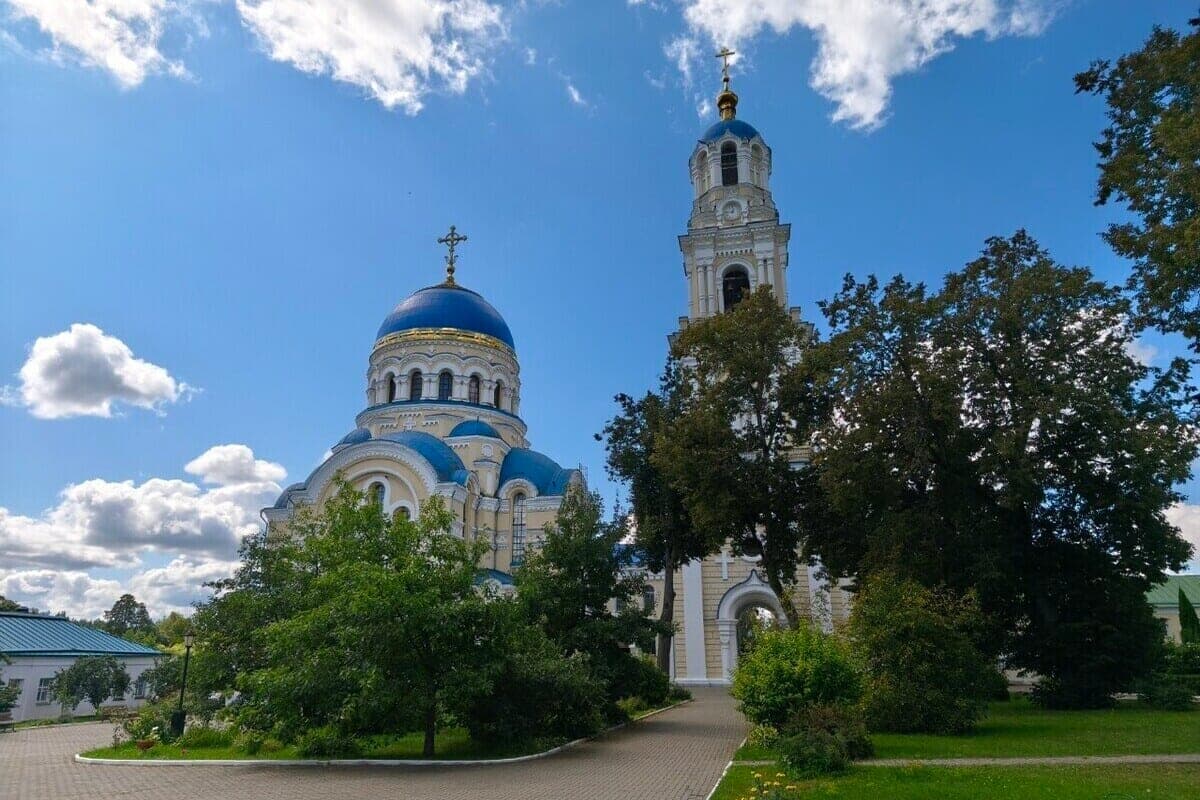
In Russia, on September 30, two significant holidays are celebrated.
Today, representatives of different professions and hobbies are honored in the world.
Among the unusual holidays, it is worth noting Women's Health and Fitness Day, Podcast Day, as well as Purring and Sipping Day for cat lovers. Lovers of needlework can celebrate the Day of cozy knitted blanket.
According to the Orthodox calendar on September 30 (September 17, Julian style), the memory of the martyrs Faith, Hope, Love and their mother Sophia (about 137) is celebrated. These saints suffered for their faith in the second century.
Also remembered today:
On September 30, 2026, Orthodox Christians celebrate the day of memory of the holy martyrs Faith, Hope, Love and their mother Sofia. This holiday, one of the most revered in the people, is also known as the Universal Babi Name Day. This day is associated with many traditions, beliefs and prohibitions that have developed over centuries.
On this day, despite the tragic history, it is customary to show care and love for others.
There are a number of prohibitions that our ancestors adhered to.
Every year on September 30, Orthodox Christians remember the holy martyrs Faith, Hope, Love and their mother Sophia. This date refers to the non-transitory holidays of the church calendar, that is, it does not depend on Easter and always falls on the same day. According to the Julian style, the memory of the martyrs is celebrated on September 17. This is not a state holiday, but one of the most revered Orthodox holidays in Russia, which is popularly called the Ecumenical Babi Name Day.
The Historical Basis of Life
According to church tradition, the events described in life took place in the II century in Rome, during the reign of Emperor Hadrian, who occupied the throne from 117 to 138. Sophia was a pious Christian widow. Some sources say she may have come from Milan. After her husband's death, she moved to Rome and settled in the house of a wealthy Roman woman named Thessamnia. There she alone raised three daughters, instructing them in Christian teaching.
The names of the daughters were not chosen by chance. Sophia named them after the main Christian virtues. In Greek they sounded like Pistis, Elpis and Agape, which translates as Faith, Hope and Love. The very name of the mother, Sofia, in Greek means “wisdom” or “wisdom”. Thus, four concepts that occupy an important place in Orthodox teaching are united in one family: wisdom, faith, hope and love. Girls from a young age were distinguished by beauty, meekness and deep piety.
The rumor of a house where convinced Christian women grow up attracted the attention of the viceroy of Antiochus, who brought the spies of Emperor Hadrian to the house of Sophia. Adrian was a pagan and one of the most brutal persecutors of Christians. Upon learning about the family, he wished to see the three sisters and their mother. All four appeared before the emperor and fearlessly confessed their faith in Christ.
The martyrdom of the sisters
The emperor tried to persuade Faith, Hope and Love to renounce the Christian faith. He promised beautiful girls wealth and position, and then turned to threats. However, none of the sisters agreed to sacrifice to the pagan gods. At that time, Vera was 12 years old, Hope was 10, and the younger Love was only 9 years old. The girls firmly declared that they recognized only God in heaven and were ready to die for Christ.
Then the angry Adrian ordered the children to be subjected to various tortures. According to life, the sisters were subjected to severe torture in turn. They were mercilessly beaten, burned with red-hot iron, put on a hot grille, thrown into boiling tar and into the oven. But the Lord kept them safe: fire and boiling resin did not harm them, and miraculously there were no traces on the body of the Faith. This only made the persecutors more angry. Seeing the steadfastness of the girls, the executioners beheaded them one by one. All three sisters were martyred without renouncing their faith.
The Feat of Saint Sophia
Saint Sophia was not subjected to bodily torture. However, she faced a greater ordeal: the emperor forced her mother to watch her daughters suffer and die. It was the worst suffering for her. Adrian gave Sophia the bodies of the executed girls. She placed them in the ark, took them out of the city and gave them up on a high hill. According to the life, the woman spent two days at the grave of her daughters in unceasing prayer, after which she died of grief on the third day. The Lord sent her a quiet end, and her soul departed to God, united with her daughters.
Orthodox tradition honors Sophia not as a martyr who shed blood, but as a passionate bearer – a mother who voluntarily shared the suffering of children and accepted death as a feat. The church listed her and her daughters as saints. Their feat was an example of spiritual resilience and the power of faith. The three little girls did not renounce Christ even under torture, and their mother accepted the death of the children as a test.
Symbolic meaning of names
The names of Faith, Hope, and Love are directly related to the three major Christian virtues of which the Apostle Paul refers in the First Epistle to the Corinthians. At the end of the famous chapter 13, he puts them together in one sentence: “Now these three remain: faith, hope, love; but love is greater.” This symbolism was continued in the image of the mother. The Greek word “sophia” is translated as “wisdom”, so the life of the family is often understood as a whole spiritual image: wisdom nurtures faith in a person, supports hope and leads to love. In church hymns the connection between the names of the martyrs and the Christian virtues is emphasized especially clearly.
Love has a special meaning in this series. In the same chapter, the apostle Paul writes that she endures long, merciful, and “never ceases.” That is why in the Christian tradition, love occupies the highest place among the three virtues: faith gives a person spiritual support, hope helps to maintain hope, and love determines his relationship to God and his neighbors. At the same time, the name of St. Sophia of Rome should not be directly associated with the theological concept of “Sophia, the Wisdom of God.” Coincidence is based on the meaning of the Greek name, while the Wisdom of God in Orthodox theology is mainly related to Christ and has a separate tradition of interpretation.
Honoring the Martyrs and the History of the Relics
The veneration of the feat of Faith, Hope, Love and Sofia began quite early. There is evidence that in the seventh century they were honored as saints. The first detailed lives appeared only in the VII-VIII centuries in Georgian, Armenian, Latin and Greek. When translated into Slavic, the Greek names of the girls acquired the usual form - Faith, Hope, Love. The name Sophia ("wisdom") has retained its Greek form.
After their death, the holy martyrs were buried outside Rome, and the first centuries Christians honored their grave. In 777, the relics of the martyrs were solemnly transferred from Rome to the territory of modern France. At the request of the Bishop of Strasbourg Remigius, they were taken to the convent of Echo in Alsace, near Strasbourg, with the aim of strengthening Christianity in those parts. There the relics were placed in a stone sarcophagus, and the monastery became a place of pilgrimage for believers from all over Europe for many centuries.
However, in the era of the Great French Revolution, at the end of the XVIII century, the monastery in Esho was destroyed, and the main shrine disappeared. The nuns managed to hide the relics, but the cache was never found later. It is assumed that the incorruptible remains of the saints are still hidden somewhere in the vicinity of Echo. Centuries later, the surviving particles of shrines were collected in the restored monastery. In 1938, Catholic Bishop Charles Rouche brought to Echo from Rome two new particles of the relics of St. Sophia. Now in the Church of St. Trophim in Echo there is a large tomb, an exact copy of the lost ancient crayfish, in which a part of the relics of St. Sophia is nested, as well as a crystal ark with another particle of relics. Since 2012, every year on September 30, there is a liturgy in Church Slavonic, French and Moldovan.
In addition to Alsace, particles of the relics of the saints dispersed throughout the world. A significant part of the shrine is now kept in Russia. In the Moscow Church of Sofia the Wisdom of God on the Lubyanka there is most of the relics of St. Sophia of Rome. Other fragments of the relics of Faith, Hope, Love and Sofia are found in various Orthodox churches, for example, the arks with these relics are in St. Petersburg, and in 2011 they were transferred to the St. Sophia Cathedral of the convent in Almaty.
People's worship: Universal namesakes
The church date eventually received the popular name Ecumenical Babi names. In Russian tradition, September 30 was seen as a special women’s day associated with the memory of Sofia and her daughters. There was also an old name “Baby howl”. This name is due, among other things, to the fact that on one day the name day was celebrated by several women with the same names. Therefore, the date was perceived as a kind of common women's holiday.
One of the most famous customs is associated with ritual crying. On the morning of September 30, women were supposed to intentionally lament and cry for themselves, their relatives and friends, to remember their grievances, losses and anxieties. In some places, it was customary to conduct a ritual by the water. Even in a prosperous life, this custom was observed. The ancestors believed that the mourned grief will remain in the past, and the house will be protected from new evils. Tears on this day were considered cleansing: they believed that, “crying out” on September 30, you can get rid of accumulated grievances and sorrows for the whole year.
After the morning lamentations, they moved to the brighter part of the holiday. Women were washed with holy water, “to be beautiful and happy”, then began to set the festive table. The main pastries of the day were considered loaf or kalach, as well as pies. At the ready loaf, symbolic actions were performed: according to some customs, a lit candle was inserted into the loaf and a special prayer was read, after which all households were treated with this bread. It was believed that such a ceremony will bring well-being and health to the house. On the holiday itself, women necessarily went to church to pray and put candles for their loved ones. According to custom, three candles were placed: two at the icon of Christ and one in the already mentioned loaf of the house.
In the evening, the youth organized autumn gatherings. Girls and guys got together, sang songs, talked, sometimes guessed, and most importantly – got acquainted and looked at each other. The Day of Faith, Hope, Love was considered a good time for matchmaking: it was September 30 that matchmakers often came to marry brides. However, it was not recommended to play weddings and get married on this day - popular rumor claimed that a marriage concluded on a sad day in memory of the martyrs could be unhappy. Therefore, the young only agreed on the engagement, and the wedding itself was transferred to another date.
Pray for the Holy Martyrs Faith, Hope and Love
In the Orthodox tradition, martyrs Faith, Hope, Love and their mother Sophia are addressed with requests for strengthening faith, spiritual resilience, peace in the family and help in difficult circumstances. Holy Faith is asked for strengthening in faith, Hope for the best and deliverance from despondency, Love for love and peace of mind, and Sophia for wisdom and intercession before God. Prayer is especially effective for mothers praying for their children. Women from ancient times pray for the welfare of the family, women's health, healing from infertility and peace in the house.
Their memory is also reflected in the liturgical texts. One of the forms of prayer is the tropar, a short church chant that reveals the meaning of the saint’s feat or the day of his memory. In the tropare, martyrs are asked to strengthen Christians “in faith, love and hope,” which directly echoes the names of the three sisters and the spiritual meaning of their lives. This theme continues kondak - another brief chants. It recalls the daughters of Sophia, who suffered for the Christian faith and received the “incorruptible crown” from Christ. A more advanced form of prayer is an akathist. It consists of alternating kondaks and icons, and a separate akathist to Vera, Hope, Love and their mother Sofia is dedicated to the whole family.
September 30th
In everyday tradition, on September 30, it is customary to congratulate Ver, Hope, Love and Sophia. The church approach is more accurate. Nameday names are associated with the memory of a particular saint, in whose honor a person received a name at baptism. Therefore, September 30, first of all, is the day of the names of those women and girls whose heavenly patrons were the Roman martyrs. For Sophia, this clarification is especially relevant: there are several saints with this name in the month-word, so the name day depends on the heavenly patroness of a particular person. According to the church calendar on September 30, the name day also celebrates Alexandra, Apollinaria, Irene, Arina, Lucia, and of the men - Akim, Ivan, Ilya, Myron, Nile, Paul, Seraphim and Jan.
The Day of Remembrance for Believers
Today, September 30 for believers is not only a day of remembrance of saints, but also an opportunity to address the values with which their names are associated. The main theme of the day revolves around the three Christian virtues and the resilience of the family in the face of hardship. Folk name days, crying and autumn signs were added later and belong to the folklore layer. Therefore, it is better to separate church veneration and ancient everyday customs: so history preserves both meaning and accuracy.
The clergy separately draw attention to the fact that folklore beliefs were sometimes mixed with Orthodox customs. The Church does not prescribe special weeping, weather divination or house rituals. Orthodox Memorial Day does not have a separate set of household prohibitions such as the prohibition to wash, sew, clean or take scissors in your hands. The Church encourages believers to attend divine services, pray to the holy martyrs and spend the day in spiritual concentration. Work is allowed: there is no church ban on cleaning, needlework or ordinary work in memory of the martyrs. Signs are folklore, and predictions about weddings, weather, or future family life are not church precepts.
The history of the family, who lived in the second century, became part of the Christian tradition, and the names of the three sisters eventually became symbols of virtues. This day reminds us that these values remain unchanged at all times. For believers, September 30 is an opportunity to stop, remember the main values of life and spend time with loved ones. Visiting the temple, prayer and good deeds are not formal requirements of the holiday, but are perceived as a natural way to spend a memorable day.
Name days today are celebrated: Faith, Hope, Love, Sophia, as well as Ilya, Zeno, Myron and Nile.
In the national calendar, this day is called the All-World Women's Name Day. The holiday in memory of Faith, Hope, Love and Sofia, as a rule, is clear and warm.
With this day associated with their sayings: "Moose-rogues celebrate the summer wake." Our forefathers also had maiden gatherings.
The main weather signs:
1799 Battle of Glarus during Suvorov's Swiss campaign.
1908 – The play by Maurice Meterlinck “The Blue Bird” was first staged on the Moscow Art Theatre.
1916 – Jan Nagursky on the seaplane M-9 performed a “dead loop”.
1928 – Pravda published an article by N. Bukharin “Notes of an Economist” criticizing Stalin’s economic policy.
1941 – Operation Typhoon (German offensive on Moscow) begins. On the same day, the Nazis destroyed the ghetto in Ostrovno (Vitebsk region).
1948 - On the helicopter GM-1 (prototype Mi-1) design OKB M.L. Mil test pilot M.K. Baikalov developed a speed of 100 km / h, and then reached a maximum of 170 km / h.
1965 – Honorary titles “Honored Pilot of the USSR” and “Honored Navigator of the USSR” were established.
1971 – The U.S. and the Soviet Union sign an agreement in Washington on measures to reduce the risk of nuclear war.
1982 – The State Chamber Ensemble “Moscow Virtuosi” was created under the leadership of Vladimir Spivakov.
1984 - The western and eastern branches of the BAM are joined.
1988 - In the final of the men's basketball tournament at the Olympic Games in Seoul, the USSR team beat the team of Yugoslavia (76:63).
1998 – Academician Dmitry Likhachev was awarded the highest award of Russia – the Order of St. Apostle Andrew the First-Called No. 1.
1999 – Second Chechen War: Russian federal troops enter Chechnya.
2015 – Russia’s military operation in Syria begins.
1791 – The last opera by W. A. Mozart, The Magic Flute, premiered in Vienna.
1846 – American dentist William Morton first removed a tooth under anesthesia.
1882 – In the American town of Appleton, the world’s first hydroelectric power plant began operating, distributing electricity to many consumers.
1929 - The BBC English service broadcasts for the first time.
1938 – The Munich Agreement is signed.
1980 – The first Ethernet specification is published.
1891 – Otto Schmidt, Soviet mathematician, astronomer, polar explorer, chief editor of the first Great Soviet Encyclopedia, Hero of the Soviet Union.
1895 – Alexander Vasilevsky, Marshal of the Soviet Union, Chief of the General Staff, twice Hero of the Soviet Union.
1908 – David Oistrakh, Soviet violinist, conductor and teacher.
1917 – Yuri Lyubimov, Soviet and Russian theater director, actor, creator and director of the Taganka Theatre.
1925 – Vera Vasilyeva, theater and film actress, People’s Artist of the USSR.
1927 – Yuri Kayurov, theater and film actor, performing the role of Lenin in a number of films.
1933 – Ilya Kabakov, Soviet and American conceptual artist.
1963 – Andrei Konstantinov, Russian journalist, writer, screenwriter.
1994 – Aliya Mustafina, Russian gymnast, two-time Olympic champion.
1207 – Jalaladdin Rumi, Persian Sufi poet.
1964 – Monica Bellucci, Italian actress and model.
1975 – Marion Cotillard, French actress, Oscar winner.
1997 – Max Verstappen, Dutch racing driver, four-time Formula 1 world champion.
1246 – Yaroslav Vsevolodovich, Grand Duke of Kiev and Vladimir.
1915 – Konstantin Makovsky, Russian artist.
1948 – Vasily Kachalov, theater actor, People’s Artist of the USSR.
1955 – Mikhail Chekhov, Russian and American actor, theater teacher and director, nephew of A. P. Chekhov.
1961 – Alexander Bryantsev, founder and director of Russia’s first theater for children.
1970 – Nikolai Konrad, Russian and Soviet Orientalist, academician of the Academy of Sciences of the USSR.
1980 – Anatoly Kotrov, theater and film actor, People’s Artist of the USSR.
1999 – Dmitry Likhachev, Soviet and Russian philologist, art critic, academician.
2009 – Pavel Popovich, Soviet cosmonaut, Hero of the Soviet Union.
420 – Jerome of Stridon, church writer, creator of the canonical Latin translation of the Bible.
1955 – James Dean, American actor.
1985 – Simone Signoret, French film actress.
1985 – Charles Francis Richter, American physicist and seismologist who developed a scale to estimate the strength of earthquakes.
In the national calendar, September 30 is called the Ecumenical Babi names, or Babia ot. This day was perceived as a special women's holiday, because on one day the name day was celebrated by several women with the names of Faith, Hope, Love and Sofia. One of the most famous customs was ritual crying. In the morning, women were supposed to intentionally lament and cry for themselves, relatives and friends, remember the grievances and anxieties experienced. Even in a prosperous life, this custom was observed. The ancestors believed that the mourned grief will remain in the past, and the house will be protected from new evils. Tears on this day were considered cleansing: “crying” on September 30, you could get rid of accumulated grievances and sorrows for the whole year. In some places, the ceremony was carried out by the water, and after crying, women were washed with holy water to be beautiful and happy.
After the morning lamentations, they moved to the brighter part of the holiday. Women began to cover the festive table, the main baking of the day was considered a loaf or kalach, as well as pies from apples of a new harvest and pretzel. At the ready loaf, symbolic actions were performed: a lit candle was inserted into it and a special prayer was read, after which all households were treated with this bread. It was believed that such a ceremony will bring well-being and health to the house. On the holiday itself, women necessarily went to church to pray and put candles for their loved ones. According to custom, three candles were placed: two at the icon of Christ and one in the loaf of the house. On this day, it was customary to congratulate birthday girls, give them personal icons consecrated in the church, and small gifts. Celebrations could last three days and included festivities, and in the evening the youth arranged autumn gatherings, where girls and guys got acquainted and looked after each other.
The Day of Faith, Hope, Love was considered a good time for matchmaking: it was September 30 that matchmakers often came to marry brides, and the holiday itself was called Maiden in some places. However, it was not recommended to play weddings and get married on this day - popular rumor claimed that a marriage concluded on a sad day in memory of the martyrs could be unhappy and short-lived. Therefore, the young only agreed on the engagement, and the wedding itself was transferred to another number, most often on the Intercession. Many prohibitions are associated with this day: women were not supposed to do hard work, cleaning, washing and needlework, they were not allowed to quarrel, gossip, lend, start new business and arrange noisy feasts. The holiday gave housewives a rare respite from everyday worries, so all the big things around the house tried to move to another date.
On September 30, 2026, the Moon is in a waning phase in the sign of Taurus. Taurus is a sign of the earthly element, ruled by Venus, responsible for stability, material values, sensuality and perseverance. The waning Moon in Taurus creates a special atmosphere: on the one hand, it gives thoroughness, practicality and the desire to restore order in affairs, on the other - it can provoke stubbornness, inertia and excessive attachment to the usual way of life. This is a day when emotions slow down and decisions require balance. Energy decreases, so it is better to finish what you started than to start a new one. The day is favorable for financial issues related to real estate, land, agriculture, as well as to restore order in the house and in documents.
Aries (March 21 – April 19)
Taurus (20 April – 20 May)
Twins (May 21 – June 20)
Cancer (June 21 – July 22)
Leo (July 23 – August 22)
Virgo (23 August – 22 September)
Libra (September 23 – October 22)
Scorpio (October 23 – November 21)
Sagittarius (November 22 – December 21)
Capricorn (22 December – 19 January)
Aquarius (20 January – 18 February)
Pisces (19 February – 20 March)
The waning moon in Taurus is a period when energy declines, and practicality, stability and completion come to the fore. Taurus is a sign of the earth ruled by Venus, so the day is colored in tones of sensuality, materiality and perseverance. However, the waning Moon makes these qualities somewhat inert: you may want peace, comfort, “grounding”, but there is a risk of stubbornness, laziness and excessive attachment to the usual.
How to behave:
How does the waning moon in Taurus affect:
Remember: this is the day of completion and grounding. Take your time, be attentive to the details, and take time for the things that really matter – yourself, home, and loved ones.
On September 30, 2026, when the waning Moon passes through the sign of Taurus, cutting hair and nails takes on a special meaning: Taurus is responsible for beauty, sensuality and material stability, and the waning Moon is traditionally considered favorable for haircuts - it symbolically "cuts" everything superfluous, helps to get rid of negativity and slows down hair growth, which is ideal for those who want to stay in shape longer. But there's a caveat: Taurus does not like haste and sudden changes, so the haircut on this day should be neat, without experiments and a radical change in image - it is better to trim the ends, update the shape, put the nails in order, but not try to become a "different person." Nail care on this day is especially good: the waning Moon in the earth sign strengthens the nail plate, and Taurus favors everything related to the body and beauty. The main thing is not to appoint a haircut for the evening, when energy is already running out, and not to cut your hair in a state of irritation or resentment, so that along with your hair you do not “cut off” your luck.
The number September 30, 2026 consists of the date and year: 3 + 0 + 0 + 0 + 9 + 2 + 0 + 2 + 6 = 22, and then 2 + 2 = 4. Thus, the vibration of the day is the four, the number of order, stability, labor, and material basis. In numerology, 4 is associated with discipline, practicality, honesty and the ability to build a solid foundation; this number does not tolerate chaos, laziness and empty promises. The day favors those who are ready to complete what they have started, restore order in business and finances, strengthen what has already been created, and not pursue new horizons. Considering that on the same day the waning Moon is in Taurus - the sign of the earthly element ruled by Venus - the energy of the four is enhanced: the day is literally created for practical, earthly and tangible affairs.
For a personal number of the day, it is important to take into account the number of birth: if you add up 30 (3 + 0 = 3), you get a triple - the number of communication, creativity and self-expression, which in combination with the four gives an interesting alloy: on the one hand, you want ease and communication, on the other - circumstances require thoroughness and completeness. This means that on September 30, 2026, it is better not to embark on adventures and not to talk, but to use the three to establish contacts, negotiations and a creative approach to routine tasks. People born under the numbers 4, 8, 13, 17, 22 and 26 can feel special support for the day - they are easier given financial issues, real estate transactions and cases that require patience.
From the point of view of numerological recommendations, September 30, 2026 is not the best day to start new projects, weddings, large purchases “on emotions” and risky financial transactions: the four and waning moon in Taurus require completion, not beginning. But this is a great time to audit the budget, review documents, repay debts, repair, cleaning, care for the body and health, as well as to strengthen family and business ties. Number 4 likes specifics: set clear goals, write plans, count money, and the day will go by with maximum benefit. And remember: the vibration of the four rewards those who act honestly and patiently, and haste and fuss on this day can lead to mistakes and losses. What is a master number and how it affects a person and fate
Dreams on the night of September 30, 2026 are formed under a double influence: astrologically it is the period of the waning moon in Taurus - the sign of the earthly element ruled by Venus, and numerologically - the vibration of the four (3 + 0 + 0 + 9 + 2 + 0 + 2 + 6 = 22 → 4), the number of order, stability and material basis. This combination makes dreams especially “dense”, realistic and bodily tangible: dreaming houses, apartments, money, food, land, gardens, things, as well as scenes from the past that require completion. The waning Moon in Taurus inclines the subconscious mind not to flights of fantasy, but to “inventory” – in a dream you can disassemble cabinets, count money, return to the places of childhood, meet deceased relatives or see plots related to debts, purchases and household arrangement. If water is present in the dream, it often symbolizes not emotions, but material flows - income, expenses, savings; if you dream food - it is a direct signal of how you meet your basic needs and feel safe.
From the point of view of numerology, the four color dreams in tones of duty, discipline and responsibility: likely stories where you finish something, repair, take an exam, fill out documents or look for a lost thing – all these are symbolic clues about unfinished business and “financial tails” that it is time to close. Such dreams are especially significant for people whose birth numbers are associated with 4, 8, 13, 17, 22 and 26: their subconscious can directly indicate the need to restore order in money, health or relationships. Negative dreams on this night are rare, but if you dream of a fire, a flood or loss of property, this is not a prophecy of trouble, but a signal of inner tension due to instability; it is useful in the morning to write down a dream, analyze what real things he "mirrors", and during the day to make at least one concrete step towards the completion of what he started - the waning Moon in Taurus and the number 4 will definitely support such work.
On September 30, Libras are born.
The air will warm to 16 degrees, without precipitation.
The air will warm up to 15 degrees, cloudy, without rain.
The geomagnetic background of September 30, 2026 is as favorable as possible: the probability of spending this day with a calm magnetosphere is 82%, only 15% is allocated to local disturbances and only 3% to the risk of a full-fledged magnetic storm, which makes the environment almost ideal for weather-sensitive people who can forget about pressure drops, headaches and mood swings caused by space weather. Nevertheless, even with such a level background, experts advise not to relax completely: in order to maintain the tone and support the body, you should give preference to high-quality rest, limit fatty foods, drink enough clean still water and end the day with a quiet walk in the fresh air - such mild prevention will help the body synchronize with a favorable rhythm of the day and use its resource with maximum benefit.
Why Men Think About the Roman Empire


