
Karelian doctors warned about the threat of a dangerous cocktail
Specialists of the Republican ambulance hospital again remind about the serious risks associated with alcohol consumption during the course of antibiotic therapy
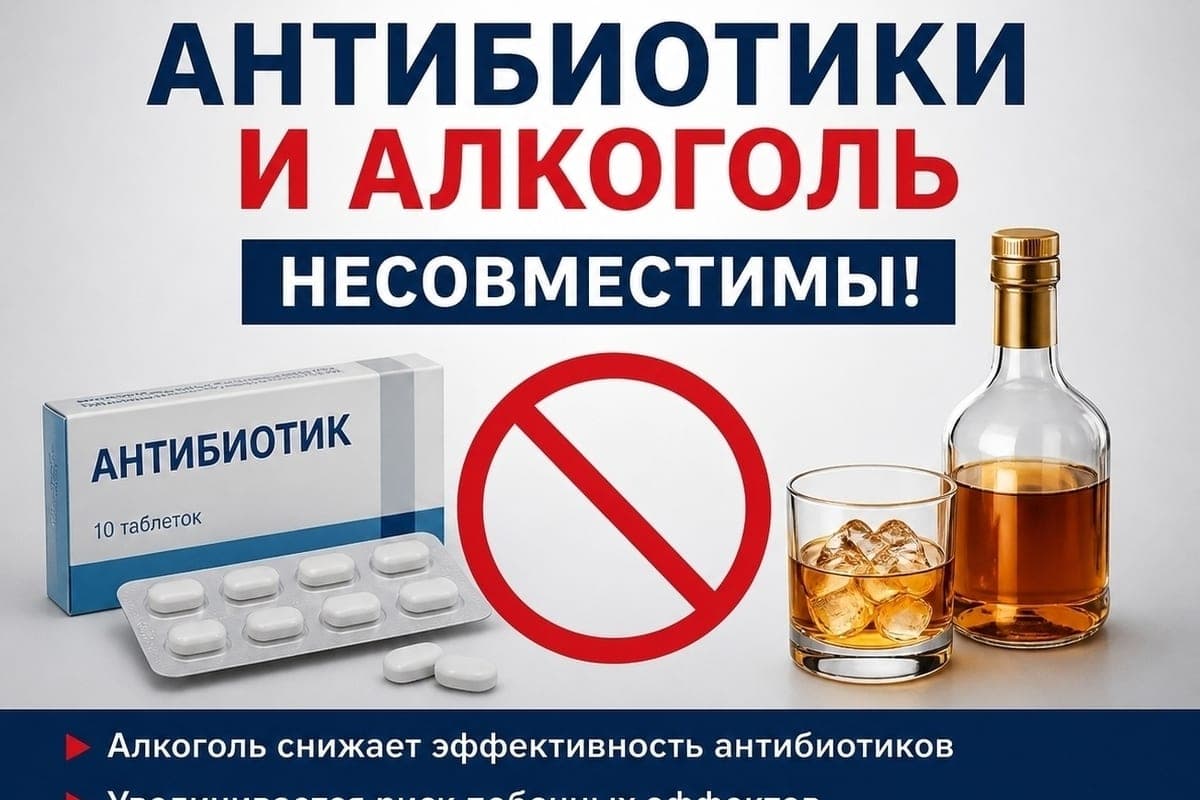
Specialists of the Republican ambulance hospital again remind about the serious risks associated with the use of alcohol during the course of antibiotic therapy. The combination of alcohol and antibiotics can lead to dangerous health consequences.
The main problem is that both alcohol and many antibiotics are metabolized in the liver using the same enzymes. Simultaneous intake of these substances creates an increased load on the liver, leading to an enzyme deficiency. This, in turn, contributes to the accumulation of toxic substances in the body, weakening the immune system and increasing the load on the organs.
Of particular danger is the so-called disulfiram-like (or antabus-like) reaction. This is an acute toxic condition that occurs while taking alcohol and a number of antibiotics. Its cause is an excessive accumulation in the blood of acetaldehyde - a toxic product of the breakdown of ethyl alcohol.
The most common disulfiram-like effect is caused by antibiotics such as:
Metronidazole
Some cephalosporins
Furazolidone
Chloramphenicol
Co trimoxazole
Symptoms of this reaction can be very serious and include:
Sharp redness of the face, neck and upper body (hyperemia).
Severe nausea and vomiting.
Frequent heartbeat (tachycardia) and heart rhythm disturbances.
Spikes in blood pressure.
Severe headache, tinnitus, hand tremors.
Feeling of lack of air, shortness of breath, panic attacks, fear of death.
Seizures.
Doctors strongly recommend to completely abstain from alcohol throughout the course of antibiotic treatment. Compliance with this simple rule will ensure the effectiveness of therapy and avoid undesirable and sometimes life-threatening consequences.


