
Kazan Astronomical Sites of UNESCO Presented in Moscow
In the Moscow Art Cluster on the eve of the Doctor of Physical and Mathematical Sciences, Professor of the Department of Astronomy and Space Geodesy of the Institute of Physics of KFU and Scientific Director of the Astronomical Observatory named after V
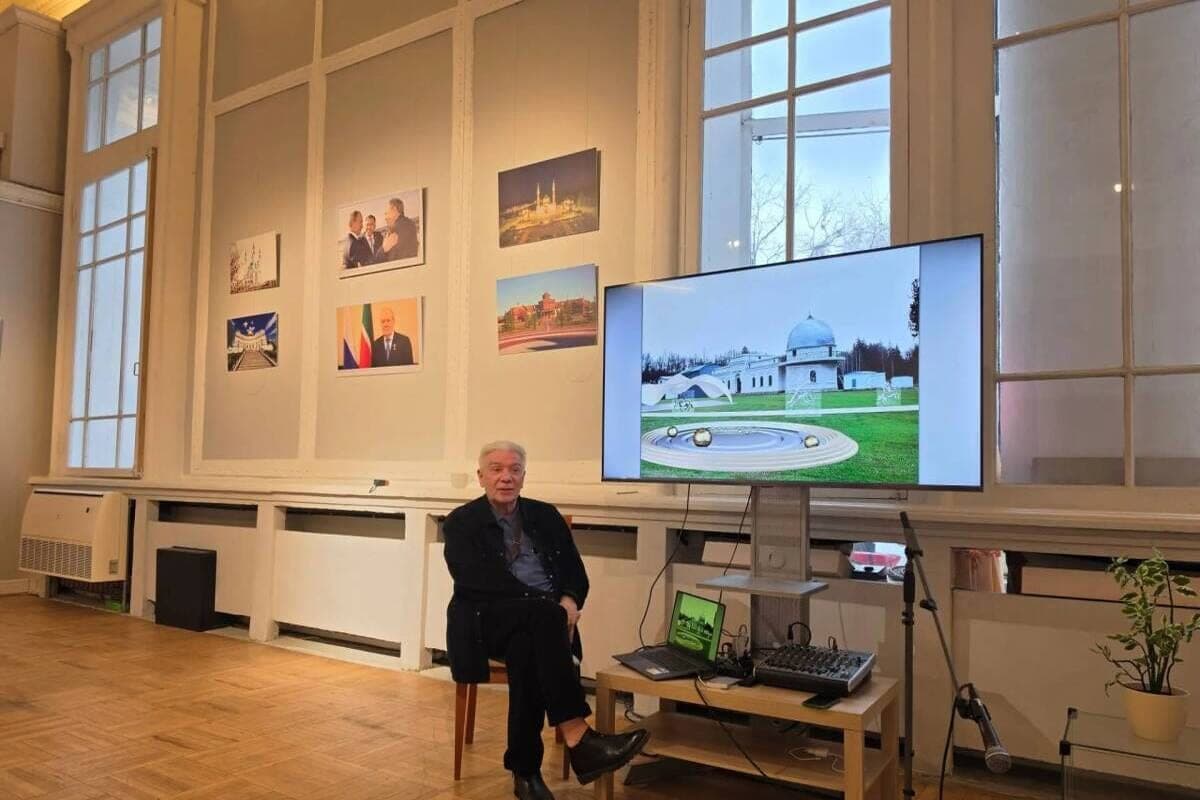
In the Moscow Art Cluster on the eve of the Doctor of Physical and Mathematical Sciences, Professor of the Department of Astronomy and Space Geodesy of the Institute of Physics of KFU and Scientific Director of the Astronomical Observatory named after V. P. Engelgardt KFU Yuri Nefedyev presented a lecture “UNESCO Astronomical Objects in Kazan”, reports IA Tatar-inform.
There was a conversation about history: from the creation of the Department of Astronomy and the city observatory in 1837 to the Engelhardt Observatory, about the craters of the moon, named after scientists of the Kazan school, who contributed to the study of space, as well as the planetarium named after cosmonaut Alexei Leonov.
We discussed why rare earth metals, which are used in the production of modern technology, will become scarce on Earth in 10-15 years. The scientist was asked about possible expeditions to the moon and exploration of the galaxy.
Thanks to the efforts of the first President of the Republic of Tatarstan Mintimer Shaimiev, Tatarstan is the only region in Russia where 4 of the 33 World Heritage sites in the country are located. The V. P. Engelhardt Astronomical Observatory and the Kazan City Astronomical Observatory became the first UNESCO astronomical objects in Russia.
The Department of Astronomy at Kazan University was founded in March 1810, the construction of the observatory building on the territory of the university began in 1833, under the leadership of the rector – the great mathematician Nikolai Ivanovich Lobachevsky.
The basis for the construction of a scientific astronomical base 25 kilometers from Kazan were the instruments donated by the famous astronomer and public figure Vasily Pavlovich Engelhardt. For many years they were friends with the director of the Kazan Observatory Dmitry Ivanovich Dubyago (in 1899 he was appointed rector of the university, became the third rector-astronomer).
Work on the inclusion of objects in the protected list was started in 2009. UNESCO Director General Irina Bokova and the State Counsellor of the Republic of Tatarstan, Chairman of the Board of Trustees of the Republican Renaissance Foundation Mintimer Shaimiev got acquainted with the unique objects during their visit in 2017.
The decision to be included in the UNESCO list was taken on 18 September 2023 at the 45th session of the UNESCO World Heritage Committee in Riyadh. The status was awarded to two objects in the single nomination “Astronomy Observatories of Kazan Federal University”


