
When to change summer tires for winter: what the law says and when you need to go to tire fittings
When to change tires for winter: by law, winter tires are mandatory from December 1, but it is worth changing shoes at +7 ° C. Penalty, tread depth and timing by region.
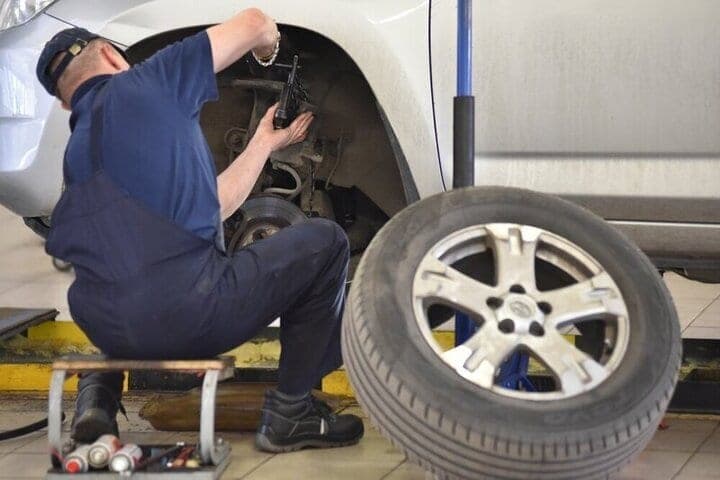
The main reference point for the driver is not the date in the calendar, but the weather. If for several days in a row the average daily temperature is kept within +5 ... +7 ° C and continues to fall, it is time to plan the replacement of summer tires. It is especially important to take into account night frosts, the likelihood of wet snow and the formation of ice.
Lawyer Alexander Pavlyuk in an interview with mk.ru reminded that the legislation establishes a seasonal framework, but does not appoint a common term for the country “re-shoes”.
There is no single date associated with the replacement of summer tires for winter tires for the whole of Russia. The law sets the framework, and when to change the rubber depends on the weather and climate of your region.
According to paragraph 5.5 of Annex 8 of the Technical Regulations of the Customs Union, in winter (December, January, February) it is prohibited to operate vehicles not equipped with winter tires. It turns out that December 1 is the deadline for federal requirements, but not a recommendation to postpone the replacement until the beginning of winter. If the cold came in October, it is safer to prepare the car in advance.
Requirements for car tires are enshrined in the technical regulations of the Customs Union TR CU 018/2011 "On the safety of wheeled vehicles".
When winter tires are required
As mentioned above, in December, January and February, M1 cars and N1 light trucks must have winter tires. The requirement applies to all wheels: installing winter tires only on the driving axle is not enough.
Important: By December 1, the car must meet seasonal requirements.
When it is forbidden to drive on studded rubber
Seasonal restrictions also have a downside. From June to August, you cannot operate a car with studded tires. The ban applies to vehicles regardless of their category. That is, from September 1, it is already possible to change the rubber to studded, if weather conditions require it.
For unstudded winter tires, there is no similar summer ban. However, this does not mean that they are comfortable and safe to ride in the heat: the soft rubber mixture wears out faster at high temperatures, and handling can deteriorate.
Timing in the regions
Regional authorities, taking into account the local climate, have the right to extend the period during which winter tires must be used.
“Local authorities can only extend the winter period, for example, set their terms from October to April, but not reduce or cancel the effect of federal seasonal restrictions,” said Pavlyuk.
It is important for motorists to take into account not only all-Russian requirements, but also the rules in force in a particular region.
Summer tires are designed to work in warm weather. When the temperature decreases, the rubber mixture becomes stiffer, the tires cling worse to the roadway, and the braking distance increases. On snow and ice, lack of grip is particularly dangerous, but problems can occur on cold asphalt.
That is why experts advise to focus on a stable +5 ... +7 ° C, rather than waiting for the first snowfall.
The question often arises: do you need to change your shoes if the day +10? +12 °C, and only at night the temperature drops? It depends on the driving conditions. During this period, ice may appear on certain sections of the road, even if there is no snow in the city.
Especially attentive to the weather should be treated by those who regularly drive early in the morning, at night or outside the city. On bridges, overpasses, open sections of roads and in lowlands, slippery sections appear earlier than on ordinary city streets.
To understand when you need to change tires for winter, you should monitor the average daily temperature. To do this, add temperature indicators per day and divide the amount by the number of measurements. If the average value is kept at +5 for several days... +7 ° C and continues to decline, you should not postpone the replacement.
The timing of seasonal replacement varies depending on the climate. In the north of the country, cooling begins earlier than in Central Russia, and in the south, stable plus temperatures can persist until late autumn.
North, Urals and Siberia
In the northern regions, Siberia, the Urals and Yakutia, winter preparations usually begin in late September - the first half of October. Here frost can come early enough, so waiting for steady snow to change rubber is unwise.
Drivers who regularly go on country roads should also consider the likelihood of ice on the roads.
Moscow, Moscow and Central Russia
In Moscow, the Moscow region and other regions of the middle strip of Russia, the right time for replacement often falls in the middle or second half of October.
St. Petersburg and the North-West
In St. Petersburg and neighboring regions, you can focus on the middle - end of October. Watch not only the forecast, but also the condition of the roads: due to frequent precipitation and temperature drops, ice may occur.
Southern regions of Russia
In the Krasnodar Territory, the Stavropol Region and the Rostov Region, seasonal replacement usually occurs in October-November. Here, the heat can last longer, so it is better to make a decision taking into account the forecast for the coming days.
Important: all dates are approximate. If the frost began earlier, it is not worth postponing the replacement until the usual month for the region.
When the first snow in 2026 in Moscow and the regions - read here.
Spikes or "Velcro" are one of the most common questions motorists ask themselves before winter. There is no universal answer.
As told mk.ru autoexpert and head of the public system of traffic police Konstantin Krokhmal, you need to choose tires not according to personal preferences, but based on where the driver often drives in the winter: the city where cleaned asphalt, or outside the city where ice and snow. You also need to remember about the effect of tread wear and speed on safety.
Studded tires
Suitable for frequent trips on icy roads, rolled snow and country roads.
“The spikes provide adhesion by mechanically biting into ice/snow,” Konstantin Krokhmal explains.
According to the car expert, on ice and rolled snow spikes are noticeably more effective, the braking distance on spikes is about twice as short as on “Velcro”. This is especially true in transitional conditions - when the street is about 0 ° C.
If the driver chooses a studded kit, after installation, he needs to pass a run-in. Konstantin Krokhmal recommends driving at least 500 km without sharp starts and braking, so that the spikes are better fixed in the tread.
Friction tires ("Velcro")
Such tires are suitable for urban roads, where reagents are often used and snow is regularly removed. On wet asphalt and with snow porridge, Velcro behaves better than spikes, says Konstantin Krokhmal.
“Velcro is maintained by the soft composition of rubber in the cold and many slats/slits that cling to and remove moisture. The tread pattern is more important, not just the depth, explains the car expert.
In addition, the "Velcro" is quieter, while the spikes give noise and vibrations, increase fatigue.
“Velcro is usually more economical. Spikes are more expensive and lose efficiency faster due to the loss of spikes. It mentions cases when the spikes that flew out damaged the cars behind, Krohmal added.
The car expert advises to choose:
All-season tires
This option is suitable for moderate climate and urban driving. This is convenient because you do not need to “catch” the moment of reshoes. But there are downsides:
In the cold, the rubber “blowns”, the grip is worse, the braking distance can increase about twice. In the heat, they become too soft: higher fuel consumption and faster wear. In the third year, replacement is required; as a result, you have to change more often than individual summer and winter ones, Konstantin Krokhmal says.
For the operation of the car on tires that do not meet seasonal requirements, liability is provided for under part 1 of Article 12.5 of the Administrative Code of the Russian Federation.
According to Alexander Pavlyuk, since September 2023, a rule has been introduced in the list of malfunctions in which the operation of cars is prohibited: in the winter months, winter tires should be on cars and light trucks. Therefore, leaving in winter on summer tires, the driver drives the car in conditions where operation is prohibited.
The amount of the fine is 500 rubles. Instead of a fine, the inspector may issue a warning.
“The inspector will not be fined simply because it is winter on the calendar. He's looking at the whole situation. For example, if there is a plus temperature outside, dry and there is no ice, the traffic police officer is more likely to limit himself to a warning, especially if the violation is primary. But if the road is ice, snow, and the driver has summer tires, then the risk of getting a fine is higher, the lawyer says.
According to him, under the penalty falls the situation when winter tires are not on all wheels.
Violation is also considered to be the use of tires that do not meet the established requirements for condition and wear. For example, an inspector may pay attention to insufficient tread depth or tire damage.
If the fine is still issued, within 30 days after the decision it can be paid at a discount of 25% (part 1.3 of Art. 32.2 of the Administrative Code).
What will happen to insurance in case of accident
The use of off-season tires can complicate proceedings after an accident. The condition of the tires or their mismatch in the weather may be taken into account.
However, the mere fact of using summer tires in winter does not mean that any insurance payment is automatically denied. The circumstances of the incident and the terms of a particular contract are important.
Before installation, you need to check the condition of the rubber set. Worn or damaged tires can pose a risk regardless of brand and cost.
Tread depth. In winter tires intended for use on snowy or icy roads, the residual tread depth should be at least 4 mm. If the tread is worn stronger than permissible, you can not use such tires.
For summer tires, the overall minimum is 1.6 mm.
The nature of wear. Focus only on the depth of the tread is not worth it: damage, uneven wear and other defects also affect safety. In addition, uneven tread erasure can be a sign of suspension or steering problems.
Tyre types. It is impossible to install studded and unstudded tires on one car at the same time. If a set with spikes is selected, they should be provided on all wheels. It is also unacceptable to leave summer tires on one axis, setting winter tires on the other. Different grip of the wheels with the road can worsen the handling of the car.
Tire age. Even if the tread pattern looks deep enough, over time, the rubber mixture loses its original properties. It is generally not recommended to use tires older than ten years from the date of manufacture. But the actual service life depends on the operating and storage conditions, so you need to inspect the tires regularly.
Konstantin Krokhmal reminds that proper storage helps to extend the life of the kit.
“Winter rubber is not a consumable, but a safety element. When the wheels winter on the balcony or in an unheated garage, where the thermometer jumps from minus to plus, the rubber loses elasticity, becomes covered with cracks and literally ages, the expert explains.
Removed tires are recommended to be stored in a place protected from direct sunlight and moisture.
How to check the marking
When replacing summer tires with winter tires, it is important to know that winter tires should be labeled M+S, M&S or 3PMSF – mountain peak with snowflake. At the same time, the requirement applies to the kit as a whole, emphasizes Alexander Pavlyuk.
The 3PMSF symbol indicates that the tyre has passed snow grip tests.
Is it possible to drive in winter on all-season tires
Yes, if the tires meet the requirements of the technical regulations for winter tires. On the sidewall should be one of the markings: M+S, M&S or the sign 3PMSF – mountain peak with a snowflake. Formally, any of them is sufficient for the law. But the 3PMSF sign indicates that the tyre has passed snow grip tests, so it is better to focus on it when choosing.
When the temperature drops sharply, many motorists at the same time begin to look for free time to replace the wheels. As a result, it becomes more difficult to sign up, and the price tag grows by leaps and bounds. Therefore, it is better to change tires in advance, before the peak of demand.
The final check depends on the region, the diameter of the wheels, the type of disks and the availability of additional options. For ordinary passenger cars with 15-inch wheels, replacing tires in Moscow will cost about 5000 rubles. For comparison: in Novosibirsk — about 4000 rubles.
Higher prices await owners of crossovers, low-profile rubber or cars with tire pressure sensors (TPMS).
After installation, you should make sure that the wheels are balanced and the pressure meets the recommendations of the car manufacturer.
The removed kit must be prepared for storage: clean from contamination, inspect for damage and remove in a dry place without direct sunlight.
When to change tires for winter in 2026?
It is worth focusing on the weather. If the average daily temperature for several days is kept at +5. +7 °C and continues to decline, it is time to sign up for tire fitting. At the same time, by law, winter tires must be installed on passenger cars and light trucks no later than December 1.
When to change summer tires to winter tires by law?
According to the technical regulations of the Customs Union, winter tires are mandatory in December, January and February. The legislation does not establish a single date for all regions when it is necessary to change tires. It is important to do this before December 1. In regions with early frosts, local amendments may apply, and you have to change rubber earlier.
What is the penalty for driving summer tires in winter in 2026-2027?
For the use of tires out of season, a warning or a fine of 500 rubles is provided under part 1 of Article 12.5 of the Administrative Code of the Russian Federation. Winter tires should be on all wheels of the car.
Is it possible to drive summer tires in November?
Federal regulations do not prohibit the use of summer tires in November. However, if the temperature drops below +5... +7 °C, summer tires are worse grip on the road. Therefore, when cold weather comes, you should not postpone the replacement of rubber until December.
When to change summer tires to winter tires in Moscow?
In Moscow and Moscow region winter tires are usually installed in the second half of October. The exact timing depends on the weather: if the night begins to freeze, change the car is earlier.
Is it possible to drive all-season tires in winter?
Yes, if the tires meet the requirements of the technical regulations for winter tires. Before installation, check the marking on the sidewall: M+S or the sign 3PMSF – mountain peak with a snowflake.
Which is better in winter - thorns or "Velcro"?
The studded tires are suitable for frequent trips on ice, rolled snow and country roads. Friction tires, or "Velcro", are convenient for a city where roads are regularly cleaned and treated with reagents.
What to do if it gets cold, and the car is still summer tires?
If frosts hit or snow fell, and you did not have time to change your shoes, if possible, refuse to travel or change to public transport. If you still need to go, slow down, increase the distance and avoid sharp braking: on cold asphalt and ice, summer tires keep the road much worse. Sign up for tire fitting as soon as possible - in the first days of cold weather, queues grow rapidly.
Can I be fined again for summer tires in winter?
Yeah. Each stop is considered a new violation, so the inspector can again issue a warning or issue a fine of 500 rubles under part 1 of Article 12.5 of the Administrative Code. The fine paid does not give the right to drive on summer tires further.


