
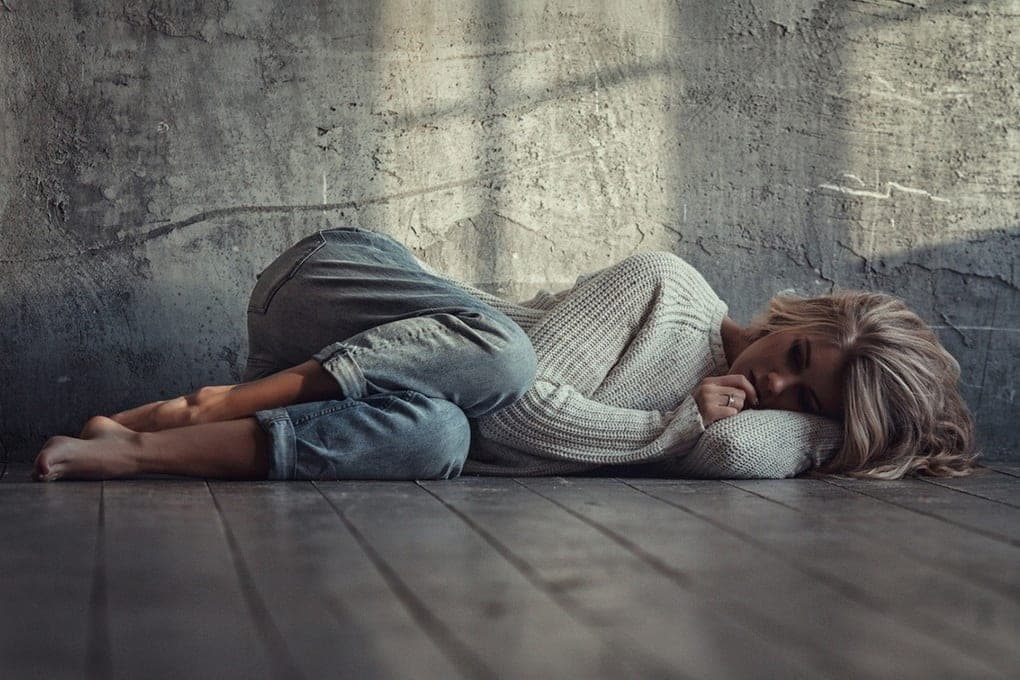
Meanwhile, the figures for several years in a row show a disturbing picture. The number of people being diagnosed with a mental disorder for the first time has nearly doubled.
Time to sound the alarm?
In 2021, there were 8.5 thousand such patients, and by 2025 their number increased to 15.5 thousand. The primary incidence rate rose from 45.1 to 76 cases per 100,000 population. In the first quarter of 2026, growth continued - 74 cases per 100,000, which is 15.7 percent more than a year earlier compared to the first quarter of 2025.
Of particular concern is the fact that the situation has deteriorated dramatically among children. In children under 14 years of age, the primary incidence rate increased almost 1.8 times - from 80.2 to 147.3 cases per 100 thousand. Among teenagers 15-17 years old, there is also a noticeable rise. The total number of those who sought help for mental problems in 2025 reached 255.8 thousand people. These are no longer isolated cases or “nerves.” It's a system signal.
Why is depression so often ignored? There are several reasons, and they are all deeply rooted in our society. First, stigma. Many still believe that going to a psychiatrist or psychologist is a sign of weakness or even shame. “Come together”, “don’t make it up”, “it’s hard for everyone” – such phrases sound too often, and, most offensively, they sound from close people and relatives. The second is the fear of official accounting. Although the system has changed a long time ago and it is about dynamic surveillance, not about Soviet “accounting”, people fear that the diagnosis will affect work, obtaining a driver’s license or the attitude of others. Third, simple ignorance. Many people confuse clinical depression with normal fatigue or bad mood. These are completely different things. Men are more susceptible to mental disorders than women.
“Depression and burnout remain the most common problems among men, but they are often ignored or silenced. In a patriarchal culture where vulnerability is perceived as a weakness, it is difficult for men to seek help. Emotional closure and anticipation of the role of the “strong” lead to an internal rupture and chronic tension, says psychologist Galia Sautova.
Women, on the contrary, are more prone to anxiety, especially in the dark.
This is due not only to personal stress, but also to the cultural background: the pressure of social norms, expectations about marriage, decency, responsibility for the emotional climate in the family. Often, a woman has a multiple burden of being successful, beautiful, caring and at the same time stable, without showing weaknesses.”.
During the first half of 2026, 874,398 applications were registered in the outpatient mental health service of Kazakhstan. The country has 101 primary centers and 203 mental health rooms where patients can receive care. Six more centres are scheduled to open by the end of the year. However, the figures may be much higher, because not all Kazakhstanis are ready to seek professional psychological help.
It is worth looking at the experience of Portugal. There, depression is officially recognized as a disease that gives the right to a sick leave. The doctor issues a certificate of temporary disability and the person can receive a paid recovery period. The duration depends on the condition, but the system allows you to go for treatment for weeks or even months, receiving social security benefits. This removes some of the financial and social pressure. A person is not forced to “pull” work through force and risk deterioration. There is no such practice in Kazakhstan yet. It is difficult to get sick with depression, and society often expects that a person will “pull himself together” and continue to work as if nothing had happened.
Experts have been talking about the same problem for years. Psychotherapist Gulnasia Aron notes that Kazakhstanis are gradually beginning to trust specialists more, but the old attitudes are still very strong. Previously, contacting a psychologist was perceived as a weakness. Attitudes are changing, especially in large cities, but barriers remain high in the regions. Psychiatrist Alim Kankulova from the Astana City Mental Health Center emphasizes that residents of megacities are already more likely to recognize depression as a disease rather than a “bad mood that is treated with strong tea.” But overall, the level of awareness is still insufficient. In this regard, the Ministry of Health has launched a massive reform of mental health.
“Today, specialized medical and social care is provided in two republican clinics, 20 regional mental health centers, 98 primary mental health centers and 212 mental health offices in rural areas. The development of outpatient care and medical rehabilitation continues, the number of children's psychiatric beds is increasing and the staffing capacity of the service is strengthening. At the same time, there is a high need to modernize the infrastructure and update the material and technical base, said Health Minister Akmaral Alnazarova.
The most vulnerable
Of particular concern is the situation with adolescents. In 2025, 199 completed suicides were recorded among minors. Growth - by 13.7 percent compared to the previous year. There were 405 attempts. More than half of the tragedy occurred in the southern regions. In the first quarter of 2026, the trend continued. Experts note that up to 90 percent of teen suicidal behaviors are linked to mental health problems. Often it is depression, anxiety disorders, the consequences of bullying or difficult family relationships.
How not to miss the danger? Experts call several alarming signals that parents and teachers must notice: a sharp change in behavior – a teenager who used to be sociable suddenly closes; loss of interest in what used to be pleasing; problems with sleep or, conversely, constant drowsiness; talk about the meaninglessness of life, even if they sound “just like that” or as a joke; the distribution of personal belongings; withdrawal from communication; a sharp drop in academic performance; excessive anxiety due to grades. Any of these signs is a reason not to wait, but to act.
According to the Ombudsman for the Rights of the Child in Kazakhstan, 62% of adolescent suicides occurred amid a difficult relationship with parents. In 10% of cases, the children lived in a disadvantaged environment or were in a difficult life situation. An analysis of cases over the eight months of 2025 showed that 44 of the 122 episodes of children could be saved. This did not happen due to the lack of quality psychological assistance, the lack of specialists in schools and systematic work with the causes of the crisis.
What to do if you notice something wrong? The first and most important thing is not to leave the child alone with his experiences. Don't devalue. Don’t say that “everyone happens.” Calm down, no pressure to offer help. You can contact a school psychologist, psychological support centers that are now operating in all regions, or the hotline 111. There is also a helpline for children and adolescents. In emergency cases, 112 or 103. It is important to understand that the earlier a person receives professional help, the higher the chances that the crisis will not turn into a tragedy.
In fact, in 2008, we were the number one teen suicide in the world. It's terrible. From 2008 to 2011, they took places from the first to the third. Then, after extensive work by national services, and at WHO, rates began to decline. But there's nothing to be happy about. In 2024, we were on the 16th place in the world in adolescent suicide, and in 2025 we are predicted to be about the 19th, — said psychologist Leyla Miras and added: — The most common causes of adolescent suicides — quarrel with parents, unrequited love, failed exams and substance use. But this is just the last straw, the last reason. The real reason is always deeper. It is almost always associated with an underformed positive image of the parent.”.
The government has been trying to change its approach in recent years. The Comprehensive Mental Health Plan for 2027-2030 has been approved. It is planned to open dozens of primary mental health centers at polyclinics, develop early diagnosis, strengthen work with children and adolescents. Schools are implementing programs to identify risks. But any government measures will only work when public attitudes change. As long as depression remains an “inconvenient” topic, as long as people are afraid to seek help out of shame or fear of consequences, the statistics will continue to grow.
Mental health is as much a part of overall health as heart or vision. It can't be tolerated. He can't be ashamed. The sooner we learn to talk about it directly and without judgment, the fewer will be left alone with their pain. The fewer tragedies that could have been avoided.


