
September 20: why you can not lend money and play weddings
On Sunday, September 20, according to the national calendar, Lukov Day is celebrated, or Lukovnitsa
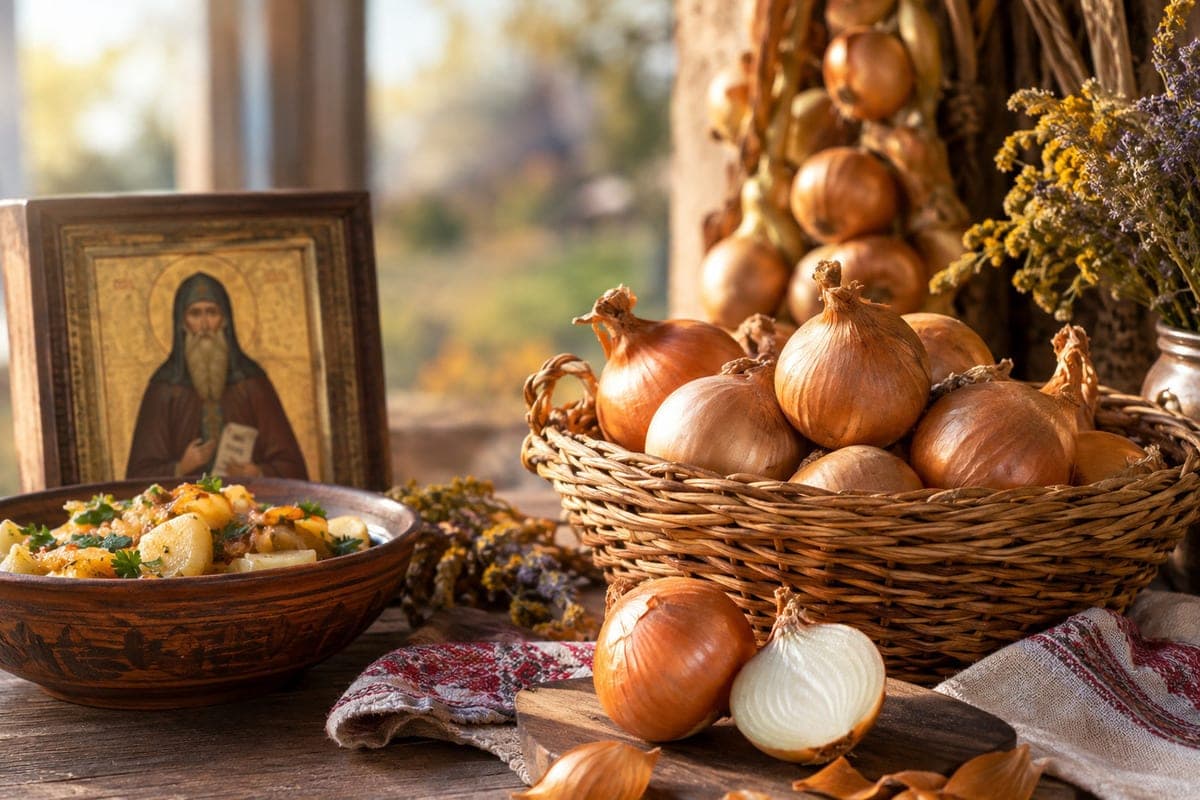
On Sunday, September 20, according to the national calendar, Lukov Day, or Lukovitsa, is celebrated. In the Orthodox tradition, on this date, Saint Luke Glubokorechensky is remembered. In Russia by this time tried to complete the harvesting of onions, and with the day associated with many household customs, signs and prohibitions.
Saint Luke came from Lycaonia and was a monk of the Saviour Monastery known as the “Deep Rivers”. In 975 he became the third abbot of the monastery. The monastery was distinguished by a strict monastic life, and Luke himself was known for his piety and ascetic exploits. The saint died at the end of the tenth century.
The folk name of the date is associated with the consonance of the name of the holy and onion. By September 20, peasants were completing its harvest, drying the crop, sorting the bulbs and woven them into bundles for storage in winter. Since then, an active trade in onions began.
The product also had a special place on the table. On the day they cooked pies with onion filling, soup, potatoes with onions and mushrooms. One of the traditional dishes was stuffed bulbs, which were filled with meat or mushrooms with potatoes and then cooked in an oven or broth.
Onion Day is associated with many popular prohibitions. According to ancient legends, on September 20, they tried not to play weddings and not to get married. It was not recommended to lend or borrow money, to boast about income and large purchases, as well as to count stocks and money. All these actions were associated with future financial difficulties.
It was not customary to burn onion husks. There was also a belief that on this day you should not go to the forest. They also refused to drink alcohol. Some prohibitions related to food: in particular, on the day of onions, seeds were not fried, turnips and potatoes were not eaten. All these restrictions apply to folk superstitions and traditions.
There were weather signs. A large amount of husks on bulbs was considered a harbinger of frosty winter. Rain on September 20 was associated with prolonged damp autumn and snowy winter, and a small number of clouds, with cold and windy weather in winter. High and slow flying cranes, according to signs, foreshadowed cold and rainy autumn.
Morning fog, which does not dissipate for a long time, was considered a sign of warm and dry weather. By the location of cones on coniferous trees, they also tried to determine the timing of the onset of cold: low-growing ones were associated with early frosts, high-lying ones, with late winter.
The names of September 20 are marked by Alexander, Andrei, Vasily, Gregory, Eugene, Ivan, Lev, Luke, Makar, Mikhail, Nikolai, Pachomiy, Peter, Savva and Stepan.


