
“They delight the soul and relieve stress”: the story of a Minsk resident who has been breeding postal and sports pigeons for 60 years
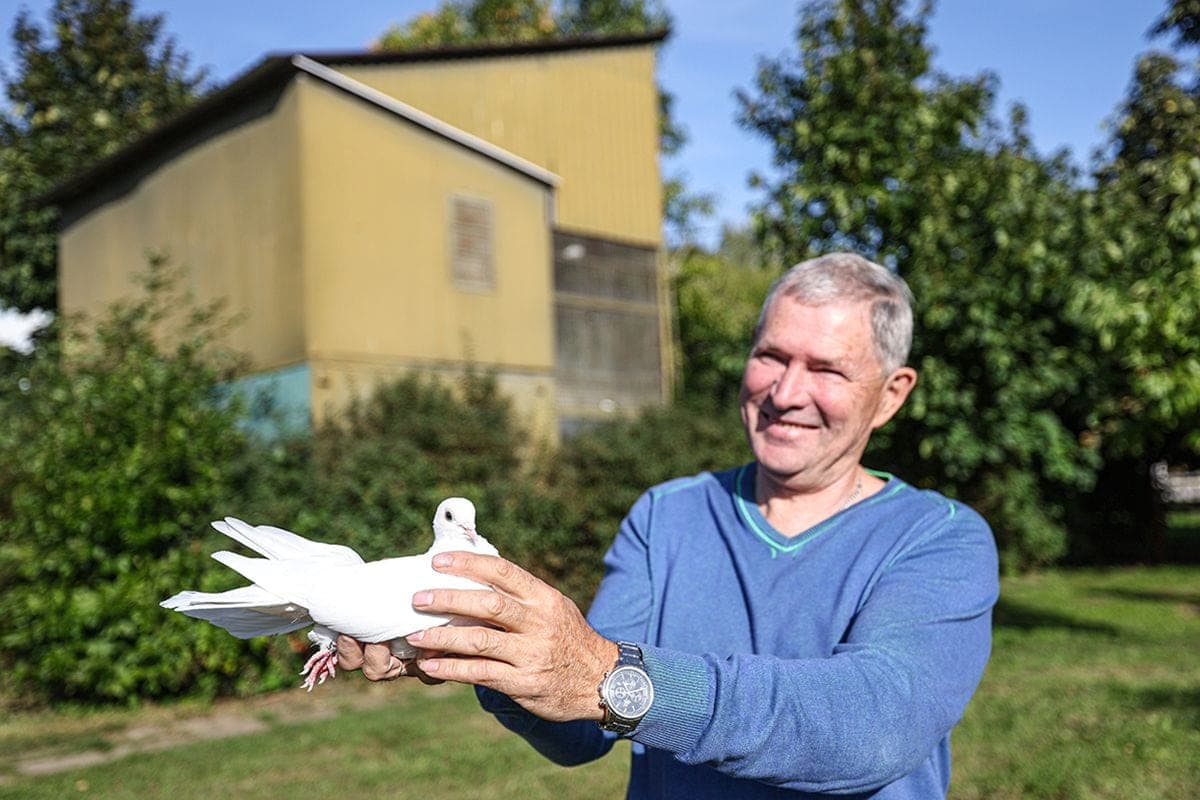
The Secret Life of the Cow-winged In all history, no bird has received as many regalia as doves: a symbol of peace, purity, divine presence, and so on.
The Secret Life of the Cow-winged
In all history, no bird has received as many regalia as a dove: a symbol of peace, purity, divine presence, love. The New Testament describes the descent of the Holy Spirit in the form of a dove at the time of Christ’s baptism. In the Old Testament, there is a parable about a dove released by Noah, which brought him the news of the end of the Flood in the form of an olive branch. During the war, the black wings perfectly coped with the mission of a military postman. Find out how they live in our time and in our realities.
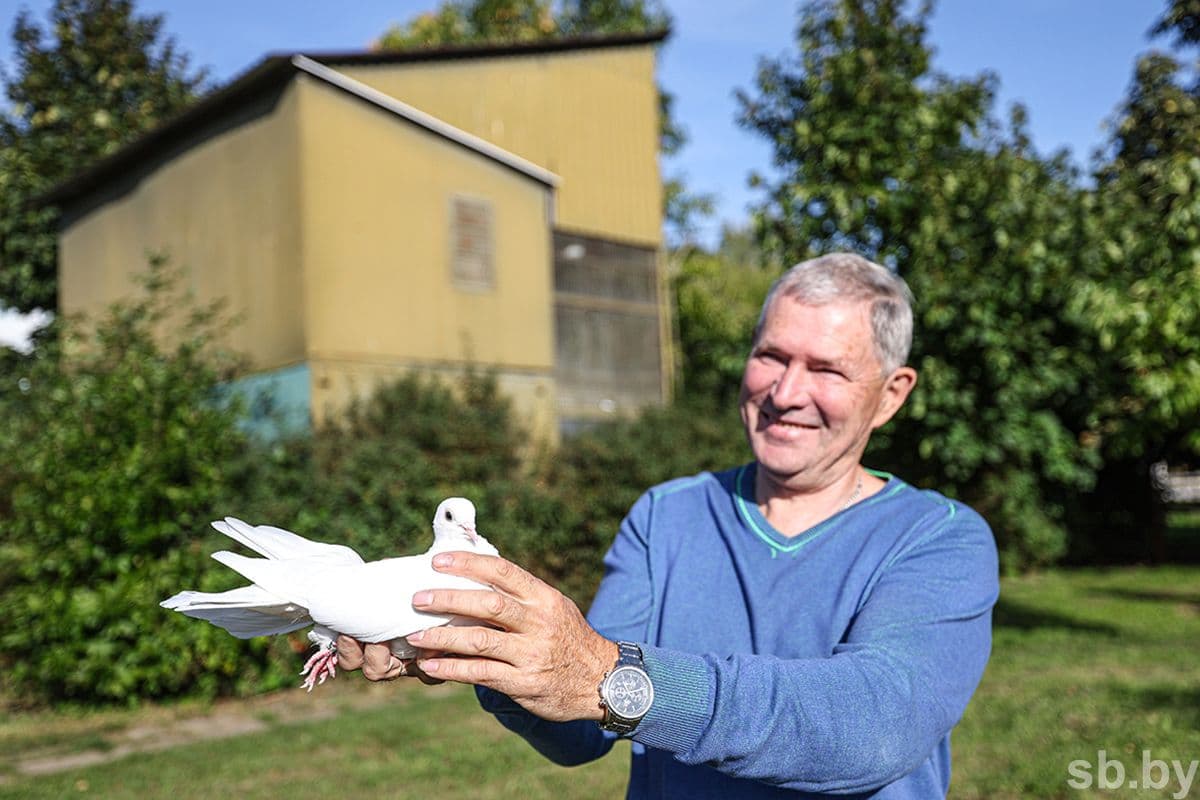
Feathered pets 60 years breeds, nurses and cherishes these wonderful birds of Minsk Anatoly Weber. Today he is the chairman of the Belarusian Club of Sports Blue Breeding and the owner of one of the largest nurseries in Minsk. Or maybe all of Belarus, adds Anatoly.
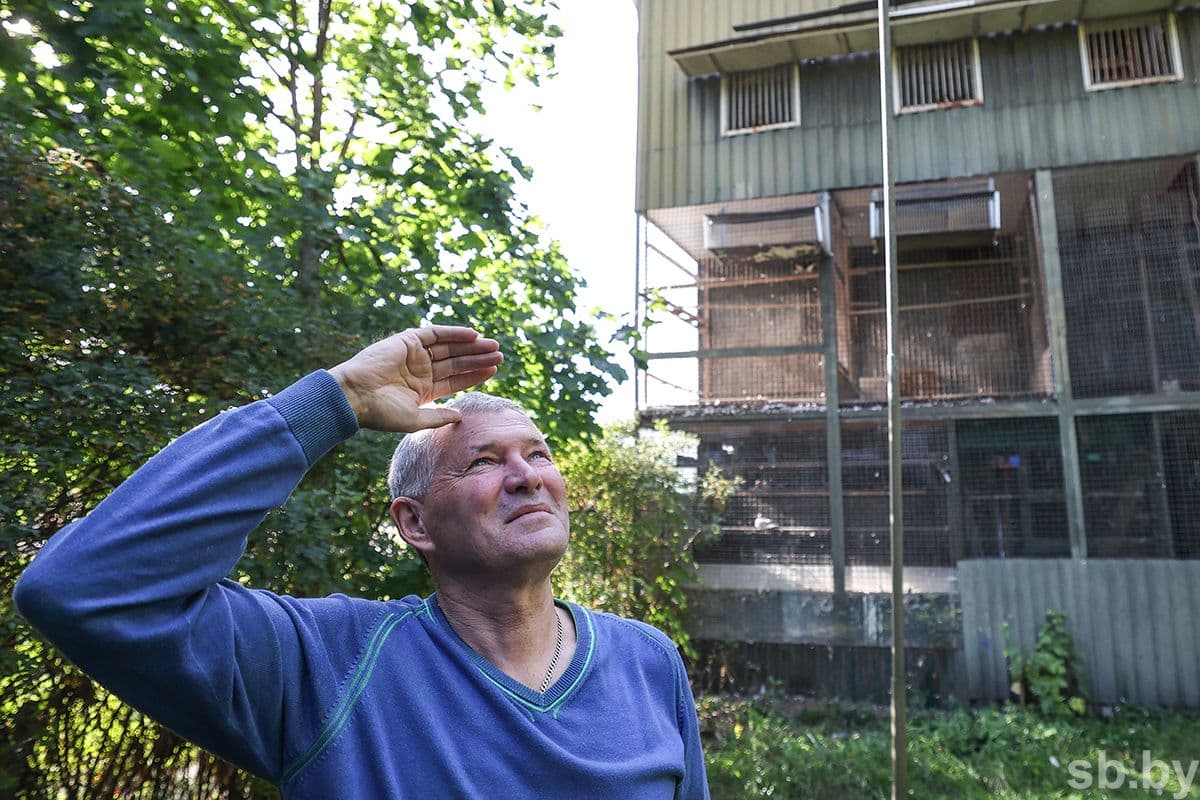
Three-storey bird choirs are hidden in one of the courtyards of the Soviet district. This bird mansion owner, a professional wood carver, built himself 25 years ago, having previously collected a solid folder of all sorts of permits, ranging from the sanitary station and ending with the district administration.
Next to the pigeon house there is a kindergarten and a school, so there are always many curious visitors. Anatoly is happy about that. He is always happy to introduce children to his wards.
On the day of our arrival, a family with the symbolic name Pigeon visited him. Six-year-old Makar is crazy about pigeons and has long wanted to visit Uncle Toli.
- I want to have these birds in my house, the boy said from the doorstep, stunning his father.
Tol's uncle saved the situation:
- Let's do it this way: next year the chicks will hatch, you will choose one, give him a nickname and follow his progress in sports competitions. But he'll live here. All right?
- There is a category of indignants, they say, how so – pigeons next to children, this is fraught with consequences. No, all my birds are vaccinated. I personally vaccinate everyone, Anatoly calms the worried.
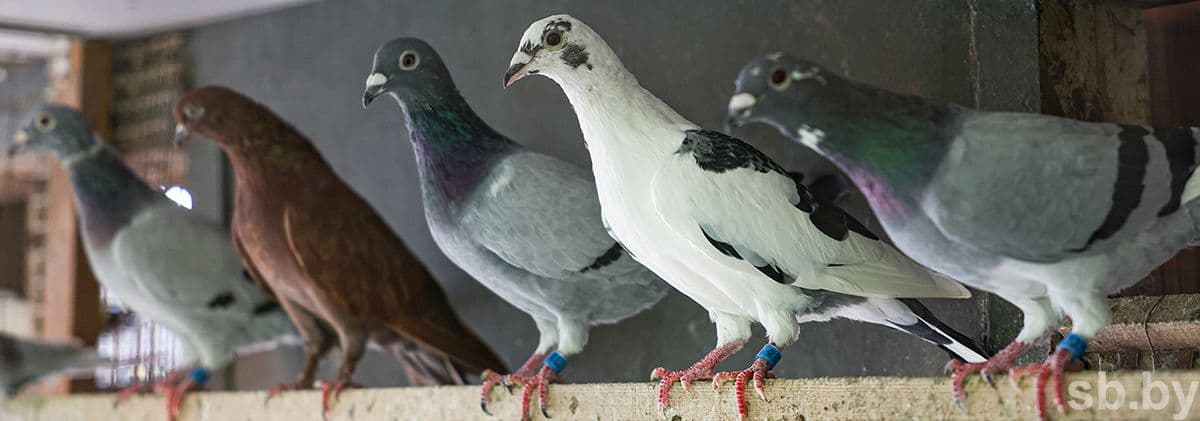
All the chicks ring, on the foot of each bracelet with a number. This helps in identifying your pet. Although Anatoly does not need this, he visually knows every one of his birds.
- No two pigeons are alike. In addition to the color, many signs: someone’s legs are shorter, the head is round or oblong, the beak is also of different sizes, Anatoly lists the distinctive features.
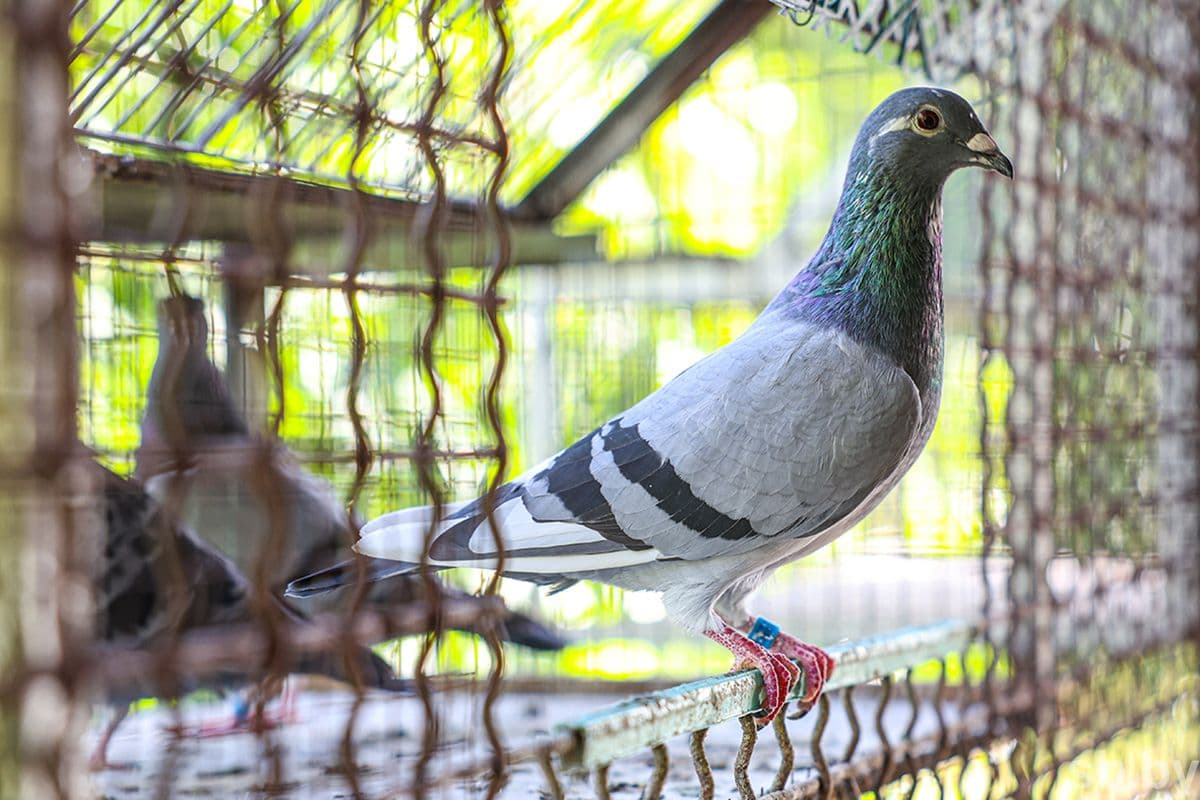
Anatoly himself fell in love with pigeons from the age of five, when he lived with his family in Baranovichi. There he got the first birds: he bought them at the bird market for the first money earned from the delivery of bottles. Then we moved to Minsk. Here he built the first dovecote from boxes on the roof of the barn, and when he moved to the Soviet district, he built a whole apartment poultry house, which surprises with its scope. Today, 150 pigeons and pigeons live here.
- The second floor is reserved for decorative and flight rocks: here and Rzhev tape, famous for their ability to tumble in the air, and English typplers, which can fly all day without a break. And, of course, Minsk birch are representatives of the only Belarusian breed of pigeons, which local breeders bred after the war, when the birds almost disappeared from the city streets. Of the flight breeds - Nikolaevsky. They were bred on the coasts of the sea, where it is windy, and these pigeons fly against the wind. But it is worth forgetting about their flights in the city today, because we have many gulls that can kill a pigeon with their powerful beak. In addition to gulls, hawks are a danger to pigeons. The other day, one of them stole my dove, so you have to chase the predator.
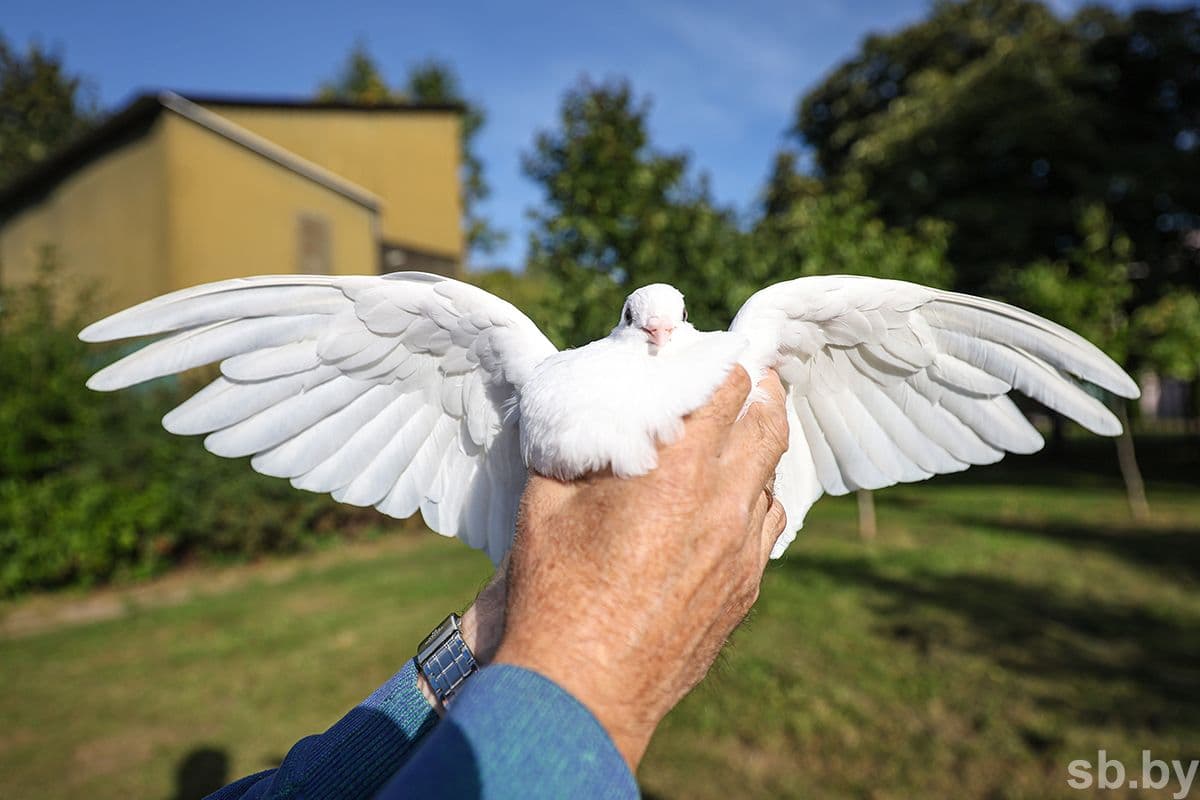
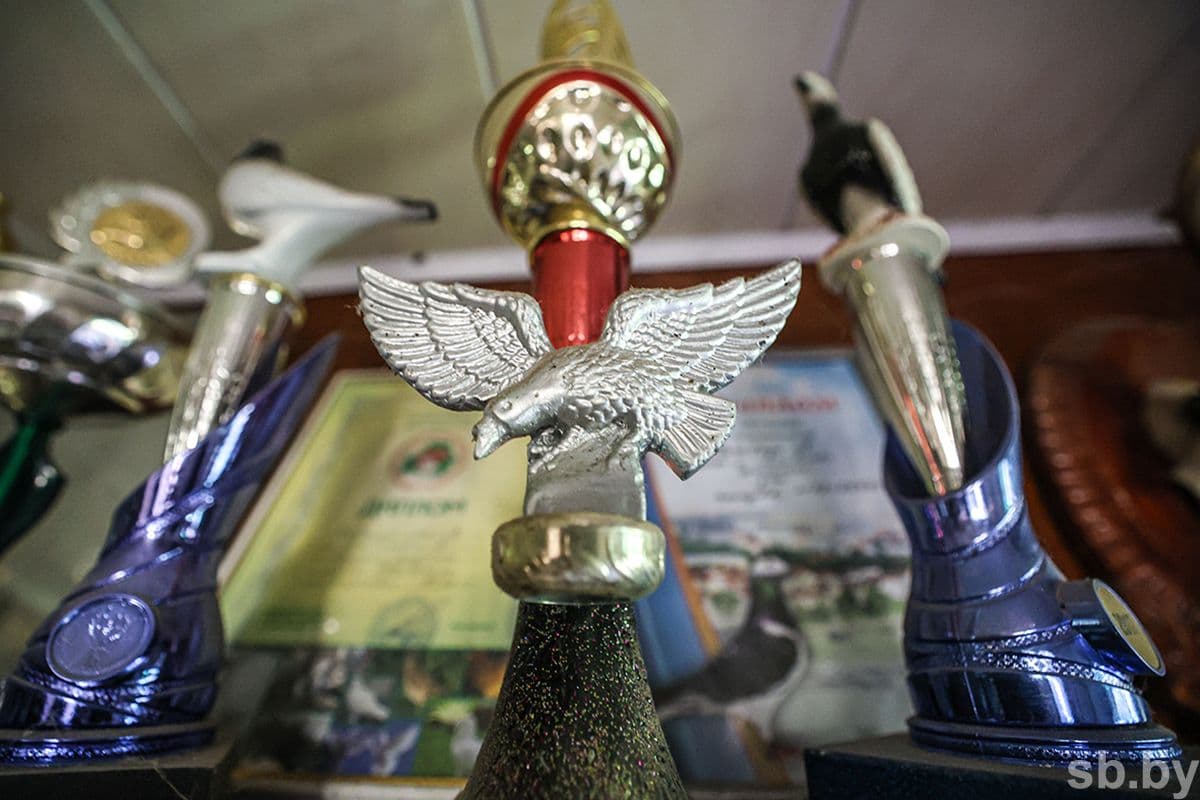
The pigeon breeder has his own white dove of the world. In the nursery, Anatoly has a wall of glory. Here on the shelves countless cups and medals, which won sports pigeons. They're postal. They have the most pigeon breeders live on the first and third floors.
- Many do not understand how pigeon mail used to work. Everyone thinks: picked up a letter to a pigeon - and he flew to the named address. But it's not. The pigeon flies only home, where it was born and raised, explains the pigeon breeder. Pigeons were brought from Minsk to Chernigov or Smolensk, where they were waiting for a letter to Minsk. And we had pigeons from Smolensk. To reduce the risk, they used to be released about 300-350 kilometers from home. If the letter was to be sent to Moscow, Moscow pigeons were already waiting in Smolensk. So the system worked: there were nurseries in the post offices where pigeons lived.
Later, races began between the birds. The first private pigeon sports society was founded in Belgium in 1818, and by the beginning of the XX century there were already hundreds of them all over the world. Now such competitions are popular in Europe and China. The birds make huge bets, and the maintenance of a racing pigeon costs a decent amount.
- In Romania, there were starts, where 20 thousand pigeons were released. This year there were large-scale competitions in Barcelona - 16 thousand pigeons participated, Anatoly cites examples. The Minsk Club of Sports Blue Breeders was founded in 1998 and I have been heading it for the last five years. We used to have 337 people, now there are only 25. The rows are small, the average age of pigeon breeders is over 50 years. Young people, unfortunately, are not very interested. But we do not lose heart, recently joined the International Federation of Sports Blue Breeding. We cannot participate in Western competitions yet, so we interact with the Russians.
The winner of the competition is the pigeon that is faster than the others. They all start from one point. The hosts put the “athletes” in the carriers, take them to a certain distance from the dovecote and release them. To track the exact time of arrival of the pigeon, a special chip is put on the bird’s foot, and a reading device is attached to the roof of the pigeoncotes.
- The pigeon that came home earlier is not always the winner. The fact is that the dovecotes are located at a different distance from the start point. To determine the result, the mileage is taken into account and the time it overcame it, the speed is determined. Whoever's taller wins.
However, without training, no pigeon will fly far. Anatoly starts working with future athletes as soon as they are two months old.
- The first flights are 10 and 20 kilometers, I increase the distance during training. In addition to training, nutrition is also important, otherwise the bird will not be able to withstand such a flight. They have 13 types of grains in their diet, I add fish oil, beer yeast. It's all working. My record — or rather, my pigeon — 700 kilometers in 12 hours from the Russian Eagle to Minsk, says Anatoly. Earnings pigeons Anatolia do not bring. He never rented his birds and didn’t want to think about it
- To pigeons, you're the cleaner and the one who feeds them. That's it. But I love these birds. They delight the soul, relieve any stress. Sometimes, I will come after the dacha, there you plow, but at night you go to the pigeon cot. I've got a light out here. My wife asks me how long I'll be. I say 20 minutes. And while some looked, others, removed, fed — and do not notice how 2.5 hours have passed. And where the power and energy come from - only pigeons know.
Anatoly has a cherished dream: to build dovecotes in the territories of socio-pedagogical centers. He wants children left without parental care to have their own outlet – a place where you could care for birds, watch them, learn responsibility and simply distract from difficult life circumstances. In total, in our country there are five species of pigeons: gray, ahir, or forest pigeon, clintuk, ordinary dove and ringed dove.
- The most common for residents of cities is a blue pigeon. This species is the pet of pigeon breeders, said Irina Samusenko, head of the laboratory of ornithology of the Scientific and Practical Center of the National Academy of Sciences of Belarus for Bioresources. This is a sedentary species that is closely related to humans and practically does not occur in the wild of Belarus. Initially, gray pigeons nested on rocky cliffs, in niches. City buildings remind them of such natural shelters, so birds nest in attics, niches and other secluded places. Often on the streets you can find pigeons of bright colors - white, brown, red. Their forefathers are the spiders. The colorful color scheme is a consequence of the work of pigeon breeders: a person chooses birds with an unusual color and purposefully crosses, fixing certain genetic characteristics.
Like all pigeons, gray lays two eggs. The offspring are cared for by both parents. Both the male and female are involved in building a nest, incubating eggs and feeding chicks. Another species that in recent decades is increasingly found in cities is the wihir. Its official name is "Valiki Lyasny Blue". It would seem that the name of this bird should live exclusively in the forest, but the last 20 years ornithologists have observed a noticeable increase in its population in populated areas.
- Viahiri appeared in Minsk in the 2000s. At first, they nested mainly in parks, and today they can be found in almost all areas of the city, says Irina Samusenko.
Viahir is noticeably larger than the gray pigeon - about 30%. You can recognize it by two white spots on the sides of the neck. Well visible and white stripes on the wings, which appear during the flight. In the blue pigeon, on the contrary, a characteristic feature is a white tail. However, due to the crossing of birds, it is sometimes less pronounced or has a different shade. The third species is the clintuch. Unlike the wahir, which gradually develops the city, the klintuk remains a real forest dweller. He nests in tree hollows. This bird is slightly smaller than a gray pigeon, has a modest gray color and pink chest.
- There are two other types of doves in Belarus. The ringed dove is about one and a half times smaller than the gray dove. It has an olive-gray color and also arranges nests on tree branches. This species is characterized by noticeable fluctuations in numbers. For example, in the 1990s, the ringed dove nested in Minsk, and now it is practically not found in the capital. At the same time, the bird still lives in the south of Belarus and in some cities and towns of the central part of the country, says Irina Samusenko.
Ordinary dove is a forest species and today is much less common. Due to the significant decrease in the number, it is included in the latest edition of the Red Book of Belarus. The species is distributed unevenly throughout the country, relatively many of these birds remain only in the southeastern part of Belarus. Now the townspeople, talking about these birds, are divided into two camps: those who care, admire birds and feed them, and those who consider them parasitic creatures. Are they really dangerous to humans?
- When concerned citizens ask whether it is possible to get any infection from a pigeon, I first explain: not all bird infections are transmitted to humans. Each species has its own specific diseases, which can seriously affect the population of birds, but do not pose the same danger to humans. For example, if a pigeon sat on a window, the probability of getting an infection from it is much lower than from someone who is near you and is sick.
Of course, this is not a reason to neglect basic hygiene rules. If there is contact with a bird, its droppings or contaminated surface, it is enough to wash your hands. This is a common rule to follow in any such contact.
- Individual infections can indeed be transmitted from birds to humans, including through droppings or eating raw meat from infected poultry. But that's very rare. In most everyday situations, it is enough to observe the usual sanitary and hygienic measures, says Irina Samusenko.
GLOBAL MAIL
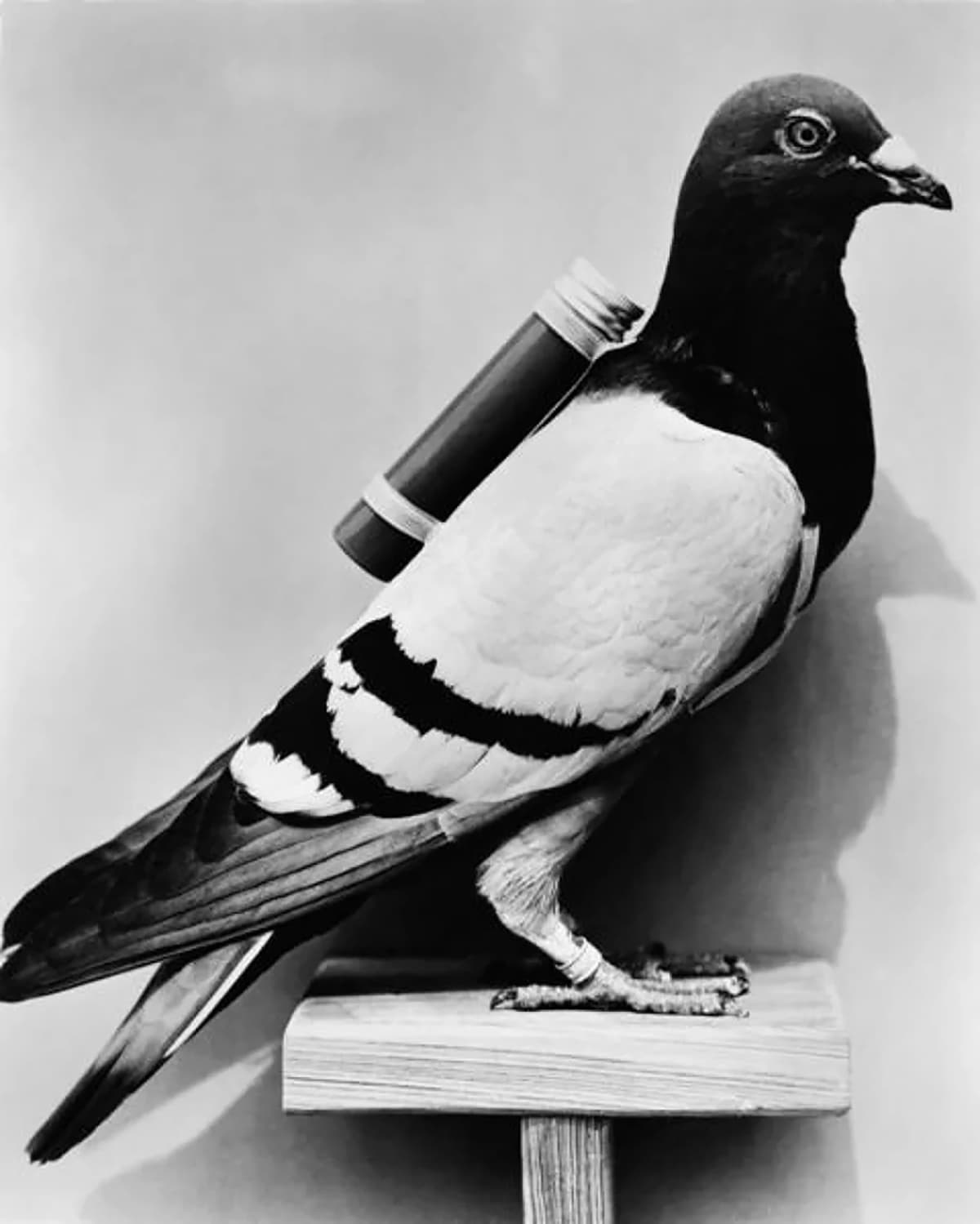
The heyday of pigeon mail fell on the XIX century. This happened during the Franco-Prussian War of 1870-1871. When Prussian forces besieged Paris, pigeons remained the only means of communication. The letter was photographed with a large reduction, the film was placed in a piece of hollow goose feather, then sealed with wax and attached to the plumage or foot of the pigeon. These letters were called “holubegrams”. One bird could deliver an average of 15 to 20 messages per day.
Feathered postmen served properly during the First World War. "Bluegrams" were placed in a special case of aluminum. If the weight of the cargo exceeded 25 grams, it was fixed on the back of the bird. And so that the white dove was not shot as a postal pigeon, it was painted black.
yankovich@sb.by


