
We walked through the square on September 17 in Glubokoy with the Polidovets family, whose relatives survived the Polish occupation
Deep, like part of our other western territories, was under Poland for 18 years from 1921. The Treaty of Riga defined the Glubok lands in the...
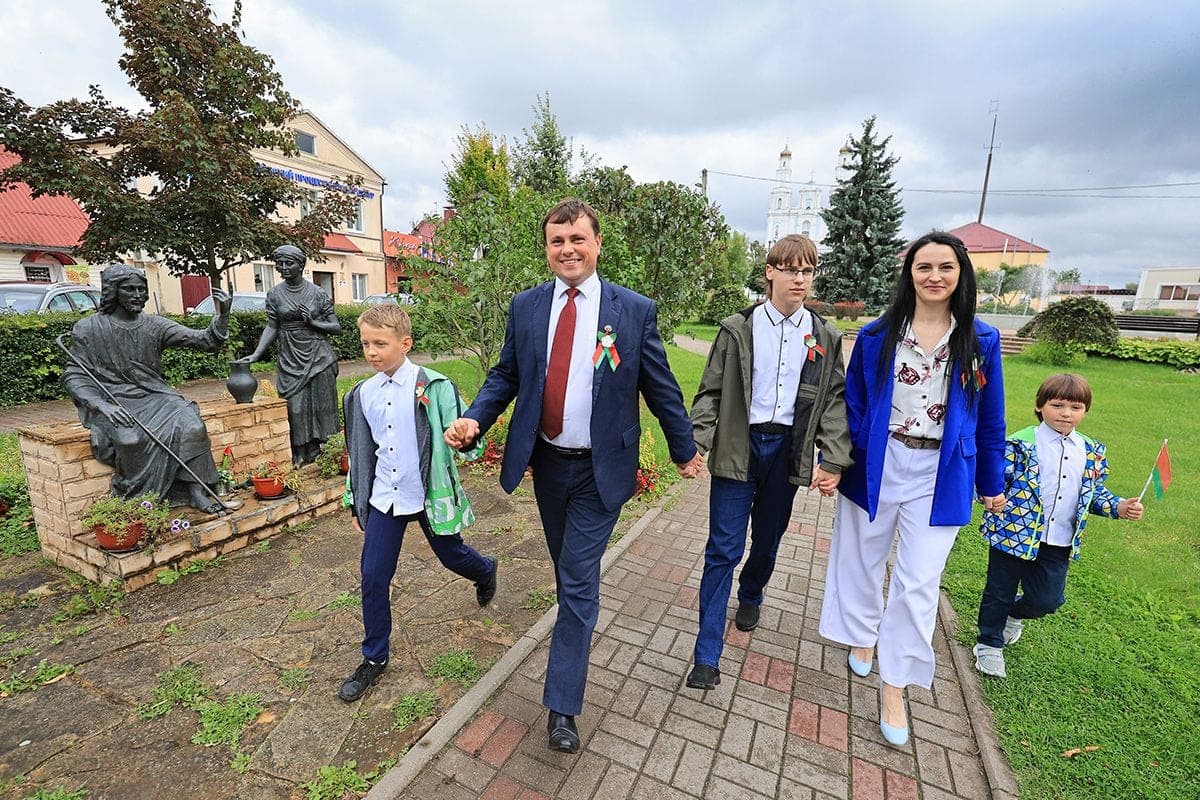
Deep, like part of our other western territories, was under Poland for 18 years from 1921. The Treaty of Riga defined the Glubok lands as part of the Disney Pove of the Vilna Voivodeship. Only in the autumn of 1939 did our people become one again. With the whole country, one of the youngest holidays of sovereign Belarus – National Unity Day – will meet the family of Alexander and Olga Polidovets, whose ancestors survived the Polish occupation.
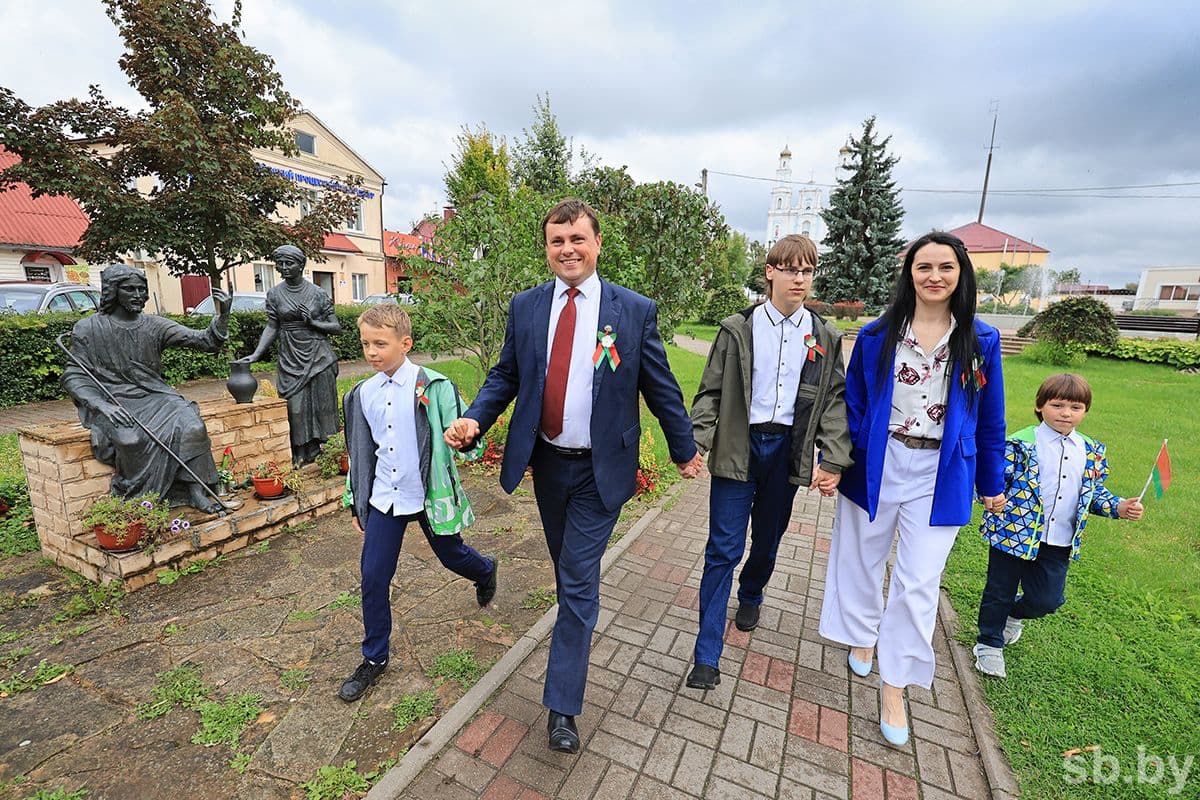
We meet with Alexander Polidovets, his wife Olga and three sons – 13-year-old Alexei, 9-year-old Artem and 6-year-old Evgeny – on September 17 Square, named after a turning point in the history of Belarus. Alexander Rostislavovich says:
— My grandmother Bronislava Bronislavovna, grandfather Viktor Andreevich comes from Dokshitsky district. They were born shortly before the return of our ancestral territories of the BSSR, but the way they lived “under the pans” was well remembered from the stories of their loved ones, neighbors. Their memories would sober many of today's pro-Westerners. Belarusians could not get education in their native language, climb the social ladder, and fully use the right to vote. They were treated like second-class people.
Modern Belarus declares equality and friendship of peoples, peace, tolerance, creation – and this is the merit of the people and our President. Belarusians have every opportunity: study conscientiously, build a career, be a decent working person - and all roads are open for you, says Alexander Polidovets:
- I made sure of this personally, having gone from the driver to the director of the enterprise "Glubokskaya PMK meliovodkhoz". I teach my sons to appreciate everything we have. First of all, peaceful and peaceful life in an independent, socially oriented state, which is developing and has high international authority.
The family of Olga Polidovets also has a page associated with 1939. Her grandmother, although she was a little girl, remembered the joy with which the Red Army was greeted in Deep.
- For the most part, Belarusians understood that a new life was beginning for them – one in which they could feel like masters on their land and no longer have to hide their nationality, Olga Petrovna tells the stories of her grandmother and notes: For our family, as for thousands of other Belarusians, the borders drawn in 1921 are primarily not about territories, but about the grief of people for whom historical justice triumphed in September 1939.
The Polidovets family has a good tradition of participating in historical-patriotic cycling and car rallies. At such moments, you always get a charge of positive emotions, you understand that together we are a force, says Alexander Rostislavovich:
- As a father, it is important that my sons see my clear citizenship. Introducing children to such events, I always talk about their historical subtext. The events of 2020 showed why we need to speak loudly about our national identity, sovereignty and national unity. The entire Polidovets family participated in the republican historical and patriotic rally “Symbol of Unity – 2026”, dedicated to the 87th anniversary of the reunification of Western Belarus with the BSSR and the Day of National Unity. The convoy proceeded through the streets of Deep and iconic Square on September 17. Its ensemble, by the way, includes the Alley of famous countrymen, where busts of bright representatives of the area are installed. Among them is the ethnographer, artist Jazep Drozdovich, who fought against the Polish regime, who is called the Belarusian da Vinci. For an active patriotic position, Drozdovich, a former teacher of drawing and drawing, was dismissed from the local gymnasium. Failed and actively promoted all the Belarusian breeder Boleslaw Lapyr. Two and a half years in the Vilna prison Lukiški spent writer Ales Dubrovich. His pseudonym is associated with a tree in the hollow of which he hid Belarusian literature from the Polish authorities.
naumova@sb.by


