
Do not confuse with a tick: all about the moose fly - danger, differences and protection
Autumn is a season of walks and quiet hunting, but at the same time the peak of the activity of the reindeer bloodsucker. Due to the fact that the insect sheds its wings, it is often mistaken for a tick, which causes unnecessary fears.
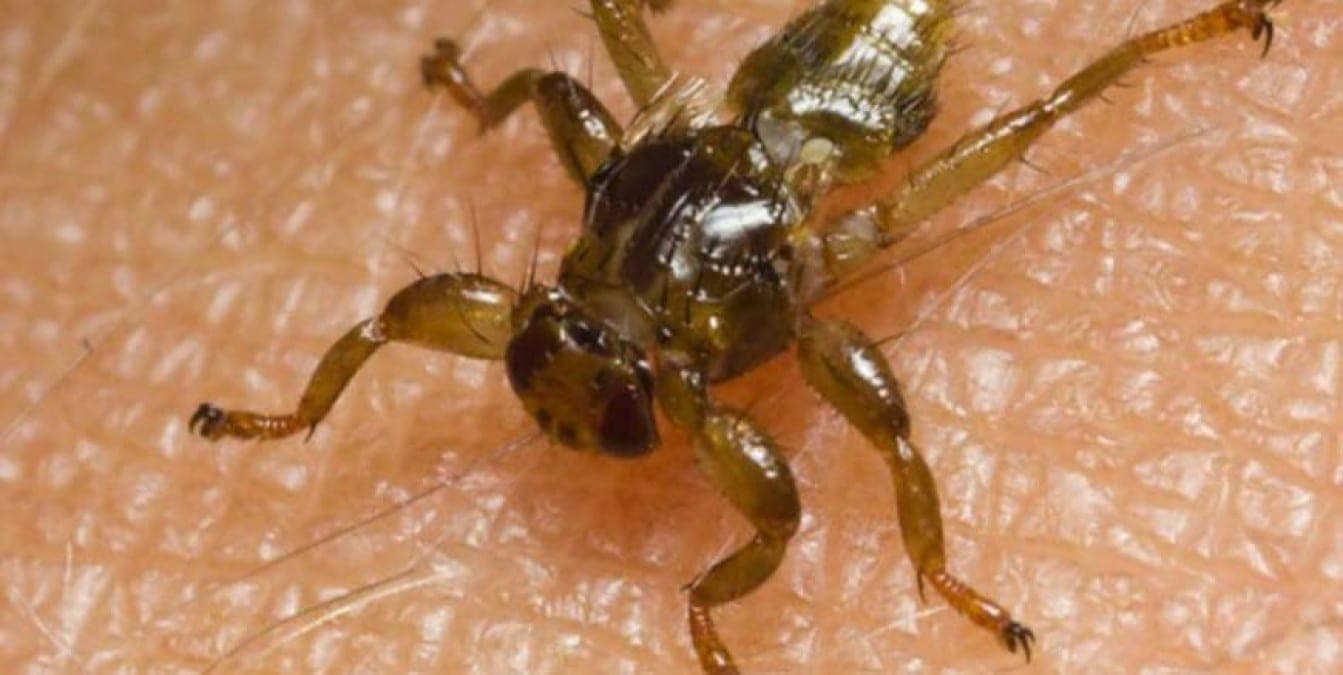
The time of traditional hikes for mushrooms and leisurely walks in the forest coincided with the period of greatest activity of the reindeer bloodsucker - an insect, also known as "elk fly", "elk louse" and "elk tick". Galina Mlynarchik, an entomologist of the anti-epidemic department of the epidemiology department of the Minsk City Center for Hygiene and Epidemiology, explained what threat this insect can pose to a person, on what grounds it can be distinguished from an ixodic tick, and also listed mandatory actions that should be taken after returning from the forest. Belta reports.
Why blood suckers are active in the autumn
The greatest activity of reindeer bloodsuckers is observed from August to October, although individual insects can be found in November. This is due to the life cycle of the species: at the end of summer, adults of a new generation appear simultaneously from the forest litter. They urgently need to find a large animal to winter on it, so they often mistakenly attack people passing by, explained Galina Mlynarchik.
- 1.Going to the woods? Check if the area is closed – list of permitted and prohibited places
Where is more likely to meet a moose fly
The main owners of reindeer bloodsuckers are moose and deer, so its number directly depends on the presence of these animals. Insects can most often be found in forests, where traces of large ungulates are noticeable, including on animal trails. In the urban environment, the conditions for the permanent existence of the population are unfavorable: in parks and squares where there are no large ungulates, bloodsuckers are not able to reproduce.
How to distinguish a blood sucker from a tick: count the legs
Once on the owner, the bloodsucker deer sheds its wings and because of this, it can externally resemble a tick. However, biologically they are completely different organisms. A blood sucker has six legs, an ixodic tick has eight. Blood sucker refers to insects: its body consists of the head, chest and abdomen, there are large facet eyes. The tick is arachnid with a fused body, without wings and facet eyes.
Behavior is different. The blood sucker moves quickly through the skin and can feed on small portions of blood several times. Ixodic mite, as a rule, is fixed on the skin and remains on the host for a long time.
How dangerous is the bite
The sting of a deer bloodsucker can be painful, and in some people causes a local allergic reaction. At the same time, as the entomologist emphasized, the role of the fly as a vector of infections has not been established. In the Minsk City Center for Hygiene and Epidemiology, there are no cases of diseases transmitted by bloodsuckers. If after the bite there is a pronounced itching, redness, swelling or other signs of allergies, you should contact a medical institution.
What to do if an insect is in your hair or clothes
The blood sucker we found needs to be removed. Because of the thick chitinous cover, it can be more difficult than it seems. Specially examine the insect for the presence of borrelia is not required. However, the mere fact of finding a blood sucker does not mean that there was no contact with other parasites, so after the forest you should also examine yourself for the presence of ixodic mites.
The main rule after the forest: do not immediately get into the car
It is better to check on the street, before getting into the car or entering the house. First of all, you need to pay attention to outer clothes and hair. Galina Mlynarchik recommends immediately after leaving the forest to thoroughly shake the outer clothes, examine the seams, gently comb the hair with a small comb. You should take a shower and examine the body again.
How to Dress to Reduce Risk
It is worth giving preference to closed light clothes with tightly fitting cuffs. A headdress is also necessary. Repellents should be used in accordance with the instructions. After returning home, it is recommended to conduct a self-examination.
Is it necessary to report the mass appearance of bloodsuckers
In the period of the release of a new generation, the number of insects in the forest can significantly increase. In itself, this is not a reason for contacting the Center for Hygiene and Epidemiology, and there is no official record of such appeals. As the specialist noted, sometimes people mistakenly take a blood sucker for a tick, and the staff of the center simply give explanations.
The deer bloodsucker activity season can last until November. Going to the forest in autumn, it is worth considering this feature and observe standard measures of protection from blood-sucking insects and ticks.
Read also:
- 1.Recipes of the best blanks from Belarusian mushrooms for the winter: how to marinate, salt and dry boroviks and podsinovy
- 2.How much can you store forest mushrooms after harvesting before cooking and freezing: terms, rules


