
The Invisible Side of Fatigue
The time of birth of a baby is not only happiness, but also new worries and experiences
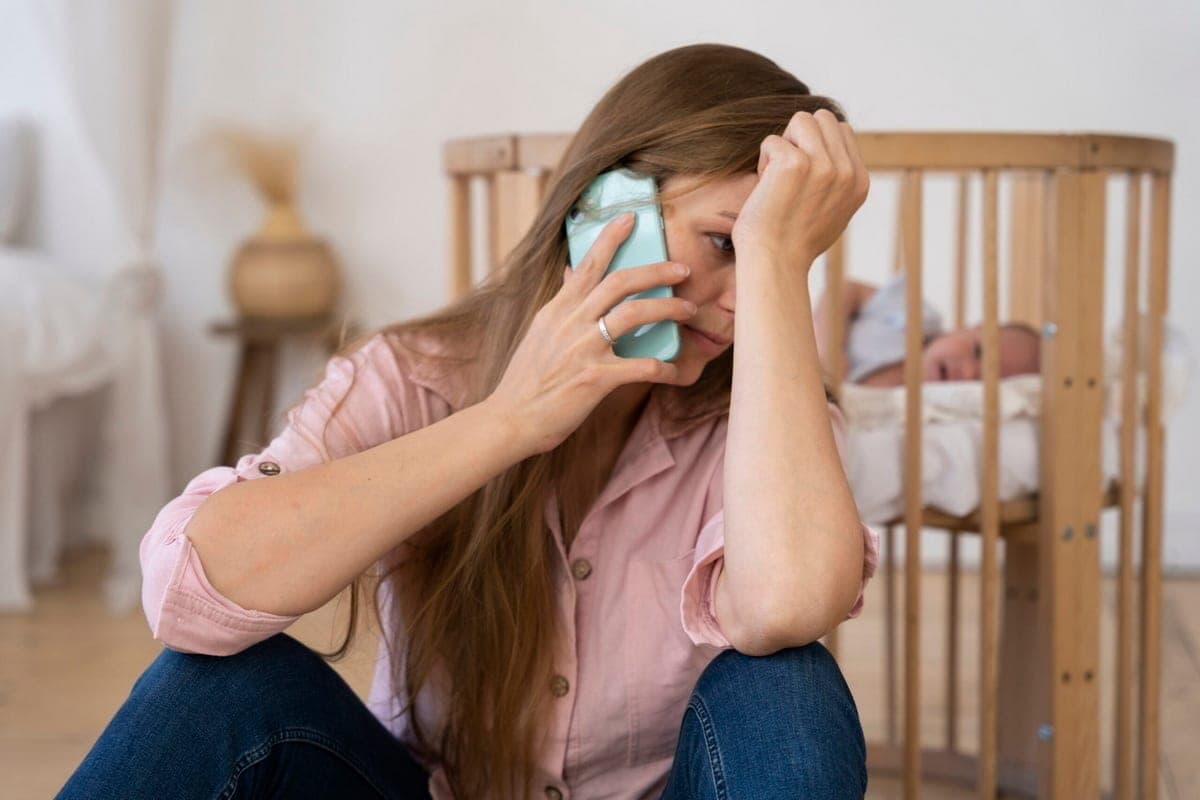
What is Postpartum Depression
And these disorders are traditionally attributed to physiological fatigue after pregnancy and childbirth. “You are just tired”, “it will pass”, “everyone is so worried”, “the baby is healthy – rejoice”, – a woman hears about her relatives and friends. But behind these phrases lies a condition that medicine has long recognized as a separate disorder. Postpartum depression exists. It's real. And in Kazakhstan, judging by the available data, it occurs more often than people think.
Postpartum or postnatal depression is a depressive disorder that develops in the first weeks or months after giving birth and can last up to a year or longer if left untreated. This is not a "baby blues" - a short-term decrease in mood, which occurs in 50-80% of women in the first days after discharge from the hospital and passes by itself. It's already a clinical condition.
The main symptoms: persistent depressed mood, loss of interest in the child and life, severe fatigue that does not go away even after sleep, sleep and appetite disturbances, guilt, feelings of own incapacity as a mother, anxiety, sometimes thoughts of death or that the child would be better without her. A woman can care for a child formally, but emotionally absent.
Hormonal changes after childbirth in the form of a sharp drop in estrogen and progesterone, physical exhaustion, lack of sleep, pain after childbirth or cesarean section, lack of support and accumulated stress of pregnancy create ideal conditions for the development of the disorder. The risk is increased if a woman has already had depressive episodes, if the birth was severe, if there are relationship problems or financial difficulties, if the child is sick or requires special care.
There are no official statistics on postpartum depression in Kazakhstan. The Ministry of Health does not single out this diagnosis as a separate unit of account. Women fall into the general category of mental disorders or do not seek help at all.
However, studies provide a disturbing picture. In 2022, among 251 women in the first year after giving birth on the Edinburgh scale, 59.4% showed a positive result. This is one of the highest values recorded in studies around the world. UNICEF has repeatedly cited this figure and said that almost 60% of Kazakhstani mothers experience postpartum depression, one of the highest rates globally. The WHO estimates prevalence in Kazakhstan to be between 19-25%, but even the lower limit means that one in five women is at risk.
A recent study conducted in the capital of Kazakhstan using the PDSS-SF scale showed an even higher percentage of clinically significant symptoms - about 70% among participants. The most common complaints were sleep disturbances, feelings of loneliness and lack of good mood. Symptoms peaked between six weeks and six months after delivery.
These figures cannot be ignored. Even if some cases can be attributed to severe fatigue and anxiety rather than full-blown depression, the scale of the problem is clear. At the same time, a relatively small number of people are officially registered for mental disorders in the country. Women after childbirth are rarely treated. The reasons are different – shame, fear of “taking away a child,” the belief that “you have to endure,” and a lack of habit of talking about mental health do their job.
The negative impact of maternal depression on children
A mother’s postpartum depression isn’t just her personal pain. It directly affects the child. Numerous studies show that children with untreated maternal depression have a higher risk of attachment disorders, delayed emotional and cognitive development, problems with behavior regulation, increased anxiety, and even more frequent access to medical care in the first years of life.
The baby reads the emotional state of the mother. If she is emotionally unavailable, reacts with delay or irritation, the child receives less warmth, love and care. All this affects the formation of basic trust in the world. At an older age, these children are more likely to have difficulties in relationships and with self-esteem.
It is important to emphasize that this is not about “bad mothers giving birth to troubled children.” Untreated depression puts additional strain on the entire system. The earlier the mother gets help, the less the consequences for the child. Patronage services that are really interested in a woman’s psychological state, not just the baby’s weight, can play a key role. In Kazakhstani studies, the lack of such attention from patronage turned out to be one of the significant risk factors.
The first and most important thing is to recognize that a state is not the norm and will not go away by itself if it has already gone beyond the “baby blues”. And contacting a specialist is not a weakness, but a responsibility. In such conditions, psychotherapy is very helpful; in some cases, antidepressants, strictly prescribed by a specialist, which are compatible with breastfeeding; real, rather than declarative care around the house and with the child; the ability to sleep for several hours in a row; support groups for young mothers, where you can speak honestly; physical activity within your strength; light; diet; minimizing information overload from social networks. Partners and loved ones play a huge role. The phrase "you're just tired" should go away forever.
How it is being fought in Korea and China
In South Korea, there is an entire industry of special postpartum recovery centers. A woman with a child usually spends two to three weeks there. She is provided with peace, special nutrition, including the famous seaweed soup, massage, round-the-clock help with a child, training in care. This is not just a hotel, but a structured recovery system. The cost, of course, the pleasure is not cheap, but it is worth it. According to 2026, the average cost of a two-week stay in a private center in the country is about 2.5 thousand dollars. Luxury rooms can reach a price of up to 20 thousand. State centers are usually twice as cheap, and in some regions, discounts for local residents make the cost purely symbolic. Demand for such centers is huge, and the queue should be long before the expected date of birth.
In China, the tradition of “sitting for a month” has existed for centuries. The modern version does not differ from the Korean version, and there the woman also goes from the hospital directly to the postpartum hotel or recovery center. A woman spends there from 28 to 42 days in conditions where she is cared for, fed with a special diet, limit physical activity and cold, help with the child. The market for such services has grown to hundreds of billions of yuan. A standard four-week package can cost about $10,000. Premium options - up to 30 thousand. It all depends on the level of service, the city and the set of procedures.
In both Korea and China, society generally recognizes that the first weeks and months after childbirth are when a woman needs serious support. Not "concentrate," but "restore.".
Europe and the US: Different Approaches
In most European countries, the emphasis is on long-term paid leave and home support. The average paid maternity leave in Europe is about 26 weeks. The Netherlands has a system in which specially trained specialists come home in the first days after giving birth and help with both the baby and the home. In Germany, midwives are actively working, who lead a woman after discharge. Nordic countries have a strong system of patronage visits and parental leave, which can be taken by both parents.
In the US, the situation is more complicated. Federal law grants 12 weeks of unpaid leave, but not to everyone. Many women return to work after 6-8 weeks. Medical supervision is often reduced to one visit six weeks after delivery. Home support falls almost entirely on the family or paid babysitting services, which are not available to everyone. As a result, American mothers often find themselves in high-stress situations with minimal systemic care.
What can be taken by Kazakhstan
Our country is in between these models. We have a patronage service, maternity leave, an understanding of the importance of motherhood at the declaration level. But systemic work with the mental health of young mothers is not enough. There is no separate record of postpartum depression, no mass screening, no sufficient number of professionals to reach without fear of stigma, no culture in which home care after childbirth is considered the norm rather than "pampering.".
The experience of Korea and China shows that when societies build infrastructure for recovery, even if it is commercial, women have a chance not only to endure but to truly recover. European experience proves the value of long-term support and professional home visits. American shows what the lack of a system leads to.
Postpartum depression is neither fiction nor weakness of character. This is a condition that can and should be treated. The sooner we stop telling women, "You're just tired," and start asking, "How are you really?" the less invisible suffering there will be and the healthier the children will grow up. Because a healthy mother is not a luxury. That's the basis.


