
A new type of fraud is an AI interviewer. How to know who you are talking to on the other side of the screen
A new and very unusual scheme of fraud was faced by a Minsk citizen who has been working in the gaming industry for several years. ...

A new and very unusual scheme of fraud was faced by a Minsk citizen who has been working in the gaming industry for several years. How to identify a bot in the process of correspondence and how to distinguish it from a real person during communication - in the material of the correspondent of the agency "Minsk-Novosti".
Alexander (name changed at the request of the hero) has been working in the game industry for several years. All the interesting, useful and, at times, little-known information concerning his sphere, he finds in YouTube and Telegram channels. Of course, this speeds up the search for the right specialists, and it is unlikely to refuse to communicate with luriphei. However, correspondence with one girl alerted him.
- The conversation began with a topic raised in one Telegram channel, which, by the way, I am not. She was interested in the gamedev, said that a beginner in this field. Then I reset the media files so I could evaluate them professionally. And then it became unobtrusive to ask questions, absolutely unrelated to the work and topic of conversation, — said the interlocutor. Something alarmed me, but I couldn’t figure out what it was. However, the correspondence with a new friend still continued.
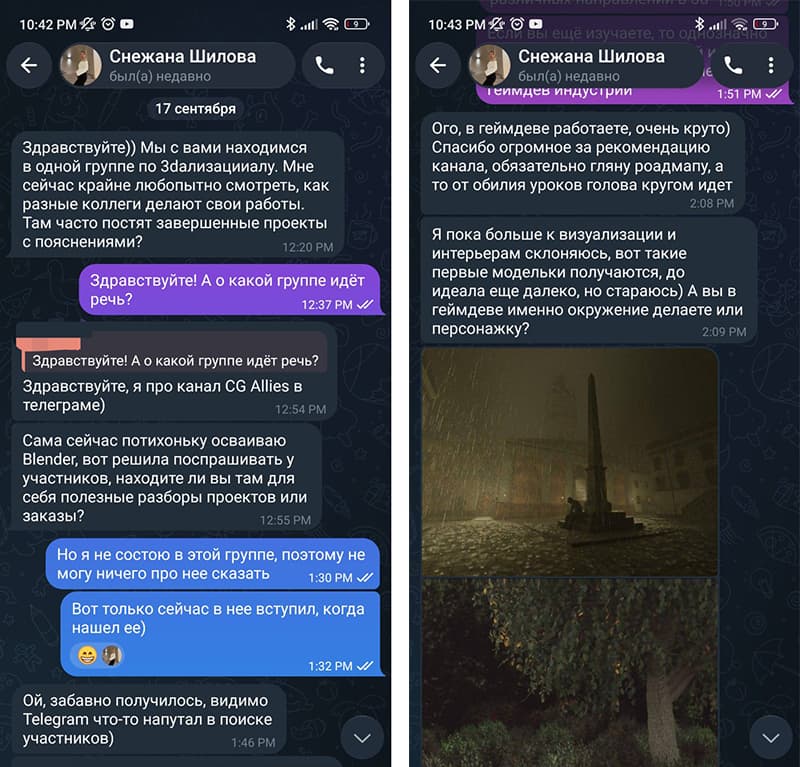
The man decided to look at the profile. Registered six months ago, filled: there are photos of the interlocutor and even several publications. At first glance, it may seem that there is nothing to worry about: on the other side of the screen there is a living person trying to figure out a new direction for himself.
- Intuition did not let me down, but for the sake of curiosity tried to show interest in communication. I noticed, perhaps, some actual errors. The girl claimed to be engaged in interior visualization. But the examples that I sent have nothing to do with the direction. Moreover, they are not even related to each other either in style or in ways of creating, Alexander said. And most importantly, the interviewee did not even belong to the group whose topics became an excuse for communication.
Then Alexander reread the correspondence and noticed the following nuances, which are unlikely to immediately pay attention:
- 1.The same structure of messages (after the answer – the question). They are atypical for communicating with a stranger. In correspondence, more concise, capacious phrases are usually used.
- 2.The sentences are long, and the answers are blurred, without specifics, with logical inaccuracies.
- 3.The response time (throughout the day) is from 10 to 20 minutes. Alexander decided to joke by asking the inappropriate question: "What is the weather on Mars?" "Girl" responded - wrote a message to 3-4 sentences.
- 4.Frequent use of idioms, stable expressions (“the head goes around”, “caught himself to thoughts”, “at a point noticed”). We don’t use them very often in conversation. The expression “to communicate with a living person” also aroused suspicion.
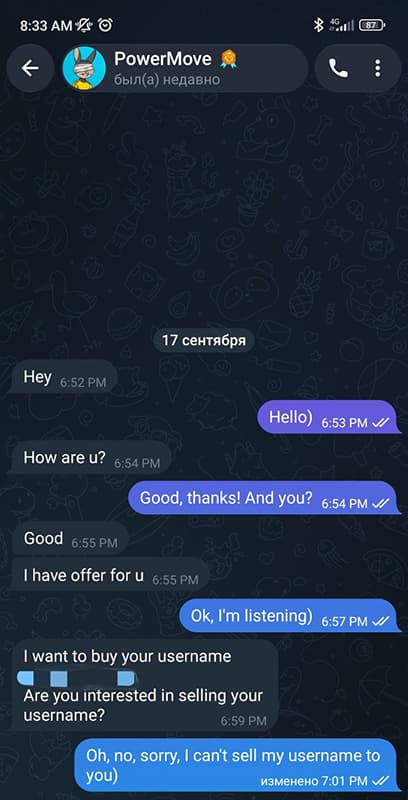
- That's not all, Alexander said, smiling enigmatically. At the same time, I was emailed from an account registered in Sweden with a request to buy my unique nickname on Telegram. Is it a coincidence? I don't think. In this way, scammers, including my new “friend” interested in the game industry, may have wanted to find out valuable information in order to further blackmail. I blocked those two numbers.
A few tips on how to distinguish a bot from a person in Telegram:
- 1.Beware of ridiculous formulations (note the strange replacement of words, indistinct expressions and words with incorrect use of case forms).
- 2.Look for repeated expressions. Bots are created for specific purposes, so they will aggressively pursue them.
- 3.Watch the speed of the response. AI instantly gives an answer, a recommendation, while a person needs time to think about or search for information on the Internet.
- 4.Ask an awkward question, make a joke, or change the subject. The chatbot does not distinguish between humor and wordplay. They may ask questions or repeat what you wrote earlier. It’s better to look weird in the eyes of a real interlocutor than to get caught by fraudsters.


