
Estimated the presence of people “brain lizard”: what is trimania
Humans have a cognitive trait related to the number three. There are many stories in which it is used, from The Three Pigs and The Three Bears to The Three Musketeers.
Well, writes The Guardian, it turns out that neuroscience is not immune to trimania. In 1959, Paul D. McLean laid out a new view of the evolution and functioning of the brain, which he called the “three-in-one” model. It quickly became one of the most well-known and enduring concepts in human biology. His idea was that inside our skull there are three different parts of the brain, one above the other, and each of them struggles to form our feelings and thoughts.
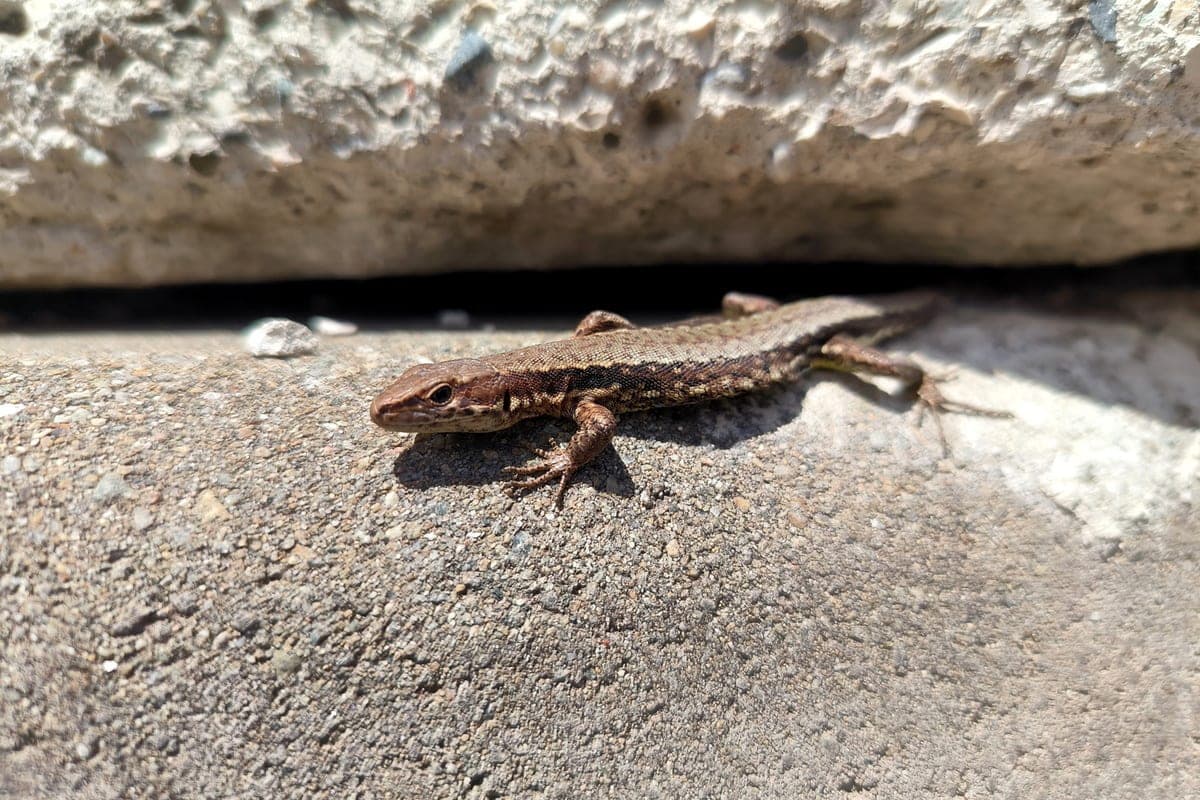
Deep inside, in the center, lies the primitive brain of the lizard, which we inherited from a common ancestor with reptiles. Here are ancient areas that are responsible for survival, help us hunt and forage, and stimulate our sexual impulses to reproduce. The second layer is located around the first, so-called mammalian brain. It contains the limbic system, which is considered the center of our emotions. It allows mammals to play, care for and care for their young, and communicate in some primitive way.
The third and final layer that covers all this and makes a person, in particular, a head taller, is the brain of the “neomammals”: the highly rational cerebral cortex. It has been suggested that it provides us with superior intelligence, the ability to speak and reason. According to McLean, this helped keep our primitive, lizard-like impulses and rudimentary emotional reactions in check.
It was believed that human behavior is the result of the interaction of all three layers of the triune brain. Temperance, impulsive actions and short-sightedness were signs that the lizard’s brain was winning. The idea that reptilian impulses “break out” has been so popular that it has penetrated the world of popular psychology, business, and self-help, and has proved remarkably tenacious. An entire mini-industry of books, conversations, and training has grown up around the idea that you can harness the power of the neo-ammalian brain to contain basic, useless, or destructive emotions.
Neuroscientists now believe that the analogy underlying this – an onion-like brain made up of different layers – is misleading. Of course, it's easy to understand, and it tells a fascinating story. But evolution simply does not anchor clearly shared mental faculties in this way.
McLean conducted autopsies of living beings in an attempt to prove his theory, but the results and his interpretations of them have since been largely discredited. For example, it is now generally accepted that many reptiles actually possess a limbic system of “mammals,” while all mammals exhibit “neomammal” traits that were previously thought to be unique to “higher” beings like us. Along with these anatomical observations, there is also behavioral evidence suggesting that many “lower” animals are good problem solvers, respond and learn through emotions, and communicate in complex ways.
Lisa Feldman Barrett, a professor of psychology at Northeastern University, is actively debunking the myth of the lizard brain. The brain is not a battleground between ancient instincts, unbridled emotions, and sophisticated logic, but a dynamic integrated system that aims to sustain our lives by predicting our energy needs and budgeting.
In terms of neuroanatomy and behavior, although the idea that we all have lizard brains has not yet taken hold in the mainstream consciousness, it has been completely discredited. And yet, despite the growing body of evidence and the success of later developments, the triune brain continues to exist.
So what is it about McLean's model that we can't get rid of? Well, as we've seen, people seem to really like threes. But maybe it's not just that. The triune brain tells us a moving story about our place in the world: that we are indeed the pinnacle of evolution, standing apart from other species. It confirms bold ideas about our domination of nature and tells an encouraging story about our logical, orderly, almost computational abilities. Of course, we are story-telling creatures, but this story needs to be updated to tell how much we have in common with other animals and how simplistic assumptions about how our minds work are almost never true.


