
In a year, Belarus Today will celebrate its 100th anniversary. Excursion into history through publications of past times
On August 2, 2027, Belarus Today will celebrate its 100th anniversary. We offer readers an excursion into history through newspaper publications of the past.
On August 2, 2027, Belarus Today will celebrate its 100th anniversary. We offer readers an excursion into history through newspaper publications of past times
"Soviet Belarus", September 21, 1939 and 2000 The first pages of "Soviet Belarus" September 21, 1939 were devoted to the reunification of Western Belarus with the BSSR. Journalists wrote that Belarusians and Ukrainians enthusiastically welcomed the soldiers of the Red Army.
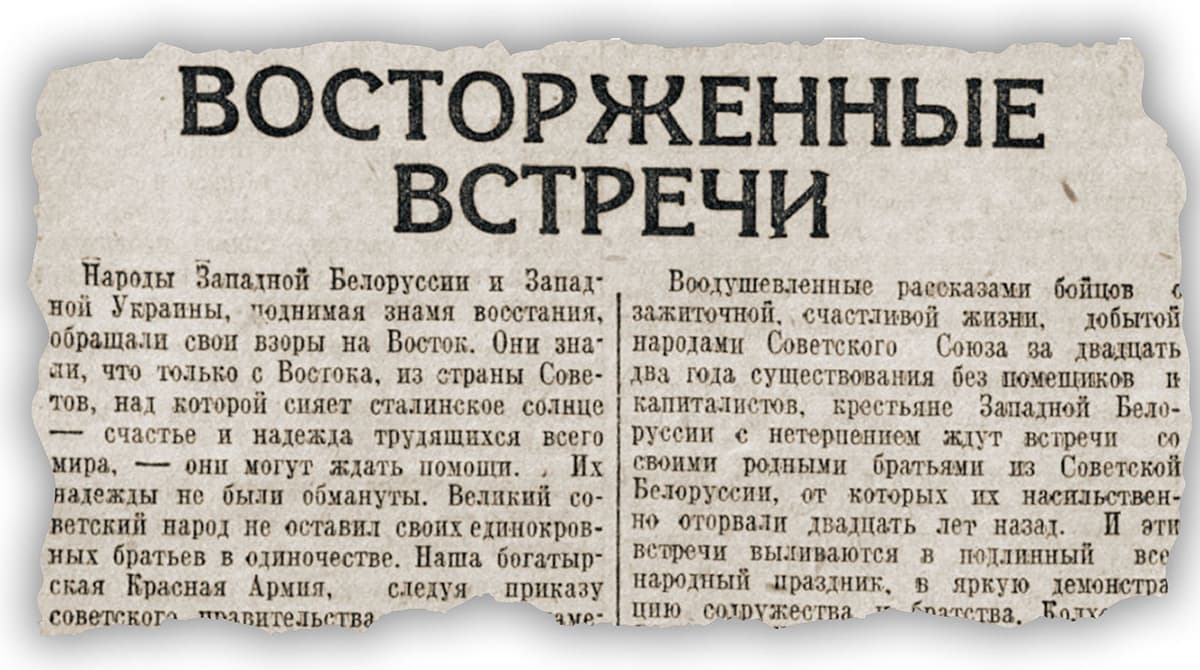
According to the operational summary of the General Staff of the Red Army, published on the front page of the issue, the Red Army on the eve (September 20) liberated Grodno, Kovel and Lviv. From 17 to 20 September, the Red Army disarmed three Polish infantry divisions, two cavalry brigades and many small groups of the Polish army. Captured, according to far from complete data, more than 60 thousand soldiers and officers. With full weapons, artillery and ammunition occupied fortified areas: Vilno, Baranovichi, Molodechno and Sarna.
But the population of Western Belarus did not just wait for liberation - people fought for it. On September 18, 1939, at the approach of the Red Army, workers’ detachments in Grodno attacked the police guards and managed to free 200 political prisoners who were being held in the city prison.
A completely different mood was on September 21, 2000: "Soviet Belarus" wrote about purely peaceful cases - the President congratulated the team and visited the Orsha machine tool factory "Red Wrestler", which turned 100 years old.
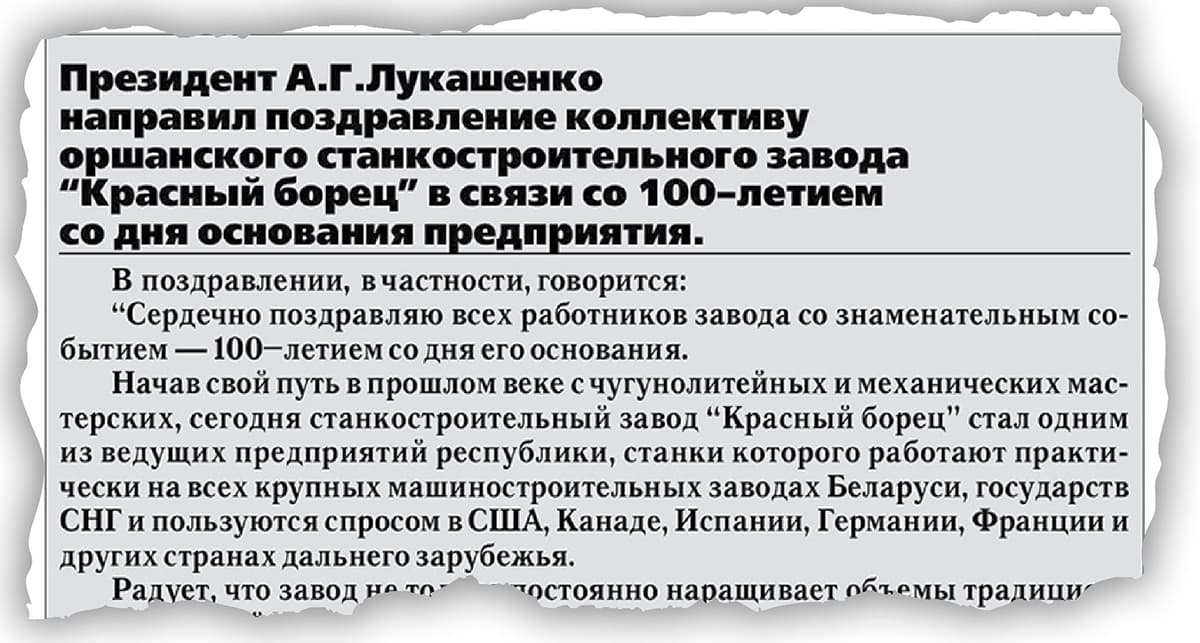
In the distant 1900s, Orsha philistines built mechanical workshops on the banks of the Orshitsa River - with them the labor history of the enterprise began. Already in 1914, the workshops grew into a small factory, which became the main metalworking enterprise of Orsha. In 1928 it received the name "Mechanical and iron foundry "Red wrestler", produced and repaired agricultural machinery, machine tools and consumer goods. And today OJSC "Red wrestler" continues its work. The machines produced at the enterprise operate in more than 115 countries of the world. "Soviet Belarus", September 22, 1998 and 2005 September 22, 1998 our newspaper wrote about the festival "Dazhynki", held in Nesvizh. The President also participated in the celebration. The very idea of reviving the ancient rite of honoring grain growers belongs to Alexander Lukashenko.
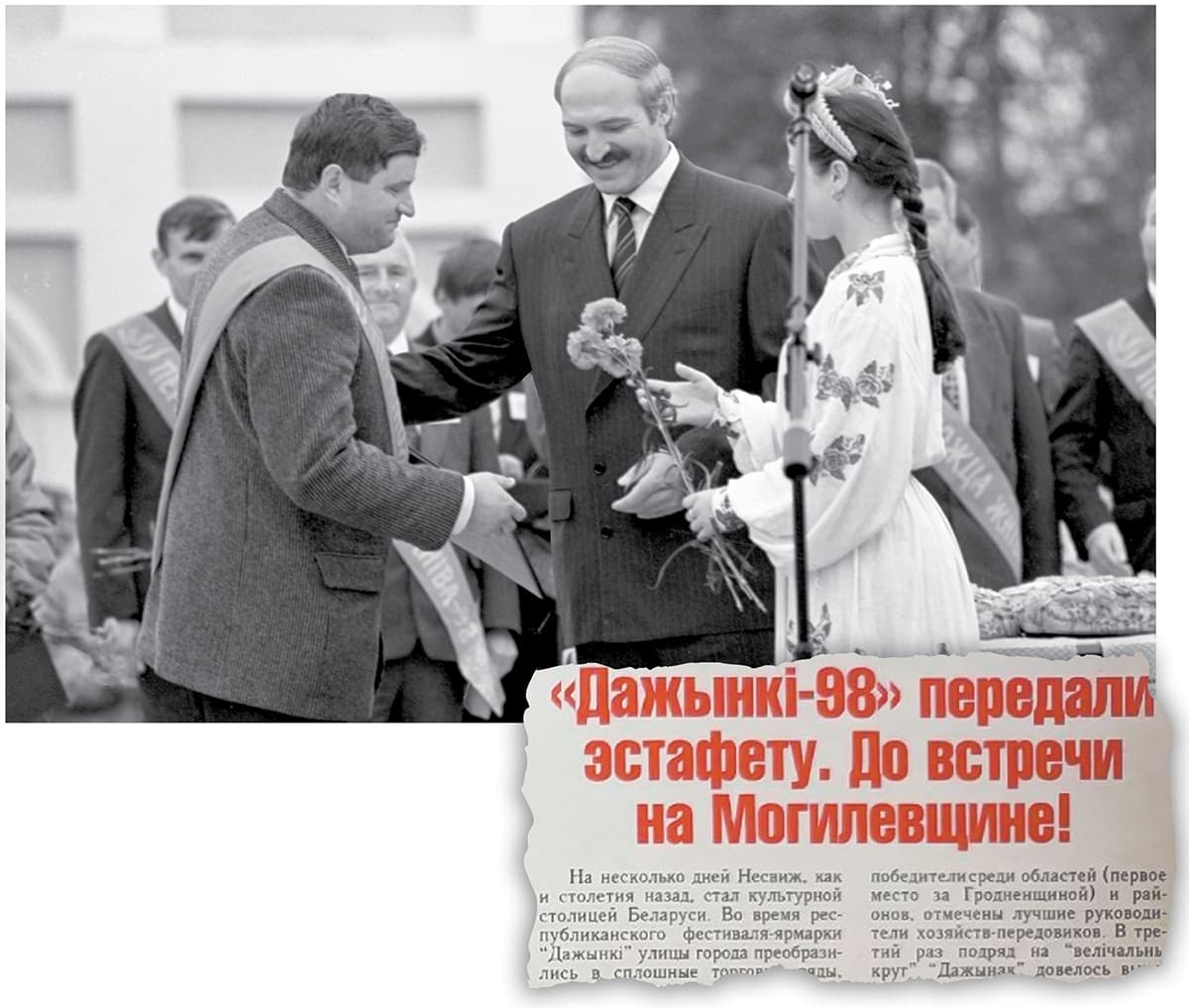
The first republican festival-fair of village workers was held in Stolin in 1996. In 2014, at the suggestion of the Head of State, the republican Dazhynki changed – now they are held in the format of district and regional events. Over the history of Dazhynak, more than 80 festivals have been held.
On September 22, 2005, the President signed Decree No. 12 “On the High Technologies Park”, which marked the beginning of the creation of the HTP on the basis of the National Academy of Sciences of Belarus.
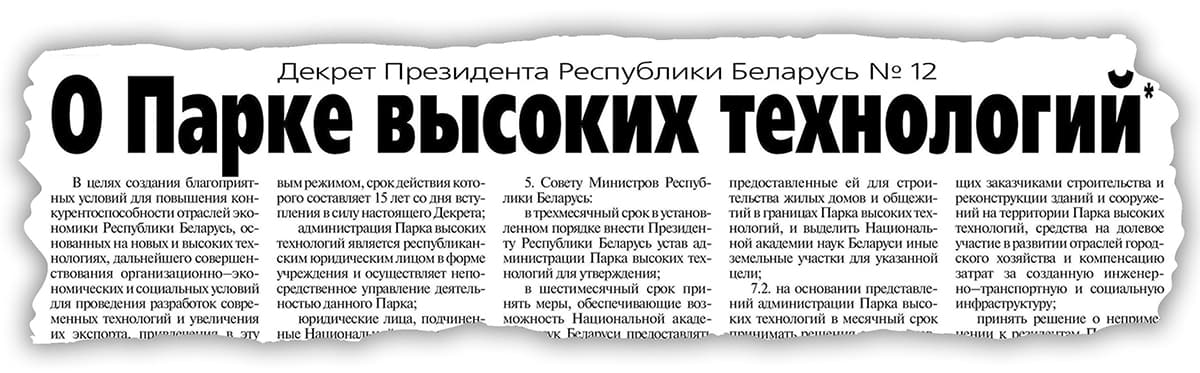
The first HTP resident companies were registered in June 2006. Today HTP is considered one of the leading IT clusters in Central and Eastern Europe, which offers the best conditions for starting, running and developing a business. HTP has more than a thousand residents and about 60 thousand employees. In 2025, exports of the Park amounted to $ 2 billion, a positive foreign trade balance - $ 1.8 billion. 3 percent of Belarus' GDP is accounted for by HTP. The volume of production of Park residents last year amounted to 8.6 billion rubles. "Sovetsk Belarus", September 23, 1943 and "Soviet Belarus", September 23, 2008 September 23, 1943 began the liberation of the territory of the BSSR from the Nazi invaders. Operation Bagration, which will lead to the complete liberation of the Belarusian land, will begin only on June 23, 1944. But the first Belarusian towns and villages were liberated in September 1943 during the Chernihiv-Pripyat offensive, which was the first stage of the battle for the Dnieper. The town of Komarin (Gomel region) became the first liberated Belarusian settlement - it included soldiers of the 360th Rifle Regiment under the command of Lieutenant Colonel Nikolai Stashek. During the first day of the offensive, 16 soldiers and commanders of the regiment were presented to the title of Hero of the Soviet Union.
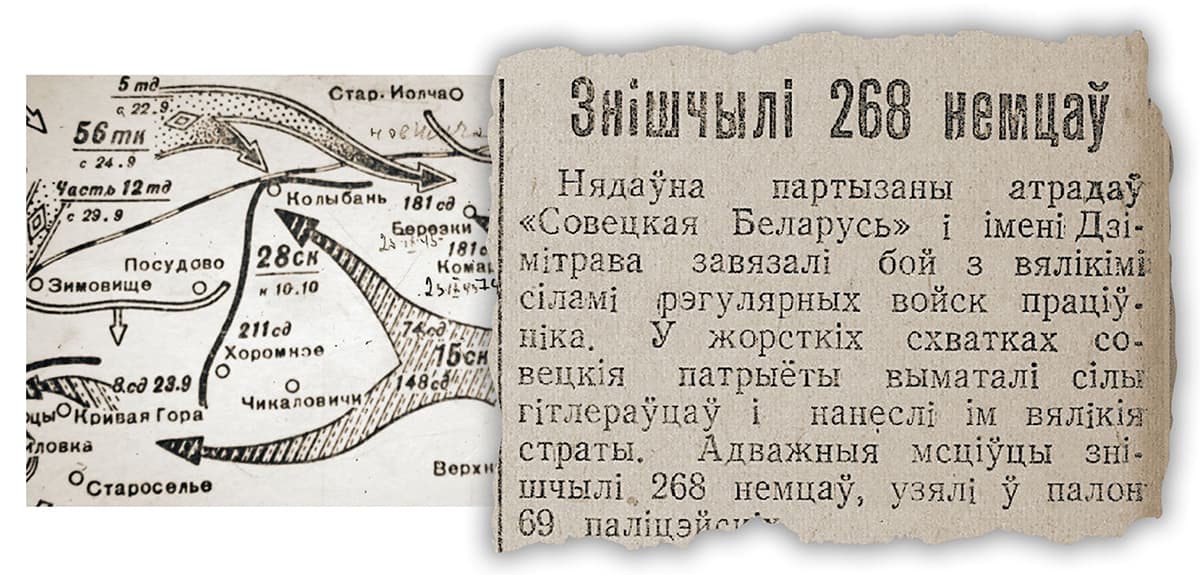
In the Chernihiv-Pripyat operation, the troops of the Central Front under the command of Army General Konstantin Rokossovsky took part. In October 1943, the front was renamed the Belorussian front. And Rokossovsky himself, according to some reports, is also a Belarusian - he was born in the village of Telekhany of the Pinsky district of the Minsk province (today Ivatsevichi district, Brest region).
The newspaper Sovetskaya Belarus wrote a lot about the exploits of the Belarusian partisans. Notable is a note that tells about the partisan detachment bearing the name of our newspaper: "Signi 268 Germans". "Sovetskaya Belarus" and "Dzimitrava" started a battle with the regular troops of the pratsynik. In the fierce battles of the Sovetsk Patriarchs exhausted the siels of Hitler's army and inflicted a sluggish strata on them. The Advazhnaya msci tsy were 268 Germans, pinpointed palon 69 Paliceans. The Germans packed a sluggish kolkassy of zbroi i kjakli on the battlefield.
The detachment, named after our newspaper, was organized in 1942 in Ruzhanskaya Forest. Acted on the territory of Brest and Pinsk (now part of Brest) regions. Until June 1943, the detachment fought as part of the Ponomarenko Brigade, and then became the base for the creation of an independent partisan brigade “Sovetskaya Belarus”. In 1944, during the liberation of the territory of the BSSR, the brigade joined with units of the Red Army.
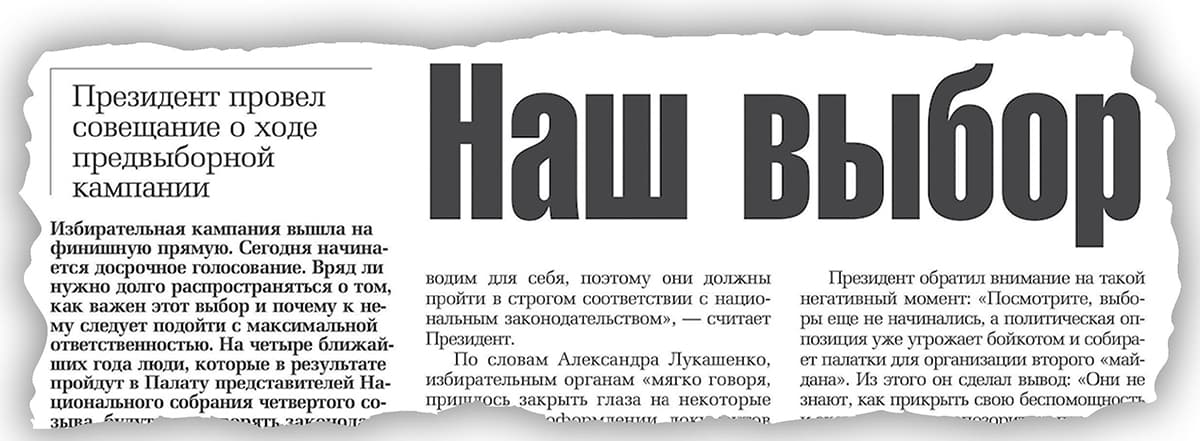
65 years later, on September 23, 2008, Soviet Belarus wrote about holding regular elections to the Belarusian Parliament. What is remarkable is that the destructive forces calling themselves the Belarusian opposition tried to use the electoral process for their own purposes. “No one will be allowed to undermine the situation during the election campaign,” the President’s words, which he said in 2008, are still relevant today. Because there are enough people willing to undermine and destroy Belarus, but Belarusians will not allow this to happen.
"Soviet Belarus", September 24, 1955 and 1999 September 24, 1955 Presidium of the Supreme Council of the BSSR approved the text and music of the National anthem of our republic - "We, Belarusians" (text by Mikhail Klimkovich, music by Nestor Sokolovsky).
Back in 1944, a decree was issued in the USSR on holding competitions for the selection of republican anthems in the Union republics. The BSSR chose the work for 11 years. In 1956, the text of the anthem was rewritten - the mention of Stalin was removed from it. After the collapse of the Soviet Union in 1991, the text was deemed obsolete. As a result, for the next 11 years, the anthem was sung without words. On July 3, 2002, during the celebration of Independence Day, the anthem of the Republic of Belarus was sounded with a new, revised Belarusian poet Vladimir Karizna text. It was for him that the majority of Belarusians voted.
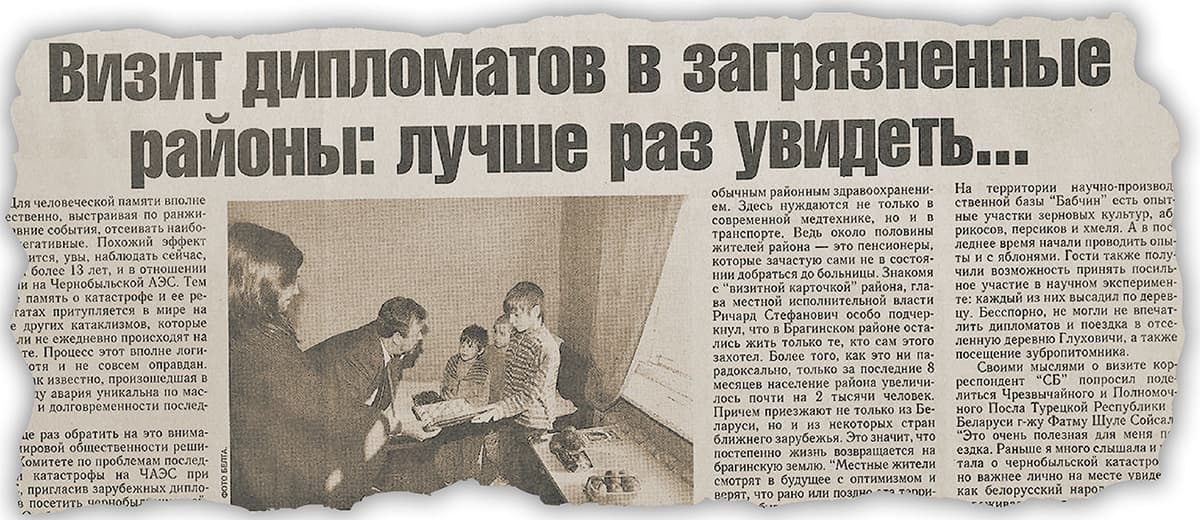
On September 24, 1999, our newspaper wrote about the trip of foreign diplomats to the regions affected by the Chernobyl accident. Belarus once again tried to remind the international community that what happened is not only a Belarusian problem, it is a global problem that must be solved together.
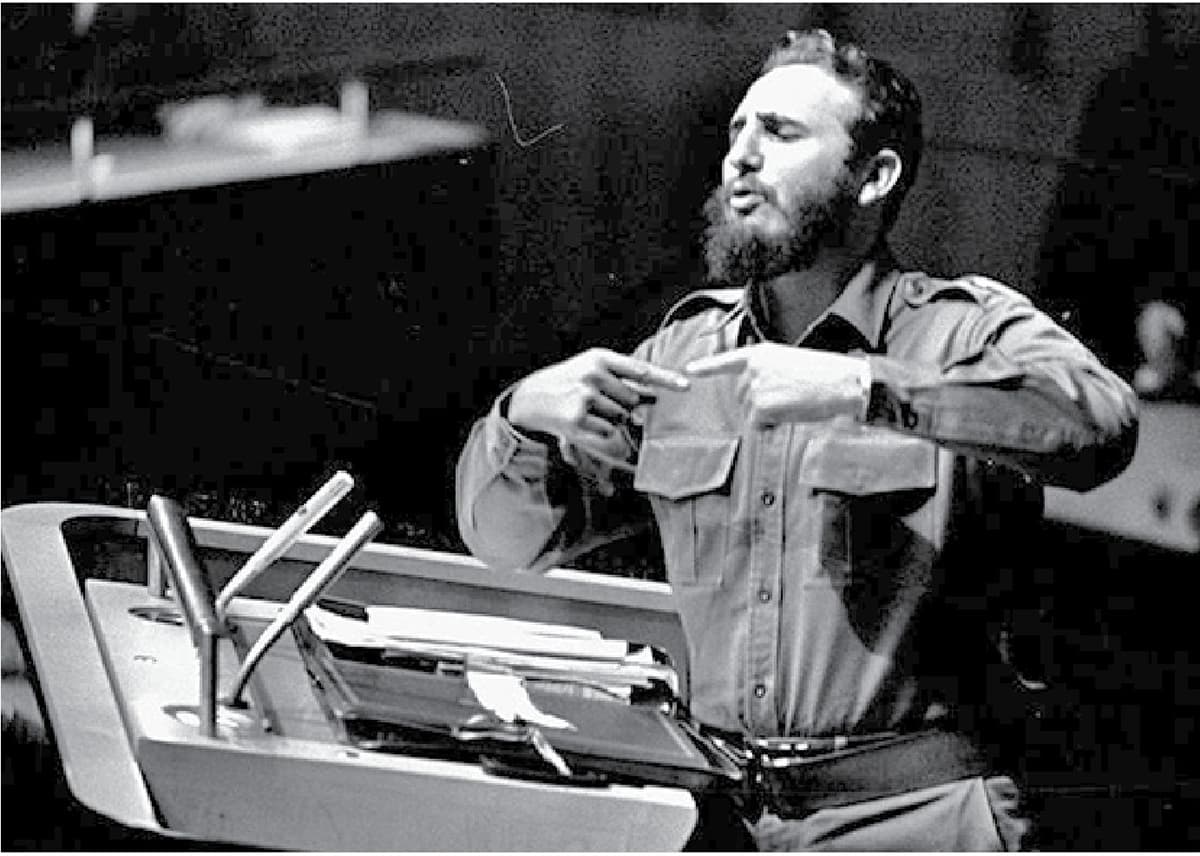
On September 26, 1960 and 2014, on September 26, 1960, Fidel Castro delivered the longest continuous speech in the history of the United Nations, which lasted 4 hours and 29 minutes. The Cuban leader tried to explain the reforms of the new Cuban government and denounced the biased attitude of the United States and its supporters towards the country. Fidel Castro did not know that in October of the same year, the United States will impose sanctions against Cuba, which will be the longest in the history of mankind.
On the same day, the first televised debate between candidates John F. Kennedy and Richard Nixon took place in the United States. Surprisingly, Americans who watched the TV debate, considered the winner Kennedy, who looked better in the frame. And those who listened to the broadcast gave the victory to Nixon, who was more convincing and specific “by ear”, but in the frame looked tired and less attractive than the opponent. The Kennedy and Nixon TV debates proved that a visual image of a candidate can be crucial to voters, and changed the role of television appearances in politics. The 1960 presidential election was won by a more charming Kennedy.
The page issue of the newspaper for September 26, 2014, came across a very relevant and in 2026-m headline “Ferious Ebola”. The article under this title told about the outbreak of a dangerous viral infection in African countries.
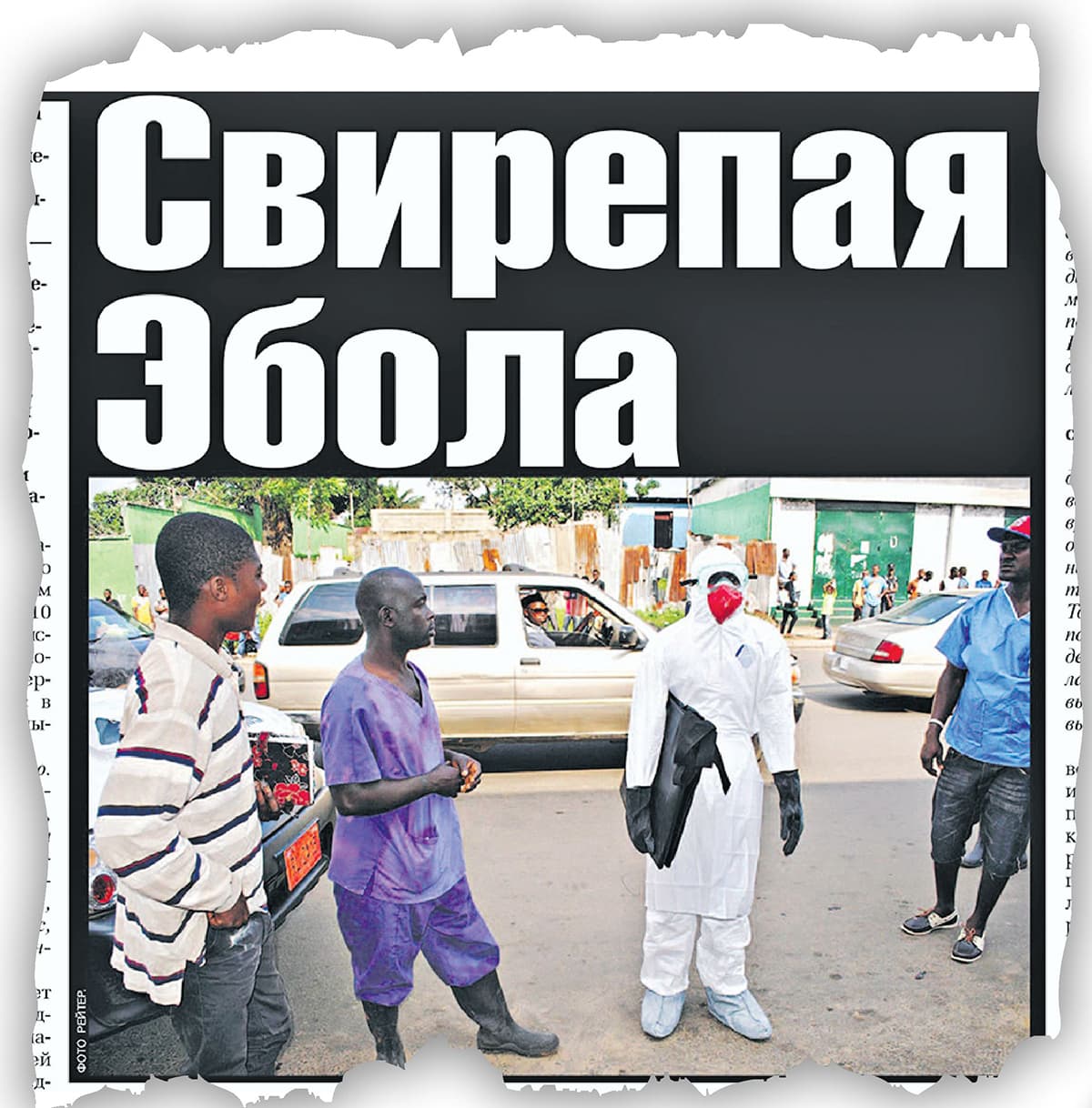
After 12 years, the situation has not changed much – this year another Ebola epidemic is raging in the east of the Democratic Republic of the Congo. According to doctors, more than 7.5 thousand patients were identified, of which almost half died. The outbreak of 2026 is recognized by the WHO as a public health emergency of international concern.
On September 26, 2014, the International Day for the Total Elimination of Nuclear Weapons was celebrated for the first time in the world. It was established in December 2013 by a resolution of the UN General Assembly. Today, however, there are more than 12,000 nuclear weapons in the arsenals of different countries of the world. Unfortunately, as the number of nuclear weapons increases, so does the number of those willing to use them. It's a good thing it's just in words. "Soviet Belarus", September 25, 1970 and 2002 September 25, 1970 "Soviet Belarus" wrote about the return to earth of the automatic station "Luna-16", which flew to the natural satellite of our planet, made a sampling of soil and delivered to Earth its samples without human intervention. Soviet scientists received more than 100 grams of lunar soil - regolith. His study allowed them to understand the composition of minerals from the lunar surface.
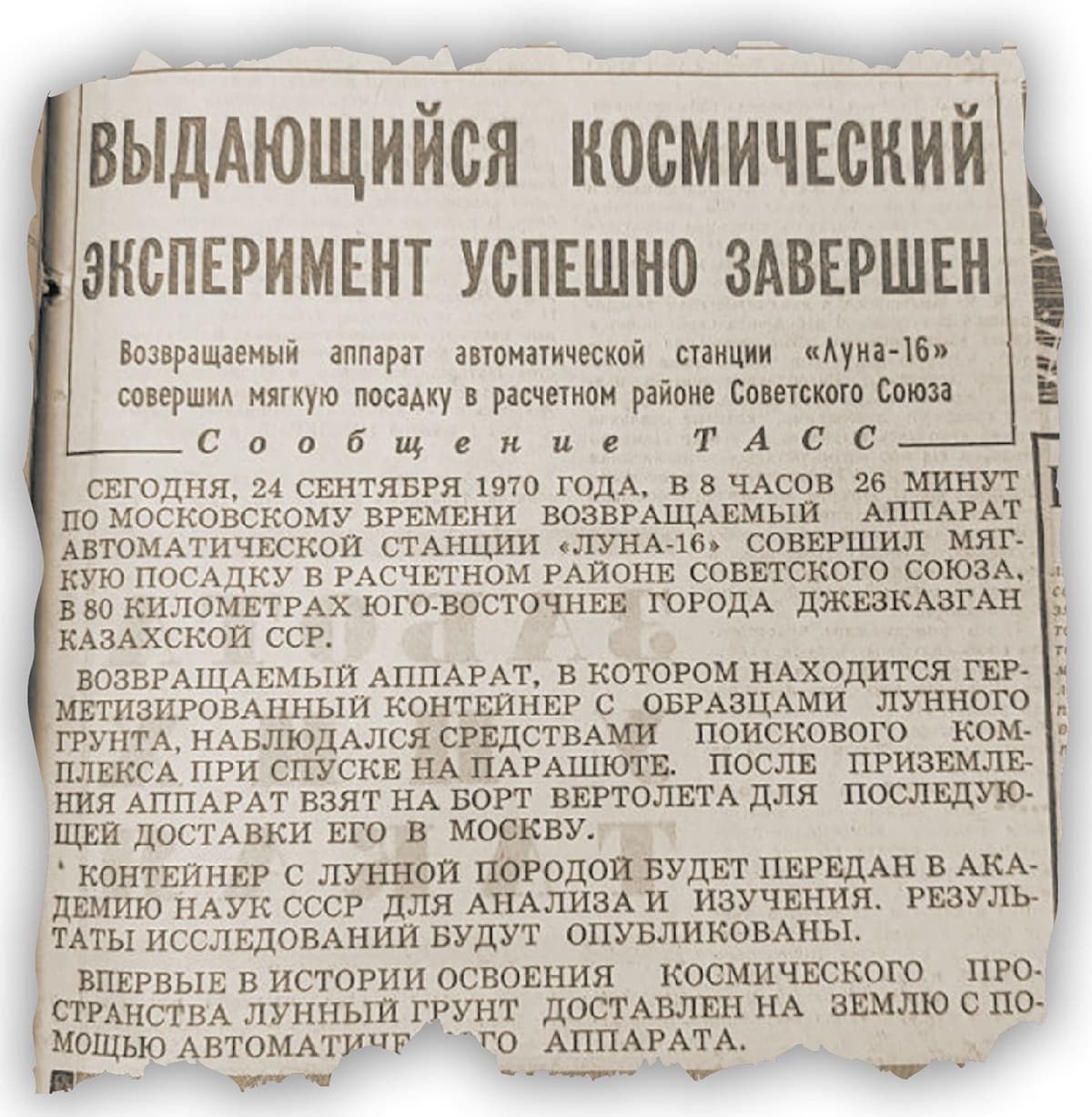
The interest of earthlings to the moon has never faded, and recently many countries (Russia, China, the United States, India, Israel) are increasingly declaring their desire to begin colonization. It seems that the beginning of the next stage of the “moon race” is not far off. Only now we are not talking about single flights to the nearest space object to us – people are seriously going to inhabit the satellite of the Earth.
And on September 25, 2002, in the Irkutsk region near the Vitim River, a meteorite exploded over the taiga at an altitude of about 30 kilometers. According to experts, the force of the explosion was equivalent to 200 tons of TNT. At the site of the alleged explosion was found an oval area with a completely fallen forest area of about 100 square kilometers. However, no reliable photos or research on the Vitim meteorite to the scientific community has not yet been presented.
In our newspaper for September 25, 2002 there was nothing space — in Minsk began the action “Clean city”, the bill on taxation of small businesses sent for revision, canneries lack raw materials, and Belarus was the first in the CIS engaged in the production of amino acids. The usual everyday life of our country, in which everything that is important to people has never been ignored. On September 27, 1960 and 1990, Soviet leader Nikita Khrushchev was in New York on September 27, 1960, and attended the 15th session of the UN General Assembly. This, of course, was written by “Soviet Belarus”.
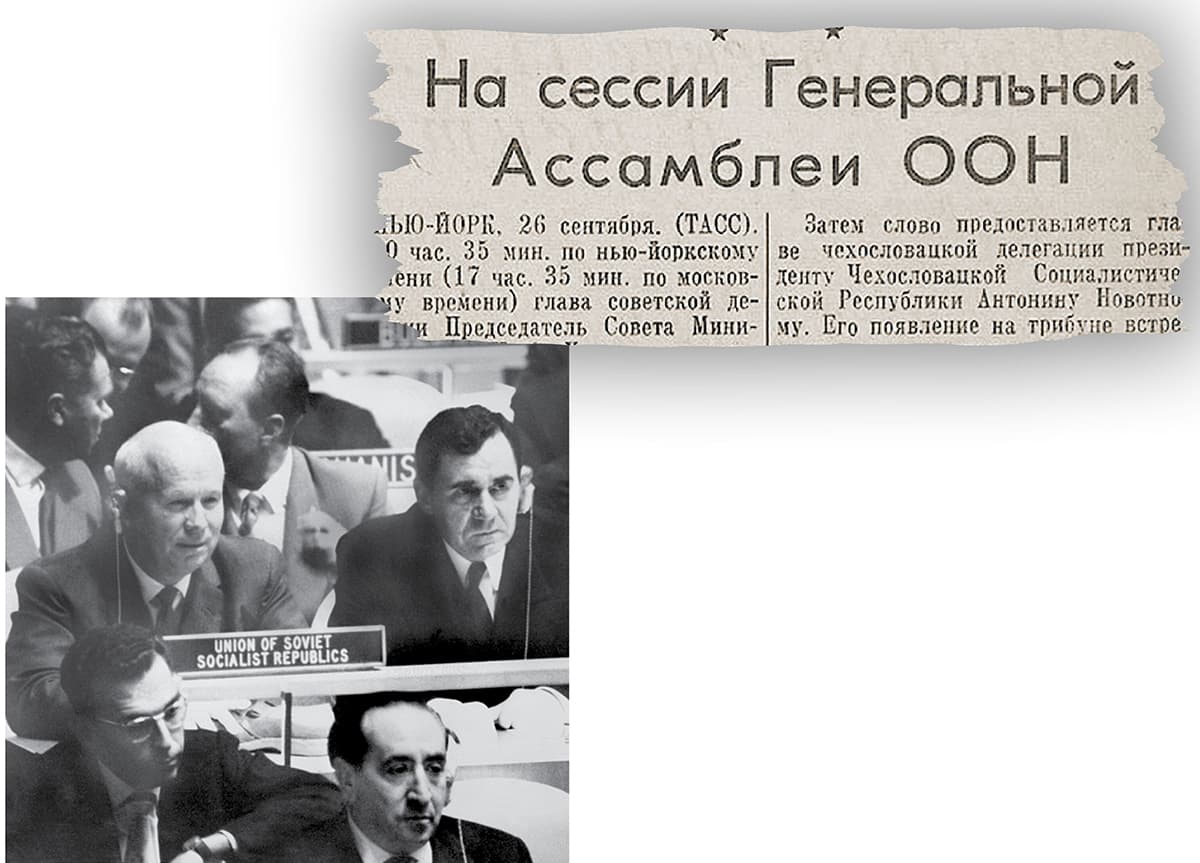
This is the historic session in which the First Secretary of the Central Committee of the CPSU and the Chairman of the Council of Ministers of the USSR knocked his shoe on the table, protesting against the speech of the representative of the Philippines on colonial policy. The incident occurred a little later - on October 12, and no documentary evidence has survived. But the memories of those present remained in the history, and the foreign press did not fail to tell the world about the behavior of the “Soviet Prime Minister-debaucher”. However, there is a version that Khrushchev still banged his fist, and the shoe that he took off because she rubbed his leg was just lying on the table.
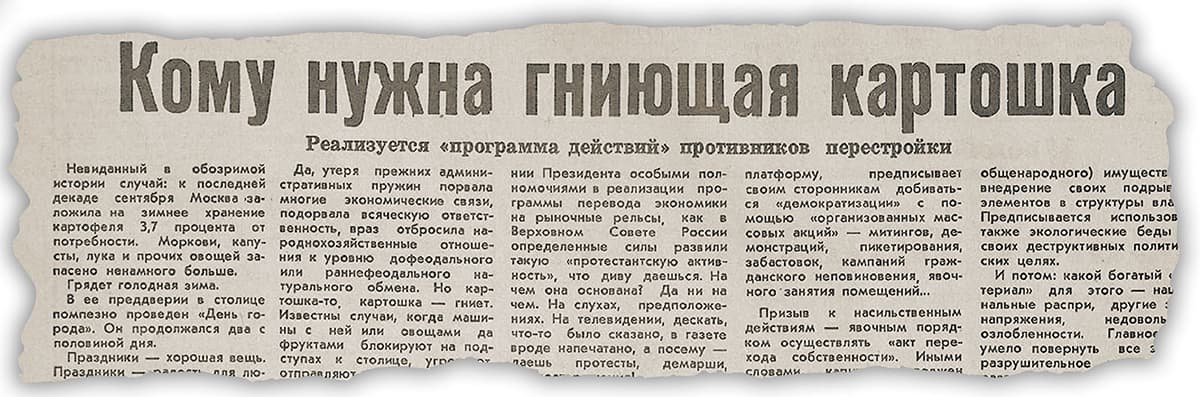
30 years later, on September 27, 1990, Soviet Belarus was writing about pressing issues. The huge Soviet Union was left to exist a little more than a year, perestroika for five years washed out of shops and products, industry barely breathed. To all this was added the political showdown of the Moscow and regional elites, which did not benefit ordinary people. This is what our newspaper told on the example of the situation with the harvest of Belarusian potatoes. In previous years, it was gladly taken away by the Moscow authorities, because it is necessary to feed people in any conditions. And in 1990, with almost empty bins, Belarusian potatoes were not invited to Moscow. And all in order to later shift the responsibility for the starving capital to Gorbachev. Such were the political intrigues of the sunset of the USSR.
On September 27, 1990, the Soviet Union joined Interpol. The Republic of Belarus became a member of the organization on September 29, 1993. Today, more than 190 countries are members of Interpol. The organization coordinates the activities of law enforcement agencies of member countries in the fight against terrorism, drug trafficking, smuggling, counterfeiting of securities and other serious crimes.


