Feed the rhubarb in the autumn, but do not fall asleep its crown
In autumn, rhubarb leaves naturally die off
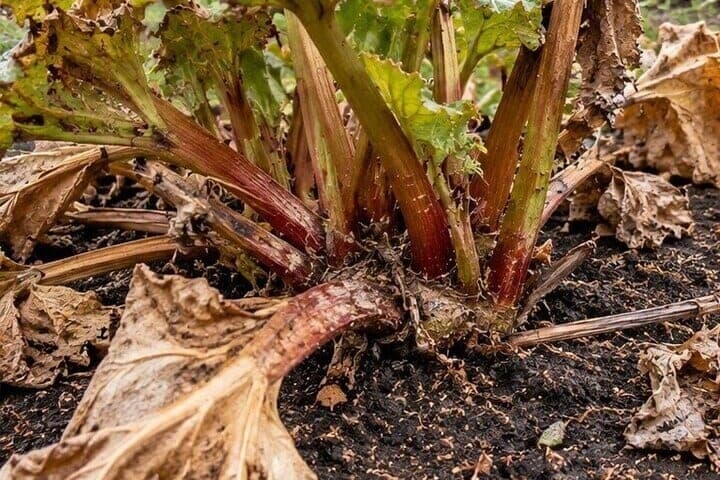
In autumn, rhubarb leaves naturally die off. Completely dry leaves after growing can be removed, especially if they lie in a dense moist layer at the base of the bush.
Mature compost or well intermittent organic matter is distributed around the root zone, without filling the crown and kidneys with a thick layer. Under moist soil or organic matter, gas exchange worsens, tissues stay wet longer and the risk of sublimation and rot increases.
After rain and thaw at the base of the plant should not stand water. If rhubarb grows in a low damp place, it is more useful to improve water withdrawal than to increase insulation. If necessary, make a shallow withdrawal or at the next transplant choose a higher place.
Fresh manure is not placed directly on the crown: it retains moisture and can create too high a concentration of salts and ammonium compounds near the tissues of the plant.
In the spring after the fall of snow, the kidneys should be dense, without soft darkened areas and the smell of rot. If the damage is repeated, first check the watering and depth of planting.
For prevention, the crown is left close to the surface and does not create a heavy moist shelter above it.
Relevance period: approximately from October 1 to November 15 for the middle strip of Russia / Central non-black earth zone. Why: Work is carried out after the natural death of the leaves and until stable freezing of the soil, while you can remove plant residues, make mature compost and, if necessary, improve water drainage.