
“The habit of sitting on the foot will lead to varicose veins”: we analyze popular myths about convex and blue veins
Do heels and the habit of sitting on the foot lead to varicose veins and is it true that this pathology ...

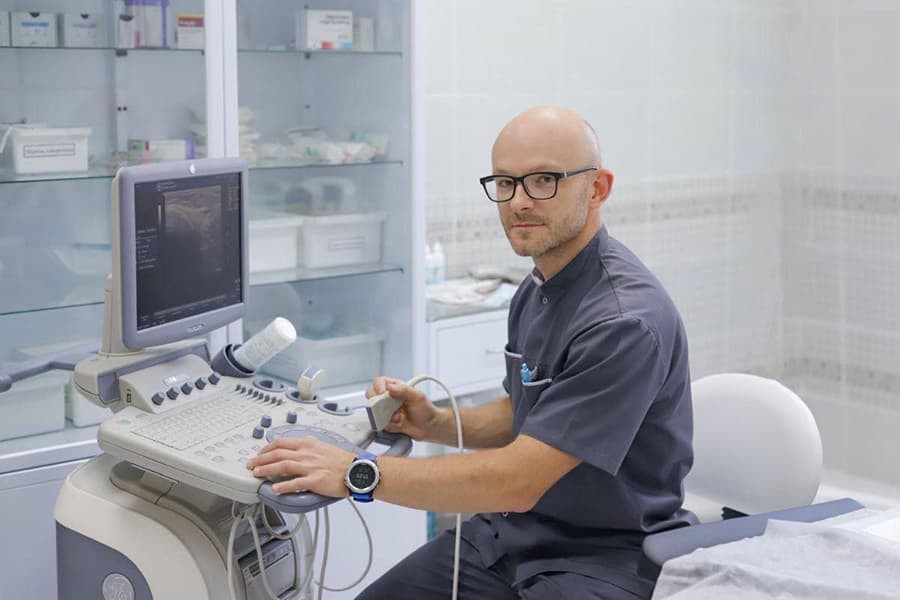
Do heels and the habit of sitting on the foot lead to varicose veins and is it true that this pathology threatens only the elderly? In the most common myths about the disease, the correspondent of the agency “Minsk-Novosti” was dealt with together with the surgeon-phlebologist Alexander Silin.
Photo by Depositphotos
MYTH #1. Varicose veins can be completely cured with tablets
- To understand why this is not the case, you need to understand the mechanism of the disease. Varicose disease is part of a large group of chronic vein diseases (CVD) and is manifested by the expansion and protrusion of subcutaneous vessels. The reason lies in the violation of the work of large veins and venous valves.
Drug therapy is only an auxiliary method. Tablets eliminate symptoms: reduce pain, reduce swelling, help cope with night cramps, improve the condition in the postoperative period. In combination with compression knitwear, they really inhibit the progression of the disease. But the drugs themselves do not treat and do not prevent varicose veins. Treatment of varicose veins is always a complex of measures: compression, sclerotherapy (administration of drugs to "clump" veins) or surgical intervention (phlebectomy, EVLK).
MYTH #2. Varicose veins appear due to wearing heels
- Wearing heels alone does not cause varicose veins. Rather, it is a direct path to foot problems and flatfoot development. However, heels cause the leg muscles to work in constant tension, which can lead to stagnation of venous blood and swelling. If risk factors are added to this - heredity, overweight, sedentary office work or inactivity - heels become a catalyst that provokes the development of pathology.
Myth 3. The habit of sitting on the foot will lead to varicose veins
- If you do it irregularly and briefly, it is absolutely safe. However, the constant habit of sitting “foot by foot” for a long time provokes compression of the deep veins of the lower leg. This increases the risk of thrombosis, can lead to damage to the fibula nerve, impaired posture and pain not only in the leg, but also in the back.
Myth #4: Varicose veins are an aesthetic problem
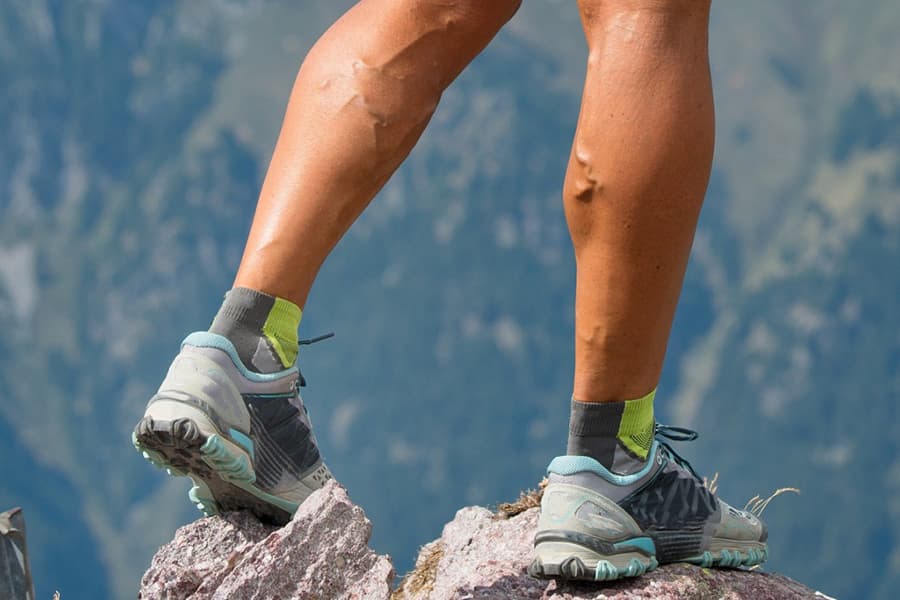
- It is important to separate concepts. When we talk about venous "nets" (reticular varicose veins, telangiectasia) - the expansion of small intradermal veins to 3 mm - this is really cosmetic in nature and does not pose a direct threat to health. In true varicose veins such nets will never grow.
But if we are talking about a classic varicose veins with protruding veins, the situation is different. This disease not only spoils the appearance, but also threatens life. It is fraught with the formation of blood clots (phlebothrombosis), the separation of which can lead to pulmonary embolism (PE). In addition, untreated varicose veins provoke constant swelling, tissue malnutrition (trophic disorders), which ultimately leads to the appearance of ulcers on the foot and shin with the risk of infectious complications.
Myth 5. Varicose veins can be cured by leeches, mud or bees
- No, you can't. Apitherapy and similar folk methods are not able to restore the work of the valves. Moreover, such manipulations often lead to damage to the subcutaneous veins, provoke bleeding, the development of thrombosis and severe allergic reactions. The best solution is not to waste time on self-medication, but to contact a specialist.
Myth 6. Varicose veins - a disease exclusively of the elderly
- This misconception refutes daily practice. Patients of 20-30 years are increasingly coming to the reception. They lead an active lifestyle, play sports, work standing or, conversely, at the computer, spend many hours driving. After the ultrasound diagnosis, they hear the diagnosis of “varicose disease”.
The reasons for young and old differ. In patients over 60 years of age, varicose veins are often complicated by concomitant diseases (heart, diabetes, musculoskeletal system), excess weight and reduced skin elasticity. The 25-year-old drivers of the disease are different: heredity, excessive strength training, long flights, uncomfortable shoes. In young varicose veins often looks different: there is no bulging vein, but there is a mesh, swelling and leg fatigue in the evening (in the complex).
Myth 7. Wearing compression linen - a panacea
Compression knitwear (stockings, golf, tights, elastic bandages) is the main method of conservative treatment. It does not relieve varicose veins, but due to compression does not allow the veins to expand excessively, increases the outflow of blood, prevents swelling and reduces the risk of thrombosis. This is a faithful assistant in prevention, in the treatment of trophic ulcers and lymphostasis, as well as in the postoperative period. But it is impossible to call it a “magic pill” that will eliminate the disease once and for all.
Photo by Depositphotos
Myth 8. Removing diseased veins overwhelms healthy ones
- It's a common fear. In fact, 85-90% of venous blood normally flows through the deep veins. Surface veins take on only 10-15%. With varicose veins, the superficial veins begin to work incorrectly: instead of outflow, they accumulate blood (deposit it). This increases the pressure and creates a huge load on the deep veins. Removing varicosely altered areas, we remove this “extra” load, restoring normal blood circulation.
Myth 9. Surgery is always scars, scars and a hospital
Classic phlebectomy (Babcock surgery) does involve cutting and removing veins under general or spinal anesthesia. But modern phlebology has gone far ahead. Today, the gold standard is minimally invasive methods, for example, endovenous laser coagulation (EVLC).
Everything happens under local anesthesia: only a puncture of a vein is performed, through which a light guide is inserted. The laser warms the vessel, after which the vein gradually sticks together. The operation is performed on an outpatient basis: the patient comes, undergoes the procedure, walks for 20-30 minutes under the supervision of a doctor and goes home. No cuts or stitches.
Myth 10. The operation means that varicose veins will not return
- Unfortunately, relapses happen. Varicose veins are a chronic, progressive disease. The reappearance of veins on the operated leg can be caused both by an error in the tactics of the operation and by the natural course of the disease. It is more difficult to operate on relapses, since the anatomy of the system has already been changed. Unfortunately, many patients with relapse delay the visit to the doctor, bringing the matter to trophic disorders. To avoid this, once a year do an ultrasound of the veins of the lower extremities. If you notice heaviness or swelling, do not postpone a visit to a phlebologist.
For the prevention of the disease, A. Silin recommends adherence to several rules: first of all, it is body weight control, since obesity is the main enemy of blood vessels. It is important to avoid prolonged static loads: if you have to sit a lot or stand in one place for a long time, you need to take regular breaks for walking and warming up. It is also critical to follow the recommendations of doctors during pregnancy. Regular exercise (walking, running, cycling and swimming) are the best ways to maintain the tone of the venous wall.


