
Abrupt warming, rains and purple sunset: a meteorologist explained the November anomalies in the Angara region
The ninth of November, the Irkutsk region experienced a sharp change in weather conditions
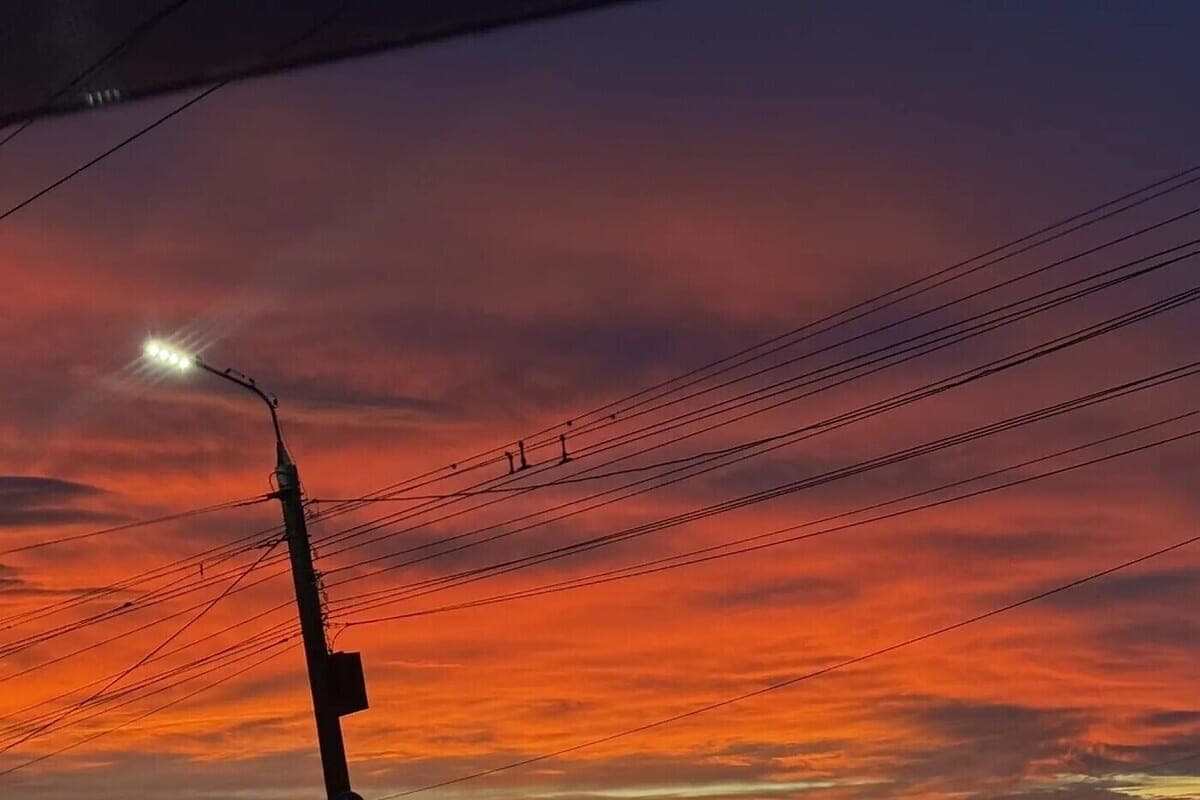
On the ninth of November, the Irkutsk region experienced a sharp change in weather conditions. In place of a prolonged 12-day wave of cold weather and snow fell came temperature swings, rain in the western regions and an unusually bright sunset. It's reported by Ireland.
As explained by the head of the Department of Meteorology and Physics of Near-Earth Space ISU Inna Latysheva, after the arrival of cold from Chukotka, the weather in the region was affected by the active high-altitude frontal zone of an extensive cyclone. It displaced the Asian anticyclone and formed a mixture of moderate and subtropical air currents from the Arabian Peninsula. Because of this, the air currents over Irkutsk changed places, creating an inversion: the ground was colder than in the upper layers, and the temperature difference reached 15 degrees.
Additionally, a giant cloud plume stretches over the region from Dushanbe to Yakutia. According to the expert, a large-scale Arctic cyclone from the Novaya Zemlya archipelago played a significant role, which stretched horizontally over a huge territory and vertically reached the stratosphere. It was this stable multicenter vortex that brought warm and humid air masses to the region, which caused rains in the west of the Angara region.
In Irkutsk itself, temperature changes were felt especially acutely: at eight in the morning thermometers showed -11 degrees, and by two in the afternoon the air warmed up to +5. The drop in atmospheric pressure caused drowsiness in weather-sensitive people, and warm weather with slush is forecast to persist until the end of the week. In the far north of the region, the drops were even more extreme: at night there were recorded up to -35 degrees, and during the day the temperature rose to -5.
Another unexpected natural phenomenon was a rich red-orange sunset. The meteorologist noted that this visual effect is associated with an increase in the path of the sun's ray in the atmosphere: passing a greater distance, light loses short blue-violet waves, leaving long red and orange. Color saturation increased due to strong south wind, increased aerosol content and movement of moist warm air.


