
Russian bison came in second place in the world in number
The total population of European bison in the world exceeded 13 thousand individuals, and Russia confidently entrenched itself in the top three world leaders in their breeding.
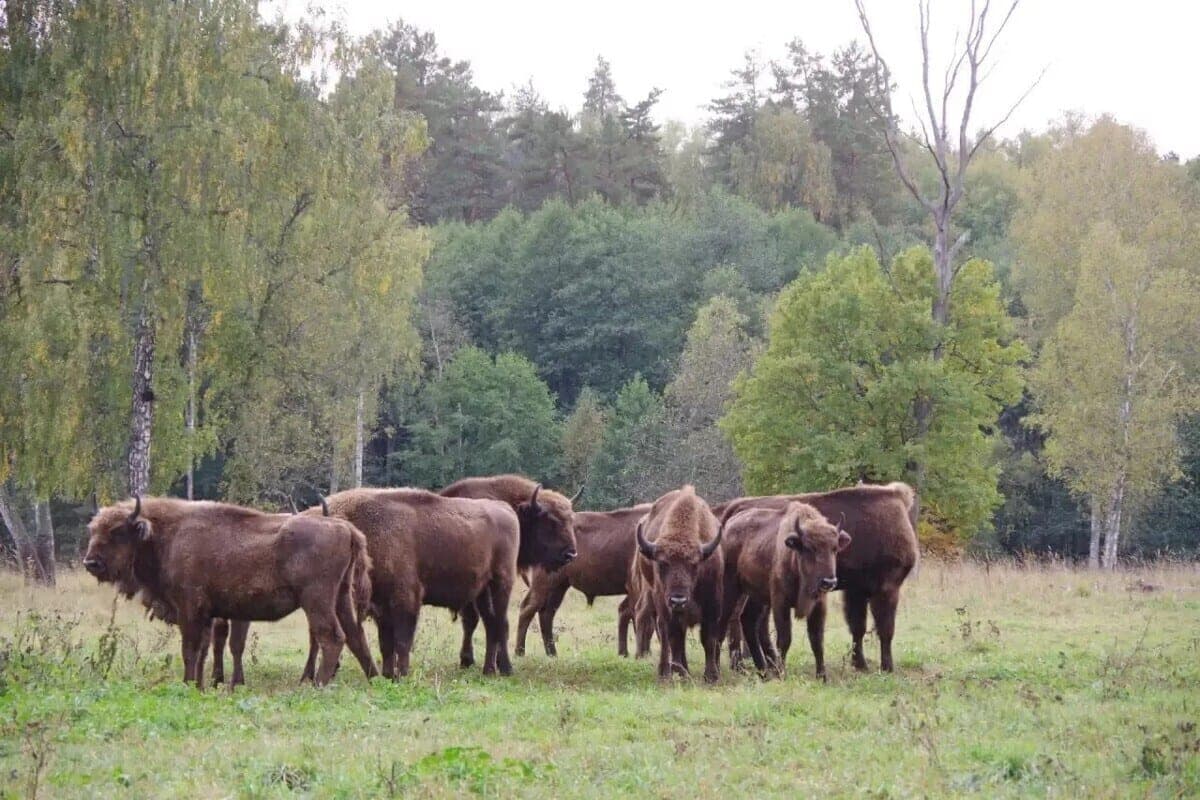
A new volume of the International European Bison Studbook has been published under the editorship of the Society of Friends of the European Bison (EBFS). Statistics for 2025 show a steady increase in the population of this rare species, which a century ago was on the verge of complete extinction.
Three leaders
The world ranking on the number of bison is as follows:
1. Poland - 3,491 individuals.
2. Russia - 3408 individuals.
3. Belarus - 2985 individuals.
The gap between the leading countries is minimal, with only a few dozen animals, indicating healthy competition and the overall effectiveness of conservation programs.
The numbers are particularly impressive in the historical context. In 1927, there were only 48 bison left in the world, which were kept in zoos and zoos. Thanks to the efforts of scientists and environmental organizations, including Russian, the species was saved.
Today, the total number of bison in the world is 13,055 individuals, of which:
10,668 live in the wild;
669 - in semi-free conditions;
1718 - in captivity (zooes, nurseries).
A significant part of the Russian population is concentrated in the Central Russian population - the largest free-living group of bison in the world. It is located in the Kaluga, Orel and Bryansk regions, and its population reached 1,681 individuals. This is almost half of all bison living in Russia.
The key role in restoring the population, including in the Moscow region, is played by the Prioksko-Terrasny State Reserve, which is one of the centers for breeding and reintroduction of bison into the natural environment.
“The growth of the bison population is one of the most successful examples of species restoration in the history of conservation activities,” the experts note. Russia is making a huge contribution to this process, creating new populations and ensuring their genetic diversity.
The next volume of the pedigree book, with data for 2026, will be published in the summer of 2027.


