More than 4300 Smolyans receive agricultural allowance to pension
In the Smolensk region, more than 4.3 thousand people receive from the SFR branch an allowance to pension for a long rural experience
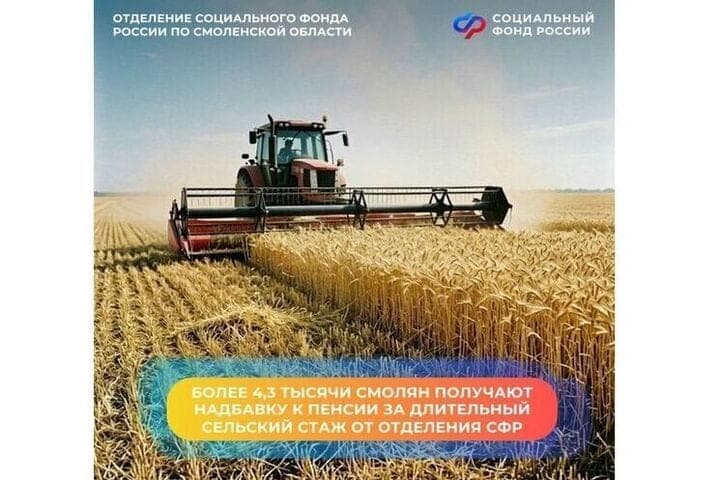
In the Smolensk region, more than 4.3 thousand people receive a pension supplement from the SFR branch for a long rural experience. This increased fixed payment is intended for non-working pensioners receiving an old-age or disability insurance pension whose rural experience is at least 30 years, and at the time of recalculation they lived in rural areas.
Rural experience includes about 500 specialties in the field of crop production, livestock and fish farming, including such specialists as agronomists, veterinarians, tractor drivers and mechanics. Also during this period, work in kolkhozes, sovkhozes or peasant farms before January 1, 1992 is counted, regardless of the title of the position. In addition, the calculation takes into account periods of leave, temporary disability and childcare up to one and a half years.
The amount of the allowance is 25% of the fixed payment to the insurance pension. In 2026, in the Smolensk region, this amount reaches 2396 rubles per month for old-age pensioners and 1198 rubles for recipients of disability pensions of group III. At the same time, the already established allowance remains for a person even if he moves from rural areas to the city.
The head of the regional branch of the SFR Natalia Grishchenko explained that if a person does not work at the time of the appointment of a pension, the allowance is charged automatically and does not require contact with the department. Upon resumption of work, the payment is suspended, and after termination of work is resumed automatically from the first day of the next month. At the same time, if the pension was granted during the period of employment, it is necessary to submit an application to the FIU to establish the allowance after completion of work.
In addition to pensions, the SFR Branch in the Smolensk region provides pensioners with other social support. In particular, there are communication centers for the elderly, where various cultural and cognitive events are organized.