
Shchelkovo plus Losino-Petrovsky: a merger that will change the map of the Moscow region
Deputies of Shchelkov and Losino-Petrovsky almost synchronously supported the initiative to unite the two municipalities into a single urban district
they may erupt with renewed force.
What exactly unites: numbers and geography
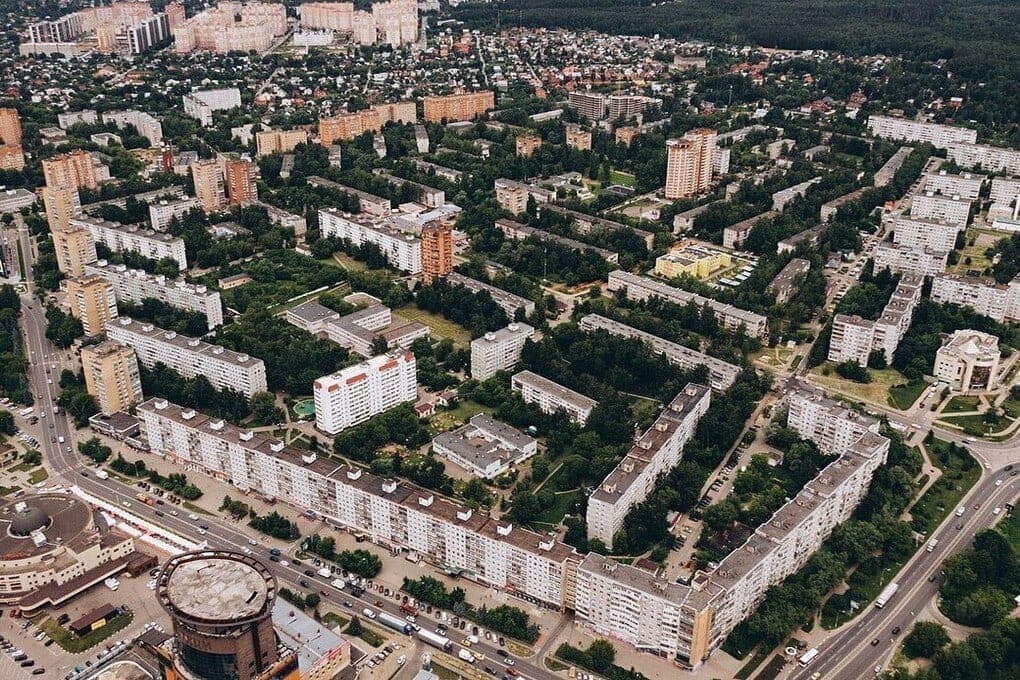
If the merger takes place, the new municipality will become one of the largest in the region. Shchelkovo today is 223.4 thousand people, 80 settlements and an area of 621.5 square kilometers. Losino-Petrovsky — 72 thousand people, 18 settlements and 91.27 square kilometers. In total - about 295 thousand inhabitants and almost 100 settlements. Judging by the logic of the process, the administrative center of the new education will be Shchelkovo, the largest and most resourceful of the two districts.
The main argument of supporters of enlargement in the Moscow region remains unchanged: the centralization of resources and the acceleration of the solution of common infrastructure problems. However, independent experts note the reverse side of this process.
Alexander Puzanov, General Director of the Institute for Urban Economics Foundation, has long pointed out that after the merger, the share of residents who will have to get to local government bodies further than 15 km will increase. For Losino-Petrovsky with its 72 thousand population, this means that the administrative center will move to Shchelkovo, and the territorial accessibility of power for some residents will objectively decrease. Moreover, Puzanov warned about the growth of conflict potential: unified land use rules and standards of improvement introduced throughout the united territory, “is unlikely to take into account” the specifics of each settlement.
The HSE study on the example of the Moscow region captures a paradox: enlargement leads to a decrease in the territorial availability of local government and services, while the cost of maintaining the government apparatus is not reduced. In other words, the promised savings on officials are more of a myth than a reality.
Voice of the Earth: what residents say and what social networks are silent about
Official press releases state that the initiative “has been prepared taking into account the views of residents of both municipalities.” However, open spaces paint a much more colorful picture - especially if you look at recent history.
Losino-Petrovsky has already gone through a painful enlargement in 2017-2018, when it included the settlements of Sverdlovsk and Aniskinskoye. Then, according to local activists, the process was accompanied by protests: residents of Aniskinsky learned about the hearings through “word of mouth”, there were accusations of forging signatures, and discontent reached threats to block the Shchelkovo highway. Some of the people said, “We will fight to the last.”.
Now on the profile forums of Losino-Petrovsky you can meet nostalgic and bitter questions: “And who can say why the hell we left Shchelkovo?”. These words are not so much support for the union as fatigue from lack of independence and the feeling that the “sovereignty” of a small district turned not into freedom, but a shortage of services and the need to follow them to Shchelkovo.
In Shchelkov, judging by the available comments, public opinion is less emotional, but also does not burn with enthusiasm. For residents of a large county, joining a 72,000-strong neighbor is more a matter of budget allocation and attention to the authorities than an everyday problem. The risk is that some of the resources will go to “pull up” Losino-Petrovsky, and some Shchelkovsky will perceive this as a burden.
Let’s look at the potential benefits:
- Common Infrastructure Policy. Roads, transport, water and heat supply networks in adjacent territories can be planned without inter-municipal approvals. For Losino-Petrovsky, where problems with the transport accessibility of social facilities have already been recorded, this is theoretically a chance for improvement.
- Simplification of management for the region. Fewer municipalities – fewer decision-making centers and headaches for regional authorities. It is this argument that critics call the main real motive for enlargement.
Obvious disadvantages:
- The distance to power. For some of the residents of Losino-Petrovsky, the administration will become physically further away, although in our digital age this does not play a fundamental role.
- Loss of local subpoena. The district will have one budget and one development plan. The problems of a small city are at risk of dissolving into the scale of a 295 thousand-strong municipality.
Risk of “management optimization” without savings. As practice shows, the reduction in the number of officials is rarely proportionate.
Next Next post: November 30th – The Moment of Truth
Technically, the process has just begun. Public hearings are scheduled for November 30, from 16:00 to 18:00. It is there that residents will be able to officially fix their position - "for", "against" or with the requirements of guarantees. However, the history of enlargements near Moscow teaches that hearings often become a formality.
If the merger takes place, we will get a new large urban district in the northeast of the Moscow region, which will become one of the key players in the agglomeration. But the question is not whether a new administrative unit will appear on the map. The main question is whether life in Losino-Petrovsky and small settlements of Shchelkovo direction will be better – or consolidation will simply make power further, and responsibility blurred. The answer depends not on the deputies who voted on November 16, but on whether the authorities will hear the popular voices at the hearings of the 30th.


