
Schoolchildren in Veliky Novgorod told how to recognize deception on the Internet
In Novgorod Quantorium passed an unusual lesson: students were told about pretexting – a type of fraud, when an attacker makes a convincing story to lure personal data or money. This was reported by the press service of the government of the Novgorod region.
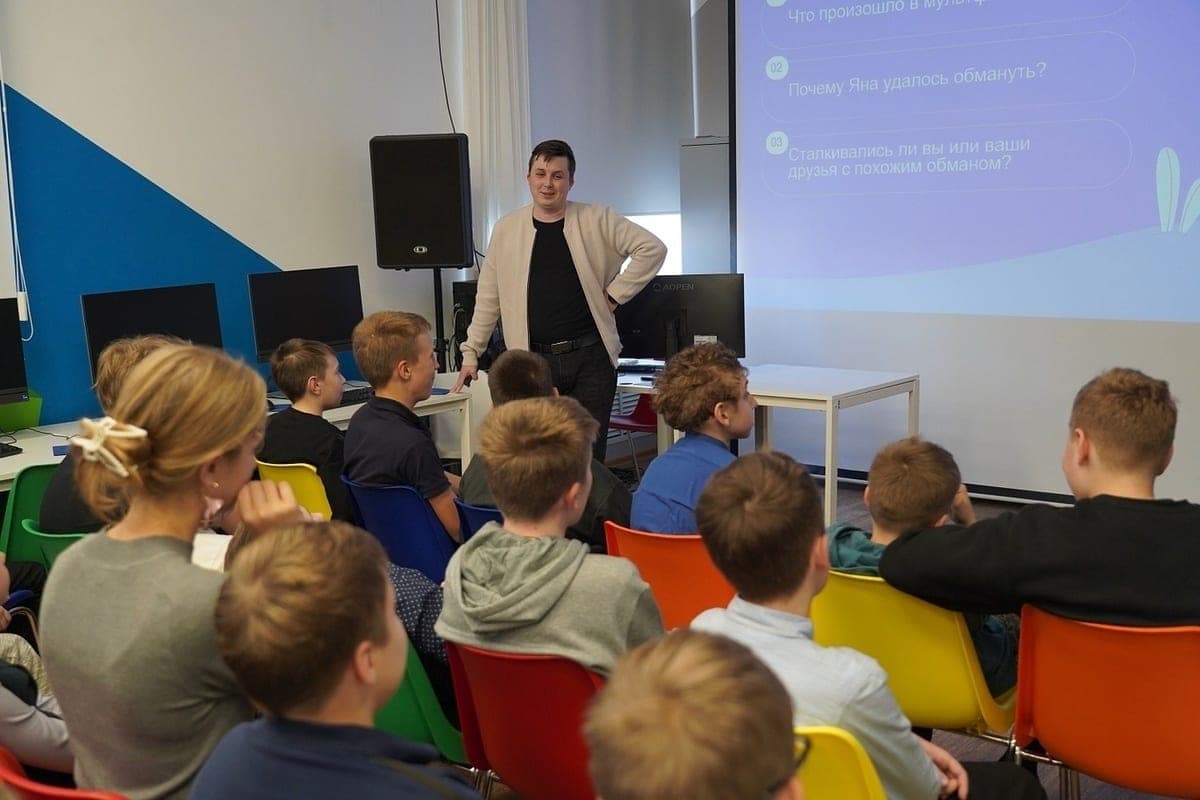
In Novgorod Quantorium passed an unusual lesson: students were told about pretexting – a type of fraud, when an attacker makes a convincing story to lure personal data or money. This was reported by the press service of the government of the Novgorod region.
The lesson was held within the framework of the all-Russian project “Digital Likbez”. Together with experts, the students analyzed typical scenarios of deception: how fraudsters disguise themselves as acquaintances, support services or even teachers, and what to do if the situation seems suspicious. The guys did not just listen, but actively participated in the discussion and gave their own examples - so the theory immediately became clearer.
The Minister of Digital Development of the Novgorod Region Mikhail Kibler stressed that children and adolescents are one of the most vulnerable groups for cyber fraudsters: attackers often take advantage of their credulity. Therefore, it is important to form “digital immunity” from an early age: to learn to be critical of information, not to succumb to tricks like “data urgently passed” and be sure to discuss suspicious messages with adults.
In 2025, 663 thousand cybercrimes were recorded in Russia, and the total damage amounted to 189.5 billion rubles. In such conditions, the ability to distinguish deception is not just a useful skill, but a basic necessity.


