
Dog "Hello": not barking, but a whole system of signals
If you translate a dog greeting into a human, it is unlikely to be a “woof” or a joyful jump on the chest
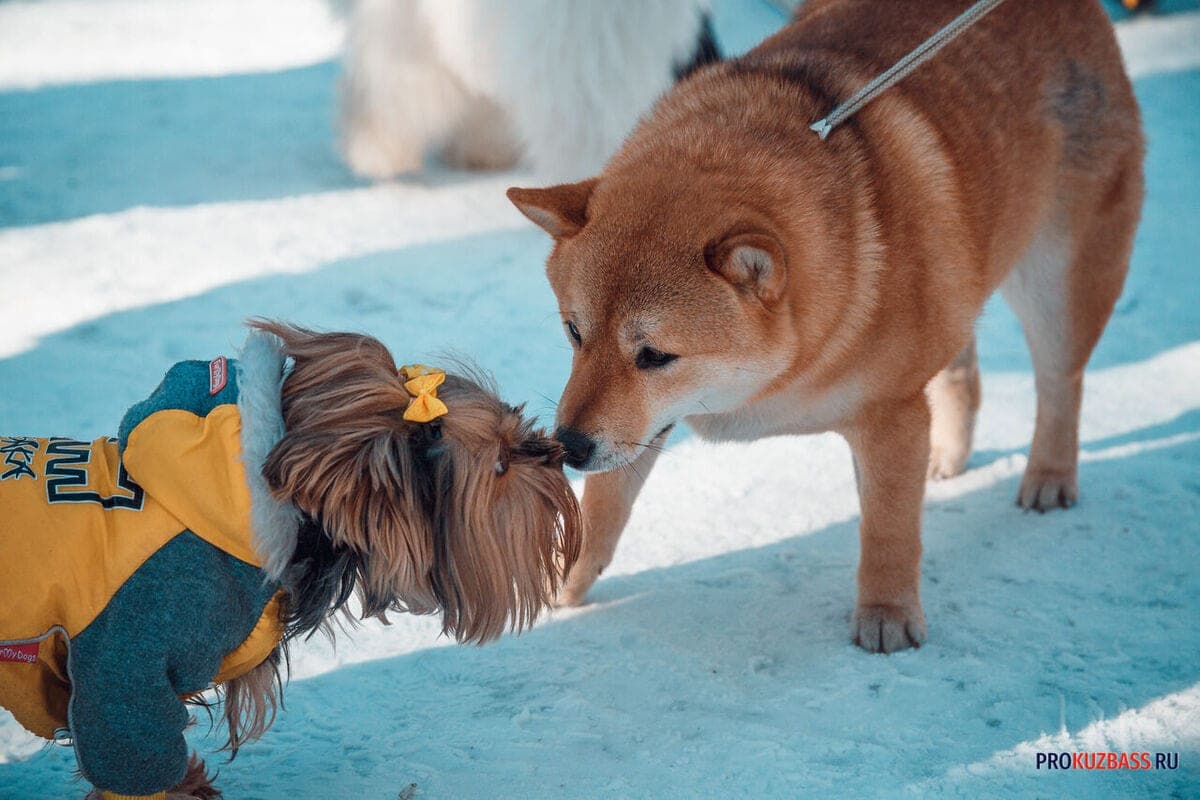
Dogs greet through postures, facial expressions, smells, look, tail and ear position, and distance. Sometimes the whole conversation takes seconds. One dog sniffs his hand and walks away, the other gently wags his tail and pokes his nose, the third brings a toy. But each gesture has meaning only in the general context of the animal's condition.
Lai is not the main translator
Lai is often perceived as the main dog’s “voice”, but it does not always play a key role in greeting. The dog may bark with joy, excitement, anxiety, impatience, or a desire to attract attention. Barking by itself does not mean “hello.”.
It is more important to look at the whole behavior. With a calm greeting, the dog moves freely, does not freeze, does not go with a tense body. The value has the head, back, tail, ears, expression of the muzzle and pace of movement. Only the combination of these signals shows whether the dog is friendly, wary or uncomfortable.
Greeting in dog language is a signal of safe contact. The dog is like, "Who's in front of me?" A friend? Calm? Can I get close
Why does a dog sniff at a meeting
For a person, greeting is a word or a handshake. A dog smells. Sniffing helps gather information about another animal or person. By smell, the dog can tell where the person was, what he brought with him, with whom he recently contacted and whether his condition has changed.
Studies confirm that dogs are able to distinguish odor signals associated with human stress, for example. Therefore, sniffing is not rudeness, but a natural part of communication. The dog may first examine the shoes, trousers, hand or bag, and then move on to more noticeable contact.
What does a calm dog's "hello" look like
A calm greeting is usually restrained: without stormy jumps and screeches. The dog can approach with a soft arc, stop at a comfortable distance, sniff, look briefly and wag its tail slightly. The body remains relaxed, the movements are free, the mouth is a little open.
After a long separation, the greeting is brighter. The dog meets the owner at the door, moves the whole body, brings a toy, rubs sideways, substitutes the chest or neck for caressing. This is an emotional meeting with a significant person. But here, too, one cannot judge by one criterion. Jumping on a person is not equal to love - sometimes it is overexcitation and the habit of getting attention through pressure.
The tail doesn't always say "I'm glad"
Wagging your tail does not guarantee joy. Soft wide movements with a relaxed posture often speak of a calm, friendly attitude. A stiff, fast or high wag in a fettered dog can be a sign of excitement, alertness or internal tension.
When it's no longer a greeting
A dog can come not only out of friendliness. Sometimes it shortens the distance to check the threat, stop the person or express tension.
The discomfort is indicated by:
These signals cannot be ignored. Not every dog meeting is comfortable. In some situations, she calmly makes contact, in others she chooses distance and shows that she needs more space.
With unfamiliar dogs, it is especially important to behave carefully. Do not hover from above, do not pull your hand directly to the face, do not rattle on the head, do not hug and do not look intently into the eyes. For humans, it can be a friendly gesture, for dogs it can be pressure.
How to Tell Your Dog “Hello”
The best human greeting for a dog is calm and unobtrusive. Don't come close, talk straight, don't hang over. Let the dog decide whether to shorten the distance. The hand does not need to be sharply raised to the nose. Stay relaxed and do not block the animal’s way out.
If the dog came, smelled and stayed close, you can gently stroke it on the chest, side or neck sideways. The head, paws, tail, abdomen, and ears are too personal areas for many dogs, especially at first contact.
Check comfort helps a short pause. I stroked the dog for a few seconds and stopped and watched the reaction. If she stays close, moves gently, reaches for her hand, or asks for a continuation, the contact is likely to be pleasant. If it turns away, moves away, freezes, licks its nose or strains, it is better to stop petting and give it space.
How do dogs say hello to each other
Between dogs, the greeting isn't necessarily like a human "come face to face and say hello." Direct entry can increase tension, especially if the animals are unfamiliar, shackled or already aroused.
A calm encounter often looks softer: dogs shorten the distance without sharp pressure, can approach the arc, sniff each other briefly, assess posture, movement and readiness for contact. One dog sniffs the muzzle, the other the side, neck, or area at the base of the tail. After that, they can disperse, continue the walk or move on to the game.
A short divergence after sniffing does not mean quarreling or "coldness." For dogs, this is the usual option of calm contact: they received the necessary information and did not develop interaction further.
The game begins where both dogs show a willingness to communicate. If one jumps and the other freezes, turns away, leaves or hides behind the owner, this is no longer a mutual game, but an intrusive contact from a more active dog.
A dog’s “hello” is not a single sound or gesture, but a whole dialogue. Observe the animal, give it a choice and respect the distance – then the contact will be safer and clearer for both parties.


