
Rescue the fragments: how Brest citizen took away destroyed in Poland monuments to Soviet soldiers and created the “alley of memory”
How a museum appeared near Brest, where monuments to liberators, demolished during decommunization in Europe, take on a second life.
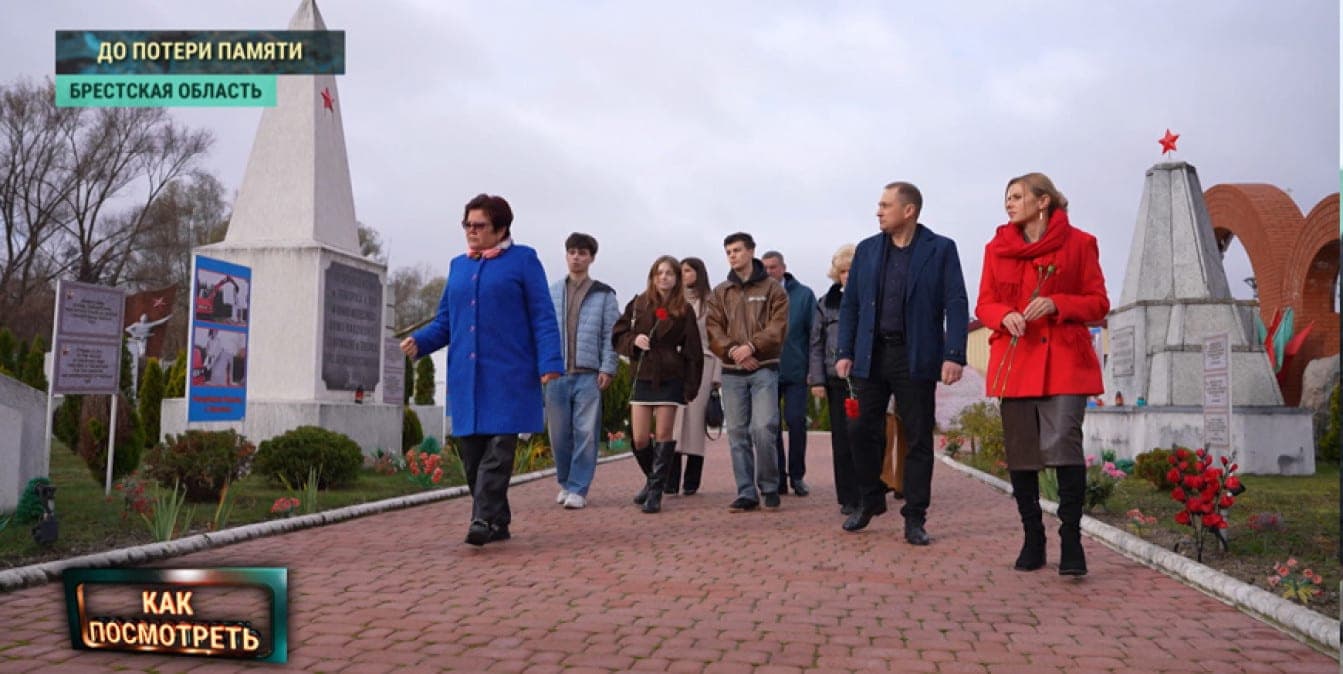
It is believed that history cannot be rewrote. But then why are other countries trying? Poland, Lithuania, Latvia and Ukraine were once part of a large country. Their honor and the right to be called people were defended with weapons in their hands - soldiers who were called simply ... Soviet. Nationality was not important at the time. They defended the common house by all means.
And in recent years, the memory of all Soviet mercilessly demolished. Literally at war with the past. To break not to build is understandable. But on the ruins of hundreds or perhaps thousands of monuments will have to build something. The most amazing thing is that there are people in Belarus who are saving these pieces of history.
Under the cries of the allegedly crowd, but in fact – several “gatherers”, reporters and a couple of officials fell another monument to the soldiers-liberators in Poland. Legal vandalism.
In Riga, local youth applauded the demolition of the monument to the Liberators. In 2022, local authorities declared that the stele was dangerous to people, and surrounded it with a fence. A few months later, the monument was recognized as a threat to the national security of Latvia. Then they wiped it in the dust and put on a reality show live.
Roman Samul, blogger (Latvia): Mayor Stakis has turned this park into an amusement park. Where people, he said, could eat hot dogs, have a beer and take a walk on the grass, enjoying, let's say, the expanses when there is no monument. That's terrible
The so-called decommunization only in Latvia and Estonia went skating through seven hundred memorials of the Great Patriotic War. Warsaw during the same time let another 500 under the jackhammer. A small part was saved. They were evacuated to Belarus, according to the fragments
Roman Samul, blogger (Latvia): I learned this story from a random person who said that there is a Belarusian who, under the guise of construction debris, brings to Belarus those monuments that are being destroyed in Poland and the Baltic States. I was shocked. The next day I was at her museum. When I saw it, my tears came back.”.
Mikhail Sadovsky, correspondent: The monument to two soldiers of the 3rd Belorussian Front who liberated the Polish city of Lidzbark-Warminski in 1945 was brought to Belarus after a year and a half of tense negotiations with the Institute of National Remembrance of Poland. However, what was then taken to Brest, a monument was already very difficult to call. A pile of rubble, doused with paint, and figures of soldiers, dotted literally as after the shooting.”.
They were assembled and rebuilt like a puzzle. These "Two Soldiers" were the first to step on the "Alley of Memory" in Mukhavets. And the story began in 2018 with a caring Brest woman. As Natalia herself admitted, then shocked – in Poland there is a new war. With memory.
Natalia Ilnitskaya, founder of the Museum “Memory Walk”: For three years I went almost every day to Poland. We searched for monuments, found them. They went to the voivodeships, concluded a contract, executed customs documents, paid duties and brought them. Of course, all the monuments were destroyed.”.
We went to all the addresses received at the Institute of National Remembrance of Poland. We didn't divide them into ours and strangers. For example, Karol Sverchevsky, a general, served in the armies of three countries: Spain, the USSR and Poland. Born in Warsaw. Hero. Decommunization did not bypass him either.
Galina Onishchuk, tour guide: Natalia Yemelyanovna, when she took him away, said: "Why are you throwing your general away?" He said, "He's not our general, he's not your general." Since 1946 he was Deputy Minister of Defense of Poland. He died in 1947 at the hands of Banderovites.”.
Another, but already Soviet twice Hero - Ivan Chernyakhovsky. He died in battle for the Polish Penenzno. At the time of liberation, there were only 500 residents. The monument is destroyed. Only part of the disfigured bas-relief was saved.
Natalia Ilnitskaya, founder of the Museum “Memory Walk”: “You can see, we have a photo near each monument.” That's how we brought them in. If you look at it, we have a star, a monument. You can see that they are painted with vandals. We restored them from photographs, there was no information in the voivodeships. That's why they were sometimes found in schools”.
Melets, Hrzowice, Terespol, Radom and another half dozen Polish cities. The remains of the monuments were searched all over Poland. This is hardly an accident, but they have come to life again where the German invaders may have encountered such fierce resistance for the first time. Brest fortress held the defense for 32 days. In 36 days the Germans invaded Poland.
Galina Onishchuk, tour guide: We came to our territory completely by accident. They went for one monument, and the residents of the village suggested that a discarded such a memorial sign lies not far from the road, and asked him to take it too.”.
The memorial stood in the Lower Silesian Voivodeship. Authorities sentenced him to demolition. And this despite the fact that virtually every board has the inscription: "With gratitude from the locals.".
Vyacheslav Danilovich, a member of the House of Representatives of the National Assembly of Belarus: There are enough Poles who apologize on social networks for the blasphemy that the local authorities are doing there against monuments of Soviet soldiers. They feel that they owe their lives. For the liberation of Poland from the Nazi brown plague laid the heads of about 600,000 Soviet soldiers.
The Alley of Memory in Mukhavets has already been visited by more than 14 thousand people. The question is always the same: how many more monuments can be taken to Belarus? In Poland, they have not yet been demolished, only a dozen remained.
Natalia Ilnitskaya, founder of the Museum “Memory Walk”: We wrote letters to Lithuania, Latvia, Estonia, Ukraine. But, apart from Poland, no one allowed us to take out the monuments.”.
There are other heroes in the Baltic countries. It is not safe to pay public tribute to the Red Army soldiers, but former SS legionnaires are honored there. Literally with meat, Poland tears out the pages of its history. Official Warsaw tries once again not to remember who liberated Auschwitz, Majdanek, and about 600,000 Soviet soldiers who died during the liberation of Poland. And while this war on memory continues, Natalia is not going to give up either. For her, each shard is someone’s heroic story.


