
Experts at Christmas completed the restoration of the piano from the Novoladoga Museum
Specialists of the workshop for the restoration of wooden products have completed work on the piano “G. Pleer & Meggi”, which belongs to the Novoladoga Museum of Local History. This was reported in the community of the international center on Christmas.
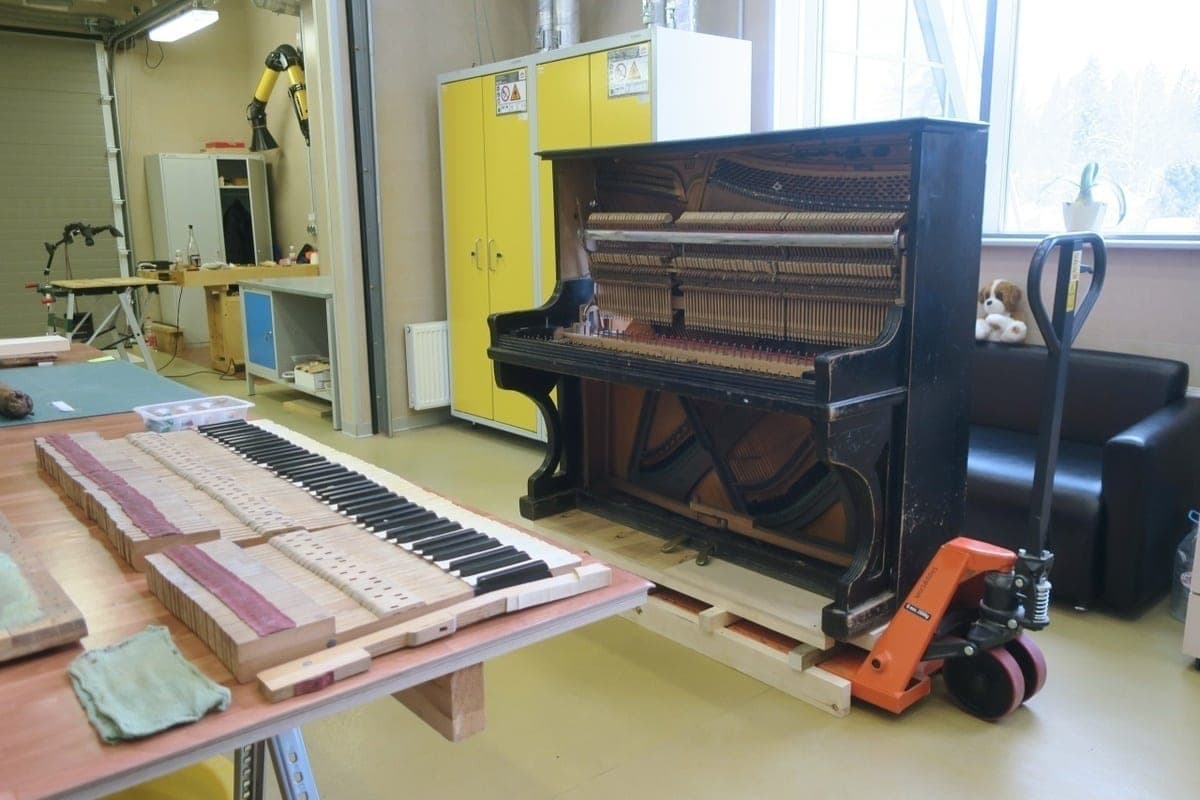
Specialists of the workshop for the restoration of wooden products have completed work on the piano “G. Pleer & Meggi”, which belongs to the Novoladoga Museum of Local History. This was reported in the community of the international center on Christmas.
The most difficult task for the restorers was the restoration of fifty white keys of the instrument, which, when entering the workshop, needed urgent intervention of professionals.
The head of the workshop Alexei Antonov said that in the early twentieth century in Russia there were enterprises that produced musical instruments in series.
“To reduce the cost and speed up the process of making keyboard tools, technologists began to use not ivory plates as a white key material, as it was previously, but composite, synthetic materials,” the expert explained.
The imitation of an elephant tusk made of cellulose and artificial bone was identified by laboratory studies and comparative microscopic analysis of colleagues from the workshop for the restoration of natural historical objects.
During use before entering the museum, due to changes in humidity and temperature, the white keys deformed, peeled off the base and covered with cracks. Decorative transparent varnish key darkened, absorbed dirt and fat, and in some places completely disappeared.
Each key was handled separately. First, the white plates were glued to the base using reversible glue. Then removed persistent contamination from the lacquer coating layer by layer. After that, a decorative and protective layer of transparent mastic varnish was applied to all the keys.
Before the final assembly of the tool, a protective layer of colorless shellac polyture with a concentration of 10% using an airbrush was applied to all the front surfaces of his body.
"During the work, it was possible to establish an exact dating: on the inner side surface of the first white key on the left (note "before" the lowest octave), a factory stamp with a date - "2(2?) Feb 1911" was found," Antonov concluded.


