
“Hurry to do good”: the grave of Dr. Gaaz is still visited by former “convicts”
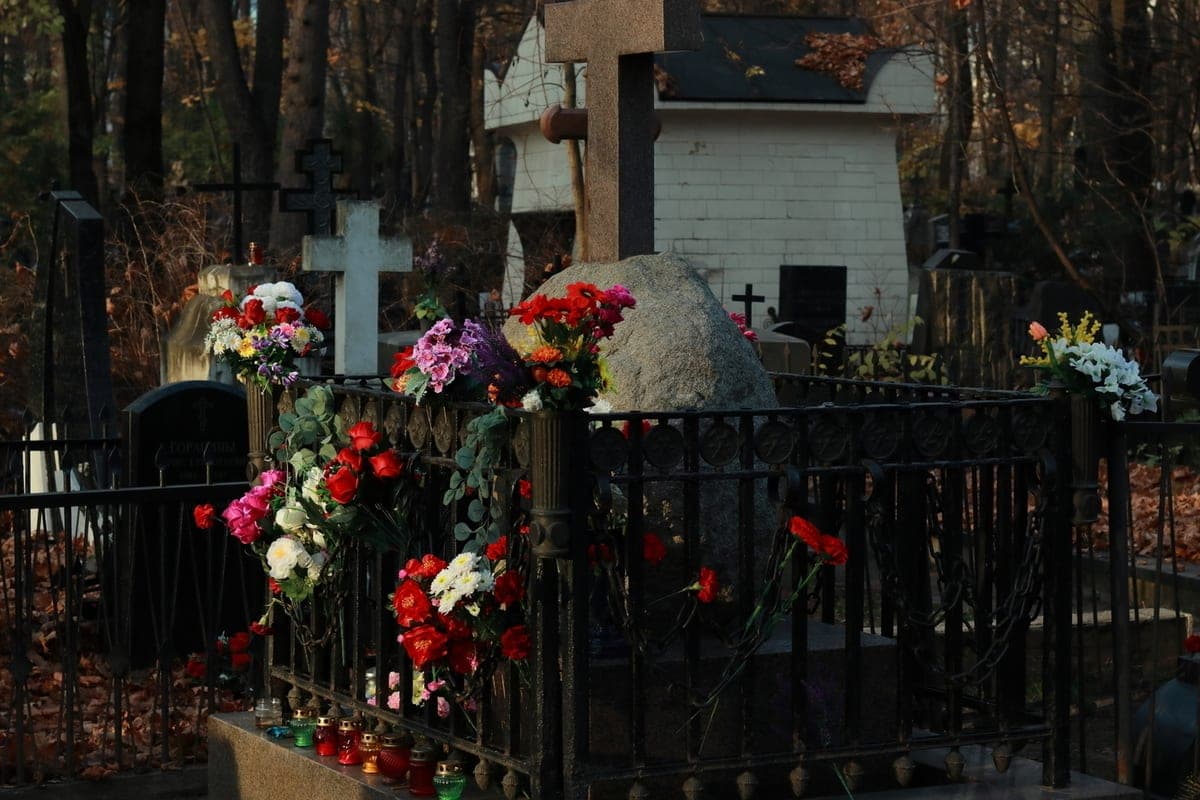
This tomb at the Vvedensky cemetery in Lefortovo is almost always in flowers brought by numerous visitors
Friedrich Joseph Haas, a native of German Münster, came to Russia in 1806 at the invitation of the Russian nobleman Repnin. He chose the name Fedor Petrovich. He became the chief doctor of Pavlovsk hospital, and then the chief doctor of Moscow. But the glory he brought not a career, but ... prison.
In 1827, Haaz became a member of the prison committee and at the same time was appointed chief physician of Moscow prisons. Seeing the conditions in which the prisoners were being held – on the floor, in shackles, without food or medical care – he found the meaning of his life in serving the disadvantaged.
What Haaz did for the inmates today seems self-evident, but then it was a revolution. He proposed to divide prisoners according to sex and severity of crimes and, accordingly, to introduce cells for each category, equipped bunks, organized hospitals, churches, schools and shelters for children of convicted prisoners in prisons.
Gaaz managed to remove shackles from the sick and elderly, and developed a lighter model of shackles - instead of 16-pound chains, his shackles weighed no more than seven kilograms, and the rings at the ends of the chains were sheathed with skin. They say the doctor checked these shackles on himself: he put them on and walked with the convict stage.
It was these shackles, according to legend, grateful prisoners strengthened on the fence of his grave. They still attract the attention of everyone who passes by: the dark metal rings on the grid are a silent reminder of a man who was not afraid to go down to the bottom of life.
The most famous episode in the biography of Haaz is not associated with shackles, but with a dispute that went down in history. Once, at a meeting of the Moscow prison committee, where Metropolitan Filaret of Moscow was present, Haaz fervently interceded for another unfortunate, proving that not everyone who went to prison was really guilty. Filaret, a man of great authority and deeply respected, answered him with a phrase that today would be called the legal presumption of that era: “If the court punished a person, then there is guilt behind him; there are no innocent convicts.”.
Gaaz jumped up. What happened next is described by different authors with slight differences, but the essence is the same. He raised his hands to the ceiling and said, Lord! You forgot about Christ! There was a heavy, frightened silence in the room. No one before him had dared to say such a thing to the metropolitan. Gaaz sat down and put his head in his arms.
Filaret paused, bowed his head, and then replied, “No, Fyodor Petrovich, not like that.” I haven't forgotten Christ... But now that I have spoken hasty words, Christ has forgotten me.
For Haas, the prisoner—anyone, even the guilty—was the one for whom Christ died. And when it seemed to him that the church hierarch was forgetting this, he could not remain silent, even if he risked making an enemy in Moscow’s most powerful man.
Gaaz spent everything he had on charity. He did not charge the poor, and sometimes gave them his own money and clothes. When he died in 1853, he had to be buried at public expense. But on their last trip, doctors came to see off up to twenty thousand Muscovites of all classes - perhaps it was the most crowded funeral in then Moscow.
Today, the grave of Fyodor Petrovich Haaz is one of the most revered burials of the Vvedensky cemetery. There are always flowers here, sometimes it is just littered with them.
Here come excursion groups, schoolchildren, medical students, historians. But there is a special category of people among the visitors - those who have been released from prison. For them, the tomb of the “holy doctor” is not just a landmark. This is the place where those who Gaaz has cared about all his life come.


