What is remarkable is the Holy Protection Cathedral in Grodno
Many people associate the city above the Neman primarily with Baroque churches and the ancient Kolozhskaya church. They are most often depicted on postcards.
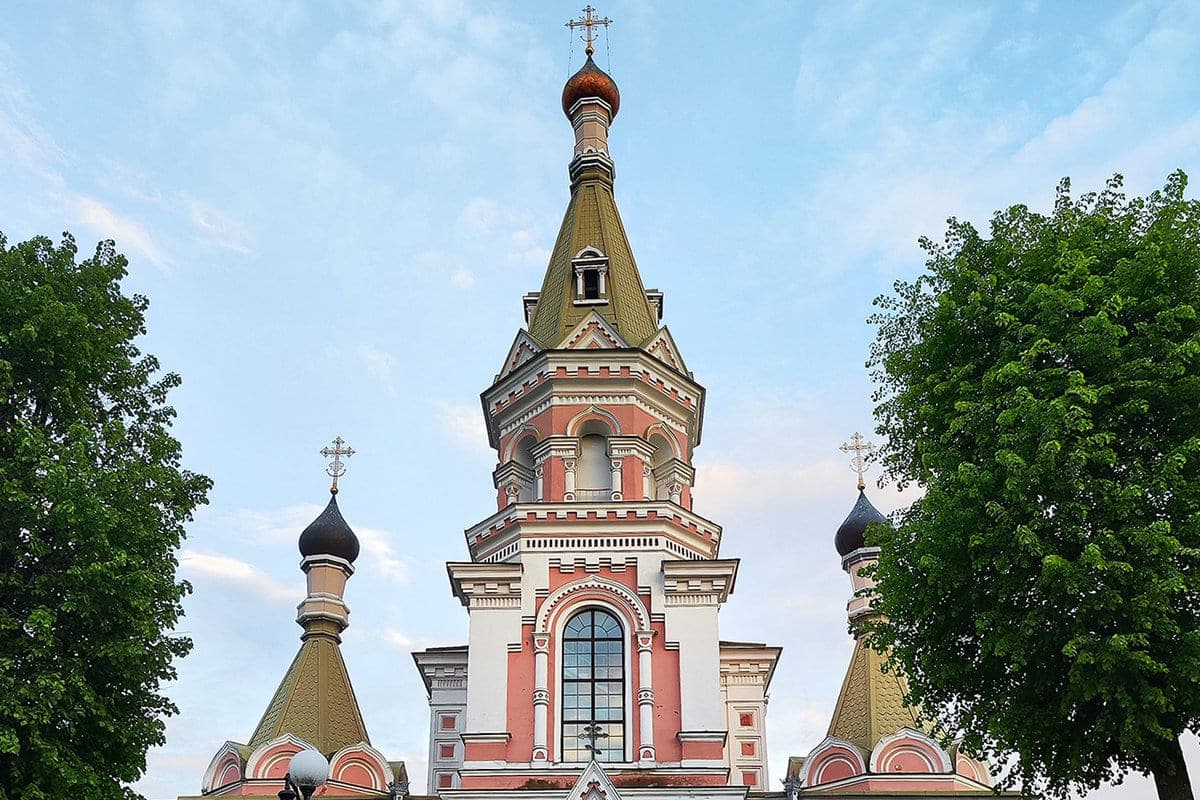
Many people associate the city above the Neman primarily with Baroque churches and the ancient Kolozhskaya church. They are most often depicted on postcards, photographed for social networks. Meanwhile, modern Grodno is impossible to imagine without St. Pokrovsky Cathedral. It is one of the key architectural dominants of the historic center and a place of spiritual strength for the citizens for almost 120 years.
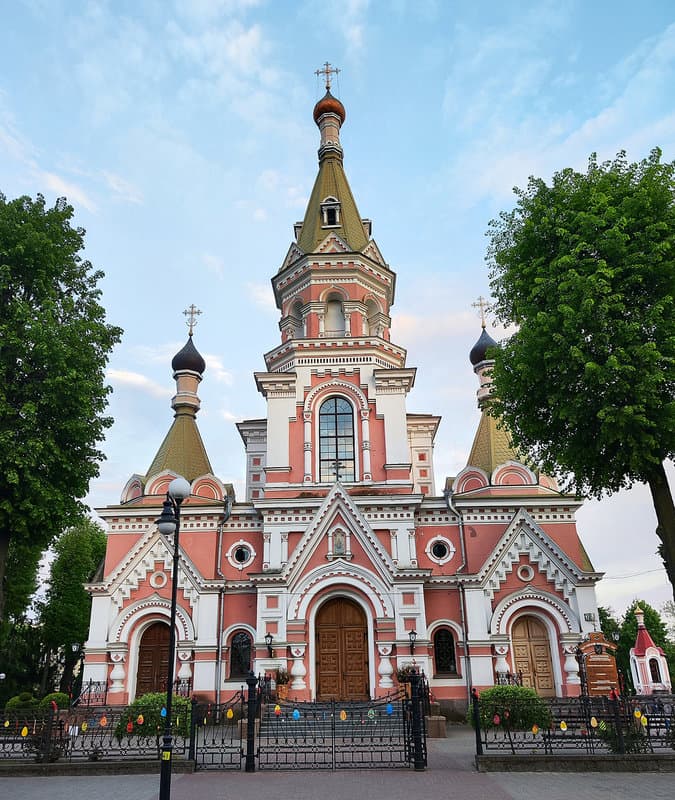
Back in the late XIX century, touring circuses usually stopped at this place, which was very profitable for the city authorities - the artists paid a considerable rent. However, in 1900 it was decided to build a new Orthodox church for military personnel. There is information that the allocation of this particular site for the future cathedral was personally encouraged by Peter Stolypin, who held the post of Grodno governor in 1902-1903.
The project of architect Mikhail Prozorov was taken as a basis. By that time, according to his project, a church in Peterhof had already been built. But the initial ideas were seriously refined by military engineer Ivan Saveliev. As a result, the temple in Grodno received its unique appearance.
The cathedral was built quickly, as the military department took over the costs. Funds for interior decoration were collected by members of the Orthodox Sophia Brotherhood and caring Grodno residents.
Initially, the Pokrovsky Cathedral was conceived as a garrison church. But for the years of its construction, the Russo-Japanese War fell, in which many officers and soldiers from Grodno took part. So in 1907, not just a temple was consecrated, but a temple-monument in honor of the fallen soldiers. A museum was immediately organized with him, where the exploits of the fallen were told through memories, awards and personal belongings. Today, a vivid reminder of this are the original memorial plates on the walls of the cathedral.
In 1921, the Pokrovsky Church received the status of a cathedral, as the St. Sophia Cathedral in Grodno was closed by the new authorities. At the same time, many revered shrines were transferred here (for example, the miraculous list of the Kazan Icon of the Mother of God and the list of the Zhirovichi icon).
It is curious that in the 1920-1930s there was a tradition of the procession from the Intercession Cathedral to the Neman on the feast of the Baptism of the Lord. The crowd gathered a lot: despite the frost, up to 10 thousand people joined the prayer.
During the Great Patriotic War, the clergy of the cathedral sought not only to maintain the morale of the flock, but also to bring victory closer by all means. Thus, Archpriest Fyodor Valikovsky helped the partisans. Thanks to him, the village of Zhytomlya was saved from destruction. And Archpriest Fyodor Vybornov provided his apartment for meetings of connected partisan detachments. Not surprisingly, the traditional procession in 1947 attracted about 25,000 participants. People have proven that they not only believe in God, but also trust those who lead to Him.
In Soviet times, the Pokrovsky temple was not closed. And it was here until the early 1990s that the relics of the holy martyr Gabriel of Bialystok were located. Later, with the blessing of the Patriarchal Exarch of All Belarus, Metropolitan Filaret, they were transferred to the Polish Orthodox Church.
In 1995, on the territory adjacent to the cathedral, a church was built in honor of the Holy Equal-to-the-Apostles Princess Olga. The new church was consecrated by His Holiness Patriarch Alexy II of Moscow and All Russia. The Sunday school opened its doors for Orthodox children, and the activity of the Sofia Youth Brotherhood (the same one that existed in the XIX century) was restored.
Today, the Pokrovsky Cathedral for Grodno residents is not just a place of faith, but an important educational and cultural center. At the temple, lectures are held on both theological and spiritual and moral topics, courses are organized for bell ringers and church readers, a children's icon painting studio operates, a library operates.
infong@sb.by