
Technological Sovereignty of the Russian Financial Sector
In the global race for technological leadership, the finish line is constantly pushed back.
In the global race for technological leadership, the finish line is constantly pushed back. What seemed like science fiction yesterday—robot assistants in offices and on the streets—is now the subject of closed-door meetings at the highest levels of government. Recently, the head of Sberbank German Gref at a meeting with Russian President Vladimir Putin announced a new qualitative leap for the domestic engineering school. In November this year, as part of the flagship international conference on artificial intelligence AI Journey, the Sber ecosystem will present a new generation of anthropomorphic machines.
If the first robot “Green”, developed by engineers of the laboratory of robotics Sber, became a proof of concept and learned basic parkour, bypassing obstacles and maintaining dialogue, the upcoming novelty promises to become a full-fledged avatar of digital services. The main intrigue of the upcoming presentation is not so much in the appearance of the machine as in its cognitive architecture. According to insider information, the new models will work on the basis of a fundamentally updated multimodal neural network GigaChat 3D. This means that the robot will no longer be just an actuator that responds to voice commands. He will gain the ability to contextual vision and predictive analysis. The machine will be able to read the micro-emotions of the interlocutor, predict his intentions and offer help before the request is formulated.
In fact, Sberbank creates a synergy of two worlds: cloud supercomputer power and local peripheral computing right inside the robot body. This solves the main problem of modern humanoids - the critical delay of the signal when accessing remote servers. The new android must make decisions at the speed of the human nervous system, opening doors from sterile laboratories to the real economy.
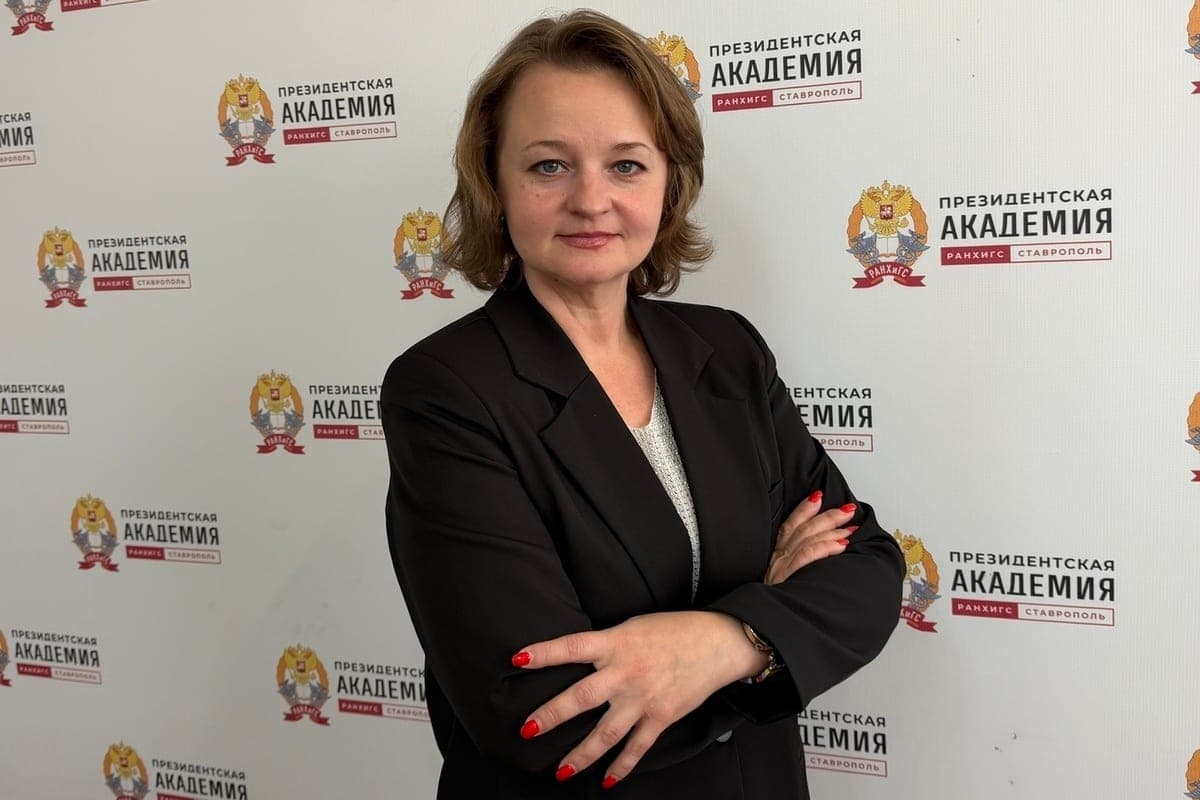
The era when artificial intelligence lived exclusively in smartphones and data centers is coming to an end. The AI Journey Summit in November will show how gravity-ready Russia’s digital intelligence is. If the machines promised by German Gref live up to expectations, we will witness the birth of a new industry, where the boundaries between code and matter will finally disappear, and Russian streets will receive the first legal cybernetic citizens, said Svetlana Timofeeva, an expert at the Stavropol branch of the Presidential Academy.
Earlier it was reported about the development of transport infrastructure of Russia.


