
Scientists of the Murmansk region studied commercial fish in the Barents Sea
From October 27 to November 10, 2026, the specialists of the VNIRO Polar Branch conducted an expedition on the MK-0102 Vilnius vessel. The studies covered the western part of the Barents Sea and the adjacent waters of the Norwegian and Greenland Seas - the area of Bear Island and the Spitsbergen archipelago.
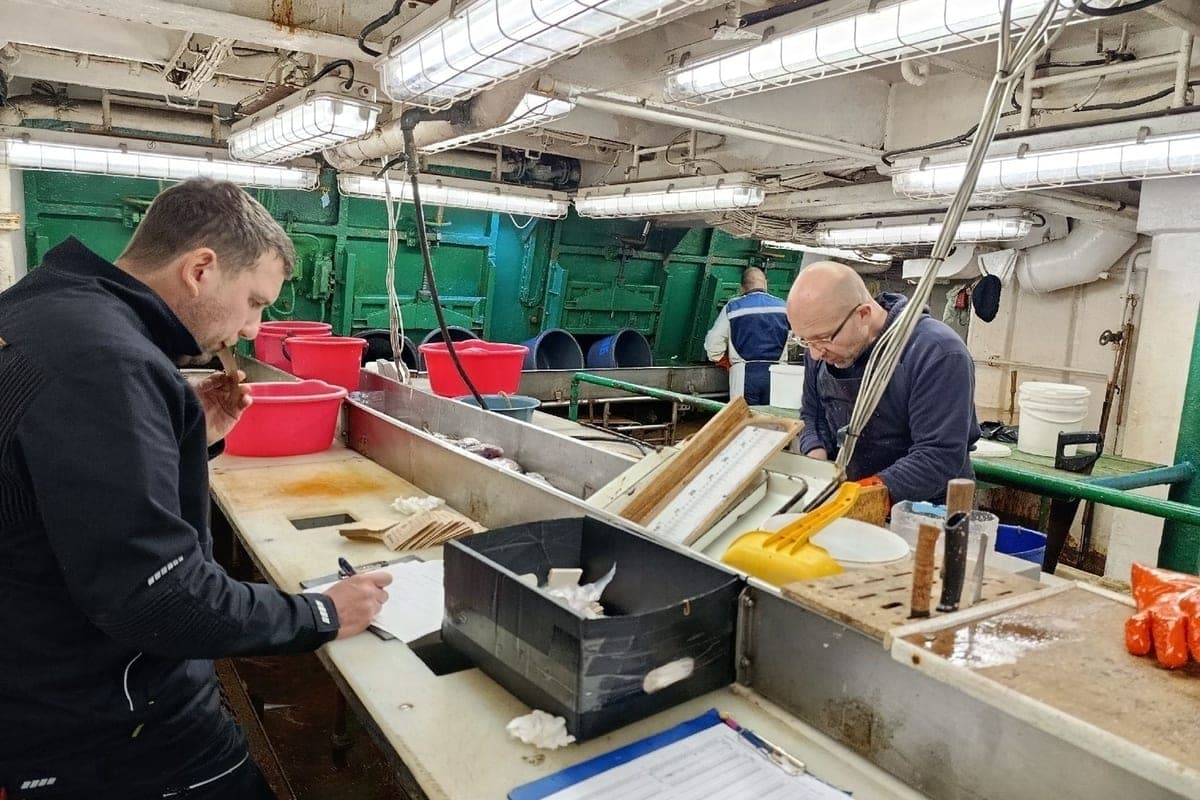
From October 27 to November 10, 2026, the specialists of the VNIRO Polar Branch conducted an expedition on the MK-0102 Vilnius vessel. The studies covered the western part of the Barents Sea and the adjacent waters of the Norwegian and Greenland Seas - the area of Bear Island and the Spitsbergen archipelago.
Scientists studied the biological state of cod, haddock, sea bass, black halibut, capelin, pussa and other commercial species. They also collected information about rare deep-sea fish, bottom invertebrates, parasites and zooplankton. Special attention was paid to indicator species of vulnerable marine ecosystems, as well as marine mammals and birds.
During the flight, experts measured about 10 thousand fish, took biological samples and delivered 126 fish stomachs to the laboratory. These materials are used for further analysis.
In addition, the expedition performed the oceanographic section “Kola Meridian”. Measurements of water temperature and salinity will help assess its heat content in the autumn of 2026 and the possible impact on the survival of juvenile commercial fish.
The results of the research will be discussed with colleagues from the Bergen Institute of Marine Research, and then presented to the Russian-Norwegian working group on Arctic fisheries. The data are used to estimate fish stocks and make recommendations on catch volumes of species managed jointly by Russia and Norway.
The expedition made it possible to obtain new domestic data on the state of aquatic biological resources in the area of Spitsbergen, a traditional zone of Russian fisheries.
Earlier, “MK in Murmansk” reported that fishermen of the Northern basin from the end of July caught another 76.2 thousand tons of fish.


