
Scientists say house clutter is good for family members
Researchers from New Zealand studied 22 families and asked them about their home space. Scientists were not interested in how neatly arranged the furniture, but how people use the rooms and whether they are disturbed by the things left behind. It turned out that scattered objects sometimes make life more convenient, and the desire for impeccable cleanliness can add tension.
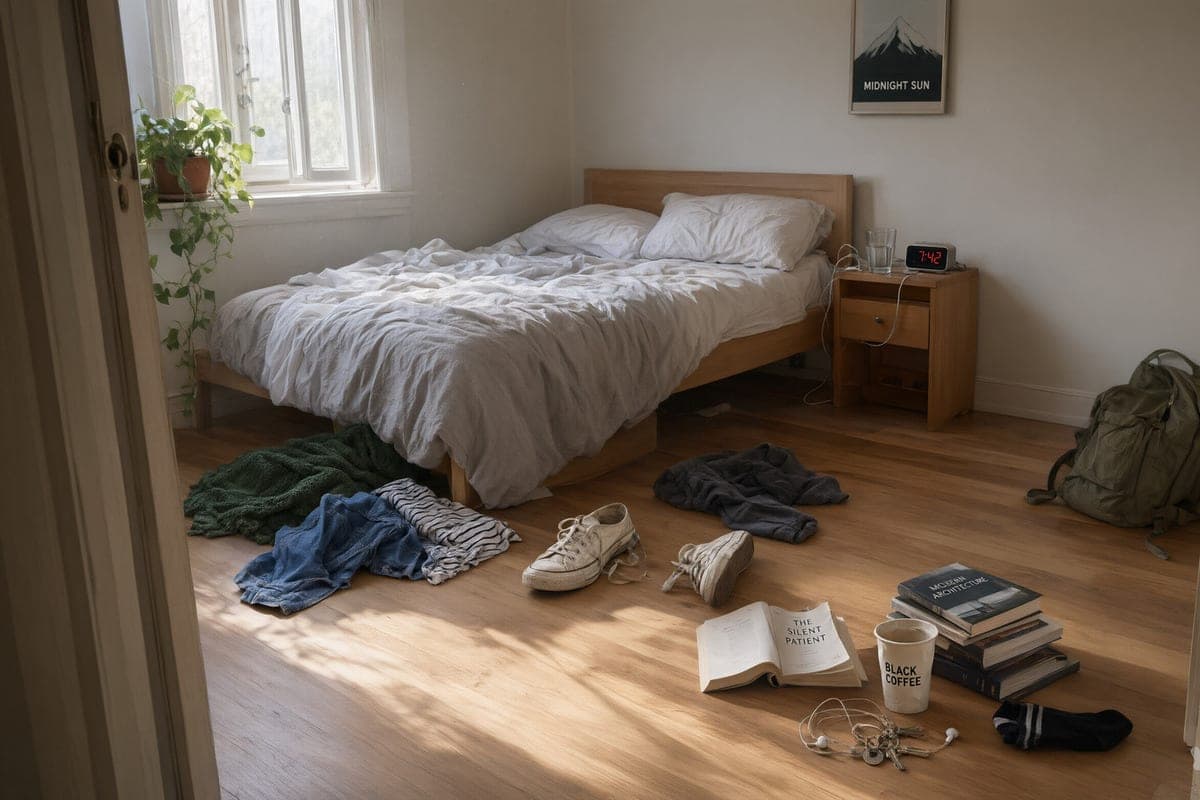
Researchers from New Zealand studied 22 families and asked them about their home space. Scientists were not interested in how neatly arranged the furniture, but how people use the rooms and whether they are disturbed by the things left behind. It turned out that scattered objects sometimes make life more convenient, and the desire for impeccable cleanliness can add tension.
In small apartments, one room often has to perform several tasks at once - the living room becomes a playroom, the bedroom is an office, and the dining table turns into a workplace and temporary storage. One couple used the table for bags, bottles and trifles that needed to be disassembled later. But for dinner, the surface was freed, and the family gathered behind it again. Another participant left the necessary things on the kitchen countertop so as not to forget them before leaving. Another woman shared a working surface with her daughter – there were plates, pens and toys, and no one was embarrassed as long as there was room for food.
The most interesting observations concerned how family members relate to each other's habits. One participant stopped rushing to remove his daughter's sweater from the back of his chair. The girl used to throw clothes on the floor, so the father decided not to find fault with the new storage place. It was more important for him to notice a little progress and support his daughter than to achieve perfect order. The other participant deliberately left some of the partner's belongings where he put them. She believed that the house should not become a space arranged by the rules of only one person.
Researchers have noticed that people cope differently with objects that violate the usual picture. They identified 3 approaches - to remove the thing in its place, to accept its presence if it does not bother anyone, or to find a compromise and hide it from view. For example, one participant moved golf clubs and other accessories of the partner under the closet so that they did not clutter the room. Another, on the contrary, left the vitamins on the kitchen countertop, although she could put them in the closet. She knew she would forget to take them. Such trifles show that there is no universal storage system.
You can spend half a day laying things out in places, and by evening you find that the sweater is again lying on the chair, a stack of papers has grown on the table, and someone’s backpack has settled on the couch. In a house where several people live, perfect order rarely lasts long. And it’s not always someone’s laziness – just everyone has their own ideas about where and how things should lie. The study authors suggest looking at home clutter differently. Instead of endlessly correcting the habits of loved ones, it is worth asking yourself whether everyone is comfortable living in this space.
Scientists have found the physical secret of a pleasant conversation
Reliable news is always at hand - in the channel "MK" in MAX


